Dad's Take:
You could call 1968 the year of the concept album, and this is another. This time, folk-rock singer Tom Rush follows a relationship from beginning to end.
Most of the songs on the album were written by others. Rush wrote two himself, but others come from such big names as Joni Mitchell, Jackson Browne, James Taylor, and Charlie Rich. He might not have written most of the songs, but he combined them into a story and delivered them in his own style. Using so many cover songs was an interesting choice, considering Tom Rush's own songwriting talent. His two songs are among the best on the record, especially "No Regrets," which has become a standard, covered by several big-name artists.
This is one of those records that you have to put on and then sit back and listen. The poetic lyrics demand attention. And it's easy to give it. Like a lot of folk and folk-rock, the voice isn't the draw. Rush's voice is kind of a combination of Dylan and Lou Reed, with a little Gordon Lightfoot and a touch of Leonard Cohen mixed in, but it usually fits the songs fine. The draw is the songs and the messages behind them.
Some songs are a little jarring. For example, if you know James Taylor's version of "Something in the way she moves," Rush's almost hyperactive musical arrangement feels more than a little odd. But for the most part, the album takes a mellow, enjoyable, and emotionally satisfying folk-rock approach.
I like the record best in its mellower moments, such as "Tin Angel" and "Urge for Going," both written by Joni Mitchell. The somewhat countrified old-school rocker "The Glory Of Love," written by Billy Hill and performed by people like Benny Goodman in the distant past, is fun, but sounds slightly overdone compared to most of the tracks.
Jackson Browne's "Shadow Dream Song" holds up well to the Tom Rush treatment. It's one of Browne's earliest songs and shows that he'll one day be a songwriting force to be reckoned with. It's one of the best songs on the record. I also really like Joni Mitchell's title song, "The Circle Game."
This record isn't a personal favorite, but when it's good, it's really good. I've gone to it a couple times in the last few months, when the mood has hit me. Usually I'll listen to a few songs, then move on to something else. But like most concept albums, it is best when listened to whole, despite a few weaker songs. Where it's weak, it's usually due to some production decisions that aren't to my taste, rather than the songs themselves, as in "Something In The Way She Moves." Overall, though, it's a solid album, a classic in its genre.
One additional note: the cover photo of Tom Rush and his girlfriend Jill Lumpkin was shot by photographer Linda Eastman, who later became Mrs. Paul McCartney.
Brad's Take:
The 60s were all about folk music that (to me) was very hit and miss. My tastes sway more to "miss" but I actually really liked this album by Tom Rush. I'd never heard of this guy before, but it's classic singer-songwriter/folky music, but the production and other instrumentation going on sets this apart a little bit from the rest of that era. It's not just an acoustic guitar and vocals. I always prefer multiple guitar tracks and other instruments in this kind of music.
Most of the songs kind of stay in a certain style, but "The Glory of Love" is a fun little early 60s pop-inspired tune. It's full of melody and even features background vocals by a female group. Not sure who it is though. This was one of my favorite songs from the album though. I'm a sucker for that kind of stuff.
Generally, I've found that most of folky stuff from the 60s all sounds kind of similar. This album was refreshing though. It has the classic popular folk style, but there's also a lot of other non-traditional parts throughout each song that makes it not as bland to me. Some might argue that a lot of these kinds of records were so stripped down is so you could focus on the story that the songwriter was telling through their lyrics. But I think that Tom Rush has the perfect balance of interesting music and interesting lyrics. I don't feel like the music takes away focus from the stories at all.
This is definitely a folky album that I don't have a hard time backing at all. Consider me a fan!
On a side note: Tom Rush's voice reminds me a lot of a singer-songwriter I like named Mark Kozelek (who is also the frontman of the bands Sun Kil Moon and The Red House Painters.) If you haven't checked him out, or his other bands, do it.
Showing posts with label folk. Show all posts
Saturday, August 11, 2012
"Johnny Cash At Folsom Prison" by Johnny Cash (March, 1968)
Dad's Take:
You pretty much know what you're going to get from a Johnny Cash album. And this has exactly what you'd expect. We are releasing the 1999 reissue, which contains three more songs than the original release ("Busted," "Joe Bean," and "The Legend of John Henry's Hammer." There's also a 2008 Legacy Edition, which contains both shows Cash played that day, along with a DVD.
My mom had this album on a reel-to-reel tape and I listened to it often as a kid. So it brings back good memories. But you definitely have to like Johnny Cash to listen to this. The one knock on his unique sound is that it doesn't vary that much from song to song. Still, this deserves its classic status as one of the great live albums.
From the opening "Hello, I'm Johnny Cash" that leads into the classic "Folsom Prison Blues," through the rest of the 19 tracks, you get everything you want from the man in black. Whether he's singing standards like "Busted" or "Green Green Grass of Home" or showing his funny side in songs like "Dirty Old Egg-Suckin' Dog" and "Flushed From the Bathroom of Your Heart," Cash provides a set list aimed squarely at the prisoners in the audience. His audience interactions are brilliant and personal. He's not afraid to sing about criminal acts, including drug use and murder, and even suicide by prison guard, topics some performers might shy away from, considering the audience. He sings about justice ("Cocaine Blues") and injustice ("Joe Bean"), and about missing the people back home, as well as the hardships of life behind bars, subjects close to his audience's hearts. And the inmates love it. They go nuts in several places on this record. The result is a live concept album, and it's a good one.
It's a lot of Johnny Cash in one sitting for me, but it makes it clear how he reached legendary status. His career was lagging before he released this record, without a hit for a few years, but it became a sensation and led to a new peak.
I was kind of dreading this one. I generally like my Johnny Cash in smaller doses. But I enjoyed the album more than I expected, and almost as much as I did as a kid. I remember his San Quentin album a little better with its tons of hits, but I like the concept album nature of this one more, I think.
Brad's Take:
I've never been a big Johnny Cash (which probably isn't very surprising, if you've followed our blog at all and realized that I'm not the biggest folk music fan) so, like my dad, I was kind of dreading listening to this too. Hence our two month hiatus.
The album kicks off with Johnny's low voice saying, "Hello, I'm Johnny Cash." This is definitely Johnny Cash. He's doing what he does and he's doing it well.
It's fitting for him to be performing these songs at a prison. His lyrics were probably never as relatable in any other setting. For example: "I shot a man in Reno just to watch him die" or "I took a shot of cocaine and shot my woman down."
The recording quality of this album is fantastic. It sounds clear and it's mixed very well. Sometimes live albums, especially older ones, are mixed terribly. Maybe this version we're listening to is remixed and remastered though. I'll have to find out. But regardless, I'm impressed with the quality.
In the end, I'm still not a Johnny Cash fan, but this is a fun performance. The overly-responsive crowd, Johnny $'s humor between songs (and sometimes in the middle of songs), etc. make this fun to listen to. But being a double disc album, it feels a little too long to me.
And thank goodness someone got the man a drink of water!
Thursday, May 31, 2012
"Songs of Leonard Cohen" by Leonard Cohen (December 1967)
Dad's Take:This is another album that shows that the list we're basing our reviews on comes from Britain, where this album charted much better than it did in the U.S. That said, I like Leonard Cohen and his songs.
The problem is, the album suffers from a sameness between songs that makes it hard to get through without getting bored, unless you listen very closely to the poetry Cohen sets to music. But that's kind of the point. This isn't an album for casual listening. It demands attention to Cohen's often poignant story poems set to music.
"Suzanne" is the obvious classic here, along with "So Long, Marianne," but the rest of the album is worth a listen, in the right mood. My favorite, beyond the two classics, is probably "Hey, That's No Way To Say Goodbye." The acoustic music is played well throughout the album, but often doesn't differ much between songs, although if you listen closely there are interesting things happening in the arrangements. Cohen's droning chanting of his poems also doesn't change a lot from song to song, but he's easier to listen to here than in later albums when his voice became little more than a deep growl.
When I listen to my collection on shuffle, I always enjoy the Cohen songs when they pop up. Listening one or two at a time is a great experience. So is listening to a career-spanning collection, where his voice and music change over the years. Unfortunately, by the time I reach the end of this album when listening to the entire thing--which I've done several times because, when it comes down to it, I'm a sucker for stories about strange, sad people-- I become somewhat numb and don't give the songs the attention they deserve. It gets better with repeated listenings, when the subtle differences between songs start to pop a bit more and it becomes more clear how much is going on in each of these songs.
If you like story songs and poetry, check this one out. If you want a good beat, this isn't your album. And if you're looking for something to party to, an album of mellow, depressing stories isn't right for you. Well, at least not until you're wasted and everything sounds deep.
All that might not sound like much of an endorsement, but I like this album. The stories are good if you can keep your attention focused, and the musical arrangement are actually more varied and interesting than they sound the first time you listen or if you don't listen closely. This might not rank up there with my favorite albums, but when heard at the right time, I really enjoy it.
Brad's Take:
"Suzanne" is such a pretty song. I love everything about it. The female background vocal on the chorus was especially great. "So Long, Marianne" and "Hey, That's No Way To Say Goodbye" are also really great. And again, the background vocals really help make these songs shine for me. I don't know who she is, but she has a really pretty voice.
I wouldn't say there's any bad songs on this record, but there aren't a lot of songs that I love individually either. However, I really like the overall mellow feel I get from listening to the album as a whole. I don't think I would like it this much every day, but this evening it's hitting the spot. It's definitely a mood record, and right now my mood is: Sleepy.
Most of the songs on this album are basically two songs. The casual listener who just listens to this as background music or something will probably just hear Leonard's voice and an acoustic guitar on most of these songs. But those who put on headphones and give this record a focused listen will hear a lot of other instruments that kind of hide out in the background a little bit. The production on this album carries every song perfectly. It never overshadows the actual skeletons of the songs, but it puts just enough meat on the songs for it to be attractive to the ears.
Thursday, April 12, 2012
"The Velvet Underground & Nico" by The Velvet Underground (March, 1967)
Dad's Take:I find the Velvet Underground very hard to relate to personally, with its urban junkie themes, but it's impossible not to hear how this band that barely scratched the awareness of the general public during most of their career influenced much of what came later, especially in the punk and post-punk alternative scenes.
The opening track, "Sunday Morning," is like late-sixties sparkly pop on heroin. Maybe because of Lou Reed's pop sensibility and his substance issues. It belies the darkness of most of the rest of the album.
This is one of those records that's hard not to judge in retrospect. Even in the anything-goes musical world of 1967, this album is odd. For one thing, nobody can actually sing, although they almost sound like people who can. It's not just that their voices are unusual, but that they really sound like they are in the wrong business. It's like they're saying, "If Dylan can do it, we can too," only they can't. And yet, the thing works extremely well. Like so many successful artists who make it in spite of their voices, VU took their sub-par voices and made them right for their music. If they had better voices, their schtick would break. And when you look back at it from those punk and alternative days, you see how much influence they had.
The catchy pop songs like "Femme Fatale" with their sixties feel have a dark edge that is almost a parody of the pop forms they imitate. And that's the whole point. VU is like the underside of pop, and its way is more honest than the music it undercuts. Whether they are attacking the exotic sound of the Beatles Indian-influenced songs on cuts like "Venus In Furs" or flat-out junkie songs like "Heroin," there's a truth in the music that is often missing from the shiny corporate pop. Maybe this is Any Warhol's influence on the album. His art often looks like simple commercial pop art, but with a sharp underbelly. That same thing is all over this record.
I admit that I often find VU difficult to listen to, and at times feel like it's one of those "art" things that I'm not hip enough to get. Only, I do get it, I think. That it's hard to listen to doesn't mean I don't see why it is so highly rated. It's not hard to believe that Lou Reed started out by playing cover versions of popular songs for budget labels like Pickwick. You hear the pop sensibilities and the jadedness of mail-order budget commercial cynicism. This attitude became the predominant one in popular music two and three decades later. That those bands that popped up in the late eighties and nineties looked back at the VU is obvious and maybe inevitable.
And, here's the thing. There's a lot of interesting stuff happening in these songs, especially in the cynical dissonance. The almost-too-relaxed underground style of the arrangements and the garage band production values hide some smart instrumentation and an artistic sensibility. Like much worthwhile art, it's not always pretty, but it tells a truth we don't like to see.
Do I like it? What is "like"? Does the band even want me to like it? I don't know. But it's better than I sometimes like to admit, fits in with both 1967 and 1997, and rewards repeated listenings more than you might expect the first time you hear it. Yeah, that junkie New York club scene is probably as much a myth as the Beach Boys' version of California (which it also lampoons in places), and it's a mythical world that makes me uncomfortable, but that doesn't make the art any less valid.
So this is one I can pull out once in a while and get into, although I'm exhausted by the end. For its influence alone it belongs on our list, and maybe mainly for that influence. But it also takes rock and roll to artistic places where it hadn't gone before. And, even if it's hard to listen to, it is good, much better than it seems like it should be, given the elements of the band.
Brad's Take:
This is yet another good example of a band that I have heard of for many years, but never got around to listening to on my own. Because of that, I was pretty excited to bust this out and give it a whirl.
The album's first 3 songs are great. They've got that 60's folk rock kind of thing going on, mixed with some of the psychedelic sounds. It reminds me a little bit of the last Bob Dylan album we reviewed. Lou Reed and Dylan even have a similar vocal style in some songs, like "Venus In Furs."
"Femme Fatale" was a song that I was already very familiar. Not their version though. The solo project of Mike Kinsella, called Owen, recorded an almost unrecognizable version of the song for his amazing album At Home With Owen a few years ago. Until just a few months ago though, I thought he wrote it. It was cool hearing the original version of the song, but I do enjoy Owen's rendition of it most.
In the song "Run Run Run," you realize that these guys weren't the most skilled musicians... The "guitar solo" in that song is just terrible. I can't figure out what Sterling Morrison was thinking when he recorded that thing, but it's no bueno.
Overall, this album reminds me of a sloppy band of teenagers trying to write in the style of Bob Dylan and The Beatles, but doing it very sloppily and not very well. For what it is though, it's pretty good. There's definitely potential. It's like watching a local band of junior high kids that are trying hard to be awesome, but they're coming up short, but you still give them a few bucks for a CD and say, "Good job, but keep trying. You'll be great in a couple years." I could listen to this again, I think.
Labels:
60s,
Andy Warhol,
banana,
folk,
Lou Reed,
Owen,
psychedelic,
punk,
rock,
the velvet underground
Saturday, March 31, 2012
"Surrealistic Pillow" by Jefferson Airplane (March, 1967)
Dad's Take:This is Jefferson Airplane's second album, but it's the first after the band was joined by drummer Spencer Dryden and vocalist Grace Slick, one of the sixties' most recognizable voices. It is also the first major success to come out of the San Francisco counter-culture scene.
The album's first track, "She Has Funny Cars," makes a good opener, but the record doesn't get going until the second song, "Somebody To Love," which gets my vote for one of the greatest rock and roll singles ever. I love that song. Paired with side two's "White Rabbit," "Somebody To Love" cements Grace Slick's reputation as an icon.
Almost everything about this song is first rate. A driving rhythm section, amazing vocals, great guitar work, hippy lyrics, and an overall upbeat counter cultural feel opened the floodgates for other bands from San Francisco. Together with LA bands like The Byrds and The Mamas and Papas, this music invited the peace and love crowd to come to San Francisco for a summer of love, with the intersection of Haight and Ashbury streets and ground zero. That area eventually became a sad disaster zone, but for one short period, it was something beautiful.
"Somebody To Love" and "White Rabbit" aren't all this album has to offer, although they'd be enough. I've always had a tender spot for "Today," with it's great lead vocal by Marty Balin. Jorma Kaukonen's guitar work on "Embryonic Journey" is a classic of acoustic psychedelia. And I also really enjoy Balin's "Plastic Fantastic Lover." "Comin' Back To Me" also has a marijuana-fueled beauty that shows off the band's softer side. Grace Slick gets most of the attention--and deserves it--but Marty Balin's vocals are also a major part of the band's sound, a psychedelic instrument in their own right. "3/5 of a Mile in 10 Seconds" is a another great example of the Airplane's sound, every bit as good as the record's pair of massive hits.
The version I have of this album includes several bonus tracks. Although we've tried to stick pretty much to reviewing the albums in their original form, I can't help commenting on the great blues track, Kaukonen's "In The Morning." (Brad will love the re-emergence of his favorite instrument.) The song just plain rocks. Sure, it doesn't exactly fit the sound of the album, which is probably why it was left off, but MAN! what a great tune. Same with the Paul Kantner rocker "Go To Her." There are two more bonus songs (and an instrumental hidden track), plus mono single versions of "Somebody To Love" and "White Rabbit." In this case, the bonus tracks really do enhance the original record. It doesn't always work that way.
I don't listen to this album enough. Whenever I do, I'm reminded just how great it is. There's really nothing here I don't like. It takes the LA folk rock and adds a generous twist of San Francisco's counter-culture (ahem) "fog," and the result is one of the best albums of the sixties.
Brad's Take:
Going into this album, I felt a bit pessimistic. 60s hippy rock music isn't typically my favorite, but by the third track, I was feeling pretty good about it! There's something about Surrealistic Pillow that is different than other albums of the same era/genre. It's got nice equal doses of just about everything from the era, and I like that. It's not overwhelmingly hippie-ish, but it's also not just a 60's rock record.
There were only a couple songs that I didn't really like as much as others, but to me, that's really surprising. Even the slow folky songs like "Comin' Back to Me" were interesting to me. Maybe it was because of "spiritual leader's" Jerry Garcia's fancy guitar playing. If it's even him. There's controversy about if Jerry Garcia contributed to this album at all. Garcia apparently even suggested the album title, but who knows. I'll need to research that stuff a little more.
But all in all, I was pleasantly surprised by my enjoyment of this album. It's got everything from folky acoustic tracks to fast rockin' songs to blues jams. I'd say this album encompasses the 60's perfectly. It makes me dislike the 60's a little bit less.
Labels:
60's,
acoustic,
blues,
folk,
grace slick,
jefferson airplane,
jerry garcia,
rock,
singles,
sixties,
surrealistic pillow
Friday, February 24, 2012
"Blonde On Blonde" by Bob Dylan (May, 1966)
Brad's Take:
As you probably know by now, Bob Dylan and I don't have the best relationship together. We've listened to a small handful of his albums so far, and I have only liked one of them. Highway 61 Revisited. Since listening to and reviewing that album, I have become a little bit more welcoming to his style of music.
In our book that we're taking all of these albums out of, I read that this was the first rock and roll double-album. I believe it was also the first album to have only one song on the D-side of the record, because the song was so long. In fact, the whole album is long! It's only 14 songs, but it clocks in at just under 73 minutes. It didn't really feel like that long though, in retrospect.
I really enjoyed "One Of Us Must Know." The way it builds up into the choruses reminded me a little bit of Mr. Dylan's hit "Like A Rolling Stone." The upbeat poppy rhythm of "I Want You" was a nice surprise. What I liked most about that song though was the organ's catchy lead melody that plays during the choruses. It fits the song's subject really well. I really like the use of organ on this album.
Maybe I just hate the instrument itself, but Bob Dylan makes the harmonica even worse somehow by using it as a weapon against my ears. "Pledging My Time" had a harmonica solo that almost killed me with its overly drawn out high pitched notes. Maybe it's his way of getting back at me for disliking most of his music.
"Stuck Inside Of Mobile With The Memphis Blues Again" is a perfect example of what I don't like about Bob Dylan's vocal style. It's unique, and it's not that hard to get used to, but this song sort of made it bother me a little bit extra.
As a whole, I liked Highway 61 Revisited a bit more, but this album comes in close second. There are a couple songs that were hard to get through because they were so long, but I liked enough of this record that I can say that I'll listen to it again soon.
Dad's Take:
When anybody asks me about my three favorite albums of all time, I always mention this as one of them. In fact, it's one of the two that are most solidly in place. I usually say Blonde on Blonde is my number two, but it's a pretty close second.
The difference between first and second place is that my first choice, which we'll be reviewing very soon, is a much more personal record. For Blonde on Blonde, it's purely artistic. I love most of the songs. This is Dylan at his poetic best, the lost clown struggling to make sense of a world that defies logic.
There are classic hits here, namely "Rainy Day Women #12 & 35," "I Want You," and "Just Like A Woman." There's also one of Dylan's best-realized compositions, "Visions of Johanna." And, there's the song that turned me from a Dylan's-greatest-hits fan to a full-album fan, "Stuck Inside of Mobile With the Memphis Blues Again," easily one of my top five or six Dylan tunes. (I've never actually made such a list, but if I did, I'm sure this would be up there. Funny that Brad chose this particular song as an example of what he doesn't like about Dylan, when it's a prime example of what I love--playful lyrics full of allusions and humor, a song where you're never quite sure what he's trying to say but you know that, whatever it is, you like it. And I love how it always seems like the song has finally reached its end, only to keep on a-goin'.
There's also the fun, bluesy "Leopard-Skin Pillbox Hat," the thoroughly enjoyable "Most Likely You Go Your Way (And I'll Go Mine)," "Absolutely Sweet Marie, the brilliant Chicago Blues of "Pledging My Time" with its classic blues harmonica--I can list almost every song on this lengthy album as a highlight.
The closest thing to a downside is the epic "Sad Eyed Lady of the Lowlands." I like this song a lot too, but it's a little too dirge-like for a 14 minute song. I don't mind the length, but, for me, a song this long needs changes and other effects to hold up. There are a few times where Dylan himself seems to be yawning the words. But if you really listen, it's a pretty amazing piece of work--just hard to listen to if you're not in the mood to put in the effort. Put in the effort, though, and the song is among Dylan's best poetry.
This has been my number two favorite album for a long time. Records move in and out of the number three spot (although it always comes back to another album we're reviewing soon), but one and two are firmly entrenched.
I should also mention another record here. I'm not usually wowed by tribute albums (although I buy them now and then), but Blues on Blonde on Blonde is a terrific little collection, containing all but two songs from the original album. It does what a good tribute album does: provide an enjoyable listening experience in its own right while giving you new insights into the songs that help you enjoy the original even more. It also has what may be my favorite cover song ever, the gorgeously heart-breaking rendition of "Just Like A Woman" by Eric Bibb. If you enjoy Blonde on Blonde or feel like the songs are great but you find Dylan himself difficult, seek out this collection. I'm betting that it will make you a bigger fan of Dylan's original work, and renew your confidence in tribute albums at the same time.
Wednesday, February 8, 2012
"Aftermath" by The Rolling Stones (April, 1966)
Dad's Take:1966 was a pivotal year in rock and roll history. Seems like everybody started to get serious and created more artful music. The folk music explosion led to more serious lyrics, and many bands experimented with unusual sounds and arrangements. Aftermath is a typical example. Those punky kids from London expanded their horizons on this one, the first album to feature only songs written by members of the band.
Now, I have to say up front that this is not my favorite Stones record. I typically like my Stones like I like my carrots, crunchy and raw. Although still rooted in a Chicago blues sound, this album leans heavily toward more mellow, with songs like "Lady Jane." Other songs, like the still-popular-but-I'm-not-quite-sure-why "Mother's Little Helper" feature lyrics that distract me by sounding like an eighth grader's attempt to write meaningful, deep poetry. The following lines, especially, annoy me and ruin what might otherwise be an interesting song that does not not quite achieve the social commentary it attempts:
"Things are different today," I hear ev'ry mother say Cooking fresh food for a husband's just a drag So she buys an instant cake and she burns her frozen steakOn the other hand, any album that includes the classic "Under My Thumb" is not all bad. Even that classic Stones rocker has interesting things happening in the arrangement, and it works.
The experimentation on this record led to more and more excess, as heard on their 1967 psychedelic classic, "Their Satanic Majesties Request," but here it sounds not quite cooked, and makes me miss that classic Stones sound.
Not a bad album, but not the Rolling Stones I enjoy listening to.
Brad's Take:
Let's start this off with a fun fact.
Fun fact: This album came out on April 15, 1966. Exactly 20 years before my birthday, and 20 years before my dad had to start changing poopy diapers on a regular basis.
It would be more of a bragging right if only I had actually liked this album...
I started listening to Aftermath a couple of weeks ago, but only listened to about 3/4 of it before I got bored and put on a different CD. I haven't heard many Rolling Stones albums so I can't really compare this one to their others, but I can say that this one was really hard to get through, especially twice.
"Under My Thumb" was the only song that I feel like I can listen to a few more times. Although it's one of the Stones' slower songs, it's still a nice tempo to bob your head to.
One thing I am confused about is why the UK version (the version of the album that we listened to) doesn't include their single "Paint It, Black" like the US version does. I actually really like that song, and that would have made this album a bit more enjoyable.
Either way, Aftermath only made me want to listen to a different Rolling Stones album.
Labels:
aftermath,
bluegrass,
expiremental,
folk,
keith richards,
mick jagger,
rock and roll,
the rolling stones
Monday, January 23, 2012
"Sounds of Silence" by Simon & Garfunkel (January, 1966)
Dad's Take:This is a good way to ease into my favorite three-year period in the history of popular music.
Paul Simon & Art Garfunkel found a magical formula when they combined the sounds of Dylan's electrified folk and the mellow harmonies of the Everly Brothers. With smart, poetic lyrics and a cool pop sound, they appealed to the Greenwich Village intellectual college folkies as well as the kids, blending the coffee shop with the burger joint jukebox. The rock and roll folkie Simon and the beautiful-voiced Garfunkel were a combination that could not be beat.
The commercial highlights here are the title track, which went to #1 in the U.S., and the smash "I Am A Rock," a song that worked as a personal theme song for much of my adolescence, an anthem for introverts everywhere. The gorgeous "Kathy's Song" is among my favorite songs by this duo. But don't let those hits lead you into believing the rest is filter. This album is full of smart songwriting wrapped in melodic harmonies and excellent instrumentation. I think this record also introduces the word "groovy" to our list in the fun, upbeat "We've Got A Groovy Thing." Our version of the album ends perfectly with bonus track "Blues Run the Game."
A little side note: There's a line in "A Most Peculiar Man" that might make Brad chuckle a bit because of a family inside joke. Laughing might not be appropriate during a song about a suicide, but I suspect Brad won't be able to help himself.
This is a wonderful album. Put it on on a rainy day or a mellow morning, and it'll fit the day perfectly.
Brad's Take:
This is actually my first time listening to a full Simon & Garfunkel record straight through. In fact, I don't think I've ever heard more than 5 of their songs before this. Now I'm kind of kicking myself though because I like this a lot.
It's folk rock, but it rocks a little more than Bob Dylan's similar style. I also definitely hear the Everly Brothers reference that my dad mentioned in Simon & Garfunkel's vocal harmonies. The vocals are my favorite part about these songs. Both of these fine young men have awesome tenor voices that (most of the time) blend perfectly together, like vanilla ice cream and root beer.
The only song that I recognized off of this album was "I Am A Rock," but some of the songs that I liked a lot from first listen were "The Sound of Silence" and "Blessed." I liked those two songs a lot, but the whole album was awesome. It was folky at times, it was rockin' at times, but it was awesome all of the time.
Side note to my dad's side note: Maybe I'm just tired, or forgetful, but I didn't catch any inside jokery in the song "The Most Peculiar Man."
Labels:
Bob Dylan,
folk,
pop,
rock and roll,
simon and garfunkel,
the everly brothers
Thursday, January 19, 2012
"Highway 61 Revisited" by Bob Dylan (August, 1965)
Dad's Take:Poor widdo Bwadley has to listen to another Dylan album already. Poor guy. This one is listed at number 4 on Rolling Stone's 500 Greatest Albums list, and its big single, "Like A Rolling Stone," is number one on their list of greatest songs. In other words, This will be pure torture for Brad. He's really going to be thrilled that the songs are so long on this record. But this album is a classic with a capital C. Even outtakes from this record like "Can You Please Crawl Out Your Window?" are great.
OK, so for Rolling Stone to pick a song called "Like A Rolling Stone" seems like it could have more behind it than simply liking the song, but seriously, it's hard to argue that choice. This song is a tour de force, unlike anything by anyone else (except maybe a few other Dylan tunes). It's spectacular. If it were the only decent song on this album, the album would be a classic.
But it's not.
Song after song is a gem. After "Like A Rolling Stone," we're treated to "Tombstone Blues," with its brilliant fast blues groove and its tribute to Woody Guthrie in the chorus. The lyrics are playful and poetic. This is a song that takes multiple listens before it all sinks in, but it's better with ever listen, and not so bad on the first one. Six minutes of near perfection, from the lyrics to the crunchy guitar. Next comes the piano-based blues of "It Takes A Lot To Laugh, It Takes A Train To Cry," with its train-whistle harmonica (oh, Brad's gonna love that!) and easy, shuffling blues rhythm.
This album is song after song of highlights. More favorites for me include "From a Buick 6," and "Ballad of a Thin Man" and and "Queen Jane Approximately," and the title track, and "Just Like Tom Thumb's Blues" (again, incredible lyrics, set to a cool song), and "Desolation Row," and --wait, I just mentioned every song on the album.
Perfection on vinyl. Or whatever CDs are made of. This is Dylan at his bluesy best, showing that there's more to Zimmy than a folk star. He's reinvented himself so many times, but this is the Dylan phase I like best. People Who Don't Know won't expect these words, but they're true: Dylan rawks! My favorite Dylan album is yet to come on our list, but this is awfully close.
Have fun, Braddio. Me, I'm spinning this one again, a little louder this time.
(Just a note about influence: watch what happened to rock and roll after these last couple Dylan albums. Dylan's direct influence is clear: the popular music of the day moved from typical songs about love to deeper songs with a more poetic and personal lyrical content. Thanks to Dylan, the Beatles (for one) moved from "I want to hold your hand yeah yeah" to "Doesn't have a point of view, knows not where he's going to, isn't he a bit like you and me?" And where Dylan took the Beatles, the rest of the serious music scene followed. Sure, there was still plenty of moon/June/hand/understand on the radio, but most of the more substantial artists moved beyond that, and the music world changed. Thank you, Mr. Dylan!)
Brad's Take:
Here we go...
On Bob Dylan's previous album, Bringing It All Back Home, he made Side A the electric/bluesy side, and Side B consisted of acoustic driven songs. Ol' Bobby decided to take it even a step further on Highway 61 Revisited though, and decided to make almost the entire album electric, much to the dismay of his long time fans; the ones who began to love him when he was just playing acoustically. I, personally, much prefer his electric stuff. It's easier for me to listen to because there's a lot more going on. (Dad, are you proud yet?)
The album opens with the lead single "Like A Rolling Stone." I, of course, have heard this song a few times before, but I never actually listened to it until now. It's definitely a song I can listen to many more times. I was surprised with how much I actually liked it. (How 'bout now, Dad?)
A few songs later, and I found myself really digging this album. It's upbeat and bluesy, and Bob's voice isn't as irritating on this album. (Or maybe I'm just used to it now.) But then about halfway into "Ballad Of A Thin Man," I started to feel the urge to skip to the next track, in hopes that the album wasn't actually starting to go downhill, like it felt like it was. I got through the whole song though, and then regained some faith as "Queen Jane Approximately" played, although not completely. (Sorry, Dad.)
It's safe to say that I really enjoyed the first half of Highway 61 Revisited the most, while the second half felt like just another Bob Dylan album to me, for whatever reason. "Just Like Tom Thumb's Blues" was enjoyable though. It should have been in the first half, as Side B feels to be the mellower side.
In the end, I did not dislike this album. In fact, I enjoyed the majority of it. "Like A Rolling Stone" was definitely my favorite song off of it. I got a bit bored with the second half of the album, but that might be mainly because the entire 9 song album is 51 minutes long. It was a struggle to get through it, but I did it without really suffering. It was a good album. (Now are you proud, Dad??)
Wednesday, January 18, 2012
"Bringing It All Back Home" by Bob Dylan (March, 1965)
Dad's Take:"Bringing It All Back Home" didn't make Dylan many friends in the folk world, with its full side of electric music, but it further cemented his place as one of the greatest influences of sixties music.
It's hard to find three better songs to open a record than "Subterranean Homesick Blues" (Dylan's first single to chart in the U.S.), "She Belongs To Me," and "Maggie's Farm." With a start like that, you'd expect it to be all downhill from there, but it's not. As much I like the acoustic Dylan, the first side of this album, with its electric rock and roll sound, is one of my favorite sides ever recorded.
Side two is just as good. It might be acoustic, but it's not typical folk music. Dylan moved beyond the folky protest songs and wrote lyrics that are more personal and poetic, and often abstract. The obvious highlights on side two are "Mr. Tambourine Man" and "It's All Over Now, Baby Blue," but the other songs on the side are just as good. The side includes one of his most ambitious compositions, "It's Alright Ma (I'm Only Bleeding)," interestingly a scathing critique of commercialism (and other things, especially hypocrisy) on his most commercial album so far. It's a song full of grim images and brilliant wordplay, set to a classic blues guitar.
Dylan's gamble paid off. This album hit number 6 on the Billboard albums chart, his biggest seller up to that time. It was also highly influential with important rock and roll bands like the Beatles and the Byrds, and other bands that were not misspelled animals. It was during the sessions for this record when Dylan met the Beatles and reportedly turned them on to marijuana.
47 years later, this still one of Dylan's best, and one of my favorite albums of all time.
Brad's Take:
This is the second Bob Dylan album out of the few on our list. It's also the second album on our list that I went into borderline dreading... Although I didn't hate the first one we reviewed, I have a hard time getting used to the fact that I will be listening to another entire Bob Dylan album, almost forcibly, and then a few more later on down the list. But here we go!
Once again, we have another album full of stories and politically charged lyrics put to some (mostly acoustic) folk music. Sometimes fast, sometimes slow, but always Dylan.
This album feels a lot more free and fun than the mega political The Freewheelin' Bob Dylan. Kind of ironic. The hysterical laughter at the beginning of "Bob Dylan's 115th Dream" even got me laughing along.
Overall, I think I enjoyed Freewheelin' more. It was more interesting because it felt like it was a snapshot and a good representation of the civil rights movement, as a whole. This album didn't hold my attention at all really. Sorry Daddy-o!
Tuesday, January 3, 2012
"Folk Singer" by Muddy Waters (April, 1964)
Brad's Take:
Now this is folk music I can get behind! Although I'd give it the "blues" title before I called it folk, it was deemed as "folk" because of it being stripped down and acoustic.
This is the first time I've ever really given Muddy Waters a real solid listen, and I have to say, I am loving it! His soulful, powerful, low voice is so awesome. His voice just rumbles from your speakers while he and the great Buddy Guy jam delicate but intricate acoustic guitar phrases back and forth to a snails drum beat.
I only got halfway through the second song before I told myself that I loved this album. Every song is soooo good! I feel like I'm watching Muddy and Buddy play together in a tiny little coffee shop where all they have enough room for is their acoustic guitars.
I don't think I can say enough good things about this album. It's totally hitting the spot for me right now. If you want mellow, acoustic, powerful blues music, pick this up right now. But be warned: You won't be able to put it down.
Dad's Take:
This is to folk music what the Ray Charles album we reviewed earlier is to country, only unlike Ray, who gave his soulful sound to country classics, Waters is playing straight-up blues, the way it had been played in the old days. All I can think is that a record company exec thought they needed a title that would cash in on the folk craze, maybe because of the crossover succes Ray Charles had enjoyed with his record. No matter what the title claims, this is a blues classic. It's a beautiful thing.
One thing about these old-school blues guys: they could deliver powerful songs without the pyrotechnics of electronic instruments, effects, and amps that go up to 11. Muddy and Buddy and the rest of their supergroup (Muddy Waters, Buddy Guy, Willie Dixon, and Clifton James on one record? Really?) performing under Muddy's name deliver powerful blues moments in every song.
As the boy said in his take, this is a great album that can't be put down. When it's over, you'll want to go back and start it again.
Monday, January 2, 2012
"In The Wind" by Peter, Paul, and Mary (October, 1963)
Dad's Take:This one brings back memories. My mom has this record, and I heard it a lot growing up. When I got a bit older, I used to play it myself. This and her Kingston Trio albums helped me develop my inner folkie at an early age.
I remember as a small child really liking "Hush-A-Bye." "Stewball" has always been a favorite, probably my favorite on the record. Brad might have fun imaging Little Dad singing along. "Rocky Road" is another favorite. Later, I appreciated their "Go Tell It On The Mountain" (this is the version I hear in my head when I think of this song, even though they changed it from a Christian spiritual to a civil rights anthem). Of course, the album features their classic "Blowin' In The Wind," which probably helped as much as anything to cement Dylan's place in the cultural mind.
So, for me, this is truly a classic album, one that has always been there, as long as I can remember. I haven't listened to it for many years, but it holds up to my grown-up ears as well. Songs like "Long Chain On" and their gorgeous cover of Dylan's "Don't Think Twice, It's All Right" still hold up well.
"In The Wind" is a feel-good record for me. It's like a bridge between the fifties folk of the Kingston Trio and the heavier folk of the Bob Dylan and Joan Baez. The harmonies are impeccable, with a perfect blend that inspired later groups like the Mamas & the Papas.
Brad's Take:
Folk music was in full force by the time In The Wind was released so it's no surprised that this album shot up to #1 on the Billboard charts. It might have helped that they cashed in on Bob Dylan's success by releasing their own versions of "Blowin' In The Wind" and "Don't Think Twice, It's All Right" as their singles for this album.
It's a shame that they didn't release a single of an original song because they were great songwriters. "Rocky Road" would have been a good choice for a single, in my opinion. "Very Last Day" could have been a good one, as well. In that song, you can definitely hear where the Mamas & the Papas got their harmonies for "California Dreamin'."
Before listening to this, "Puff The Magic Dragon" was the only Peter, Paul, and Mary song I could have named off the top of my head. I liked that little ditty and the movie when I was younger, but it's not on this album. I was kind of bummed about that.
I kind of liked the album. The 60s folk music/hippy scene isn't something I can relate to at all so it's hard to get into these folky albums. It was fun listening to it though, imagining watching a young version of my dad swaying back and forth to "Stewball."
Friday, December 30, 2011
"The Freewheelin' Bob Dylan" by Bob Dylan (May, 1963)
Dad's Take:I've been looking forward to this one probably about as much as Brad hasn't been, but I'm hoping Brad might see the light.
Bob Dylan's first album didn't get much attention, but this second disc introduced him as the major new force in folk music. Innovative lyrics, social relevancy, solid playing, revolution, and that voice that some people have trouble getting used to but that delivers the songs so perfectly--all of this helped define the music of the sixties. Dylan is to folk music what the Beatles are to rock and roll: a redefining iconoclast that changed everything that came after.
Of course, there was no way to know that when this album first surfaced. There was no way to predict how much Dylan would affect all genres of popular music. There was just a collection of great songs. "Blowin' in the Wind," "Masters of War," "Don't Think Twice, It's All Right," "A Hard Rain's A-Gonna Fall." There's anger, frustration, acidic wit, and beauty in these songs and in most of this album.
Sure, Dylan is not always easy to listen to, but that's true of so many great artists. He challenges you to listen and to think, to look below the surface and see the world. Not since Woody Guthrie had the folk music scene been forced to really see like this. Not since Woody Guthrie had folk music sounded this fresh and bitter at the same time.
We'll hear more Dylan in our list, but few of those albums will have exciting vibe of Dylan's breakout effort. I can't listen to this record enough.
Brad's Take:
My dad was right. I was not looking forward to this album. I've never been a real fan of Bob Dylan. Off the top of my head, the only Bob Dylan song I could name is "Blowin' In The Wind" but I have listened to a punk rock cover of it hundreds of times more than I have listened to the original. I won't ever disagree that he's a classic musician, but I just personally haven't been able to get into his music at all before so I went into this very pessimistically. Since that isn't very fair though, I will try to give this an unbiased review...
Bob Dylan's known mainly for his voice and his lyrics. Robert's voice is hard to get used to at first, but I got used to it on this album. Whether you get used to his unique voice or not, there's no denying that his lyrics are great. His lyrics are very politically charged, like every folk album that came out in the 60s.
As a guitar player myself, I was slightly annoyed that Ol' Bobby's guitar was noticeably out of tune on "Down The Highway" and a couple of others. Also, some of the really high harmonica notes he plays almost killed me, like the final drawn out note in "Girl From North Country." I've never been a real fan of the harmonica...
To me, this album sounds like a guy sitting on his front porch, imperfectly playing his slightly out of tune guitar but singing songs from his heart. But Freewheelin' launched Bob Dylan's career instantly, and it was well earned.
Although I was not excited to listen to an entire Bob Dylan album, I found myself to accept it about halfway through. There weren't any songs I loved, or any that I like-liked, but there weren't any songs I hated either. It's not my typical cup of tea, but for what it is, it's great. It's a perfect snapshot of the 60s folk music scene.
Thursday, December 8, 2011
"Joan Baez" by Joan Baez (October, 1960)
Dad's Take:It's interesting to follow an established folk trio with the debut from one of the quintessential new breed of folk singer who arose in the early sixties. Joan Baez signaled the new era of the bare bones solo singer-songwriter (a little ironic since the songs are mostly folk standards, not Baez originals).
This album was recorded in a hotel room, with Baez, her guitar, and guitarist Fred Hellerman. It exhibits the folk sincerity that is sometimes parodied when people make fun of folk, but the performances are strong. Where blues and jazz records might conjure up the feel of a smoky bar room, this style of folk evokes a Greenwich Village coffee shop, full of beatniks and soon-to-be hippies, navel gazing and trying to out-deep each other in conversation. Not that there's anything wrong with that.
Baez has that prototype young woman singer-songwriter voice that continues to this day. It's not one of my favorite voices, but it works perfectly with the songs and simple arrangements of the material. Her best work was yet to come, but this record is a solid announcement that a new musical force had arrived. This doesn't feel like a debut. In classic folk songs like "Donna, Donna," "Wildwood Flower," and "House Of The Rising Sun," the 19-year-old Baez performs with confidence and sincerity, opening the door for the great new folkies of the sixties.
Brad's Take:
This sounds like it was recorded today. I had to double-take that it really was released in 1960. Like my old man said, her vocal style is copied in a lot of today's female fronted folk music. It, too, isn't my favorite vocal style ever, but it works for what it is. VibratoOoOoOoOoOoOo! I can see the flower people poking their heads out from behind the trees wondering what this new sound they're hearing is.
I have never been a big fan of singer-songwriter kind of folk music. I'd take the Kingston Trio over this any day. I didn't love this album. I didn't even like it, really, but I can see why it is a classic album. It's a style that was new and fresh at the time, but became a leading one near the end of the 60s.
It isn't bad. It's just not my cup of tea. All the new-school indie kids and hipsters would love it though.
Wednesday, December 7, 2011
"String Along" by The Kingston Trio (July, 1960)
Dad's Take:We've covered just about every genre in popular music so far, so it's about time we move into folk music, one of my favorite genres. What better place to start than The Kingston Trio.
The Kingston Trio peaked commercially with "Tom Dooley" in 1958, but this album, their fifth studio record, captures everything I like about the trio. It has impeccable harmonies, humor, social awareness, and catchy melodies. By 1960, folk had been popular for a few years among the college crowd who where a little too old for rock and roll's dance beat, but it was only on the verge of becoming the force it would be with the ascent of Dylan, Baez, and the rest of the sixties folk icons.
The Kingston Trio were among the pioneers of modern folk music, and "String Along" makes it clear why. Great songs like "Leave My Woman Alone" are accessible to the aging first generation of rock and rollers (and, indeed, were influenced by people like the Everly Brothers), but with a maturity and social awareness that had not yet broken into rock and roll music. Those things would become part of rock and roll soon, thanks to people like The Kingston Trio and their influence on a folk scene that would soon give birth to Dylan and his cult of followers in all popular genres.
But back to the Trio. Not long after this album was recorded, Dave Guard left the Kingston Trio, putting an end to the first major era of the Trio. He was replaced by John Stewart, who I always liked as a member of the Trio and as a solo act. They weren't quite the same after that. They continued to have chart success for a couple more years, but "String Along" was their last album to top the charts. Six of their next seven albums hit the Top Ten, though, so Guard's departure definitely didn't kill the group.
I'm not sure why this is the album the authors of our list chose to represent the Kingston Trio, but I'm not complaining. I've never hear this whole album before, and I'm happy to have it now. "String Along" is a good, solid album, with strong songs and very little obvious filler. Like other Kingston Trio albums, it was criticized by some folk fanatics because of its political neutrality in a left-leaning genre, but record buyers ate it up and found it highly satisfying. It's a very good record.
Brad's Take:
Like a lot of the albums we've reviewed so far, I've heard of the band, but never actually listened to any of their music, until now. Although folk music isn't typically my cup of tea, this was a nice little surprise.
"Bad Man's Blunder" is an up-tempo silly little song that I thought was okay, but the next couple of tracks were a bit slower, and full of perfect harmonies. I liked all of the slow songs the most on this album.
They have great voices that sound great when they're harmonizing together. On songs like "When I Was Young," they harmonize the entire song together. It reminds me a lot of a band I occasionally listen to called Kings Of Convenience, who must have at least some Kingston Trio influence in their vocals.
As a whole, this album is good. It's not my favorite, but there's some songs that I really liked a lot, and some that I sort of struggled to get through. Fortunately though, the entire album is only 30 minutes long so the songs are short and sweet, getting to the point from the get go.
Labels:
Bob Dylan,
folk,
john stewart,
kings of convenience,
kingston trio
Tuesday, November 8, 2011
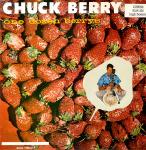
One Dozen Berrys, by Chuck Berry (March, 1958)
Dad's Take:We've heard Bill Haley. Elvis. Fats. We've listened to Little Richard and Jerry Lee. But one key part of the foundation of rock and roll is missing, until now.
It's impossible to overestimate Chuck Berry's impact on rock and roll. When you hear a guitar solo by one of today's rockers, you're hearing Chuck Berry. When a lyricist tells a story and plays with the meter of his lines, you're hearing Chuck Berry.
On the excellent rockumentary about Berry, "Hail Hail Rock And Roll," Chuck talks about the blues music he heard in his neighborhood. But then then he'd go with his father to work in the white neighborhoods, and he'd hear country songs. So he figured out that he could make more more money from his music if he combined the two. He wasn't the first musician to mix blues and country, but he was perhaps the first to mix them so seamlessly. Then he played the horn solos from the swing combos on his guitar, and created a sound unlike anything that came before and that has not left us since.
"One Dozen Berrys" is Chuck Berry's second album. Significantly, it was the first to be released in England, where it had a tremendous impact on the up-and-coming British rock and roll scene.
This album contains several hits: "Sweet Little Sixteen," "Oh, Baby Doll," "Reeling & Rocking," and "Rock & Roll Music." But it also shows Berry has a serious musician with blues tunes like the instrumental "Blue Feeling" (and "Low Feeling," the same recording slowed down), the bilingual love song, "La Juanda," and the R&B love song, "How You've Changed." Chuck Berry had ambitions beyond teen dance music, but he also knew what he needed to do to make his money. The result is an album that wears its influences on its sleeves, but also shows how those influences were combined into that unique Chuck Berry sound. "Oh, Baby Doll" is a great example. It has a traditional country rhythm, sped up a bit, with R&B instrumentation behind a story song.
Chuck Berry changed everything.
In addition to being the king of rock and roll guitar, Chuck Berry is one of the great lyricists of all time, moving beyond the usual popular love songs with a kind of folk poetry that is on par with Cole Porter and the Gershwins, but with a straight-from-the-streets twist that makes it so amazingly easy to relate to. It's not just the words that he chose, but also the way he plays with the meter of his lines. I miss that on the many instrumentals on this record (maybe a couple too many), but those instrumentals also show the great musicianship from Chuck Berry and his band, especially his other musical half, pianist Johnnie Johnson, who deserves a bigger share of the credit for Chuck Berry's sound than he is usually given.
One thing that amazes me about Chuck Berry is that, unlike many of the rock and roll pioneers, his best music does not sound dated. A good Chuck Berry song from 1958 is still a good song today. Chuck Berry's music often lacks the trendy, novelty-song feel of so much of early rock and roll.
Brad's Take:
The first time I remember really listening to Chuck Berry was in 7th grade. We had to do a small report on a famous person, and my dad suggested I do it on Chuck Berry so I did. I played a clip of Chuck Berry performing and then read my report to the class. I didn't really listen to Chuck Berry much after that, at least not on my own.
This guy was an amazing performer, which helped him become a classic artist. Like Elvis, Chuck Berry had his own stage moves that people loved to see. On top of just being a great performer in general, he was an amazing guitarist. His guitar playing style stepped up the rock 'n roll game.
One Dozen Berrys has a couple of Chuck's well known songs, including "Sweet Sixteen" and "Rock & Roll Music," as well as some other awesome jams that I have never heard before, like "La Juanda." The lyrics to that song cracked me up for some reason:
I speak only the language of English
I don't understand Espanol
This album is a great record for people wanting to get into Chuck Berry. It's got some hits, some slower songs, and not much filler. If only "My Ding A Ling" was on this one...
Labels:
Bill Haley,
chuck berry,
Elvis Presley,
fats domino,
folk,
Jerry Lee Lewis,
little richard,
rock and roll
Subscribe to:
Posts (Atom)