 Dad's Take:
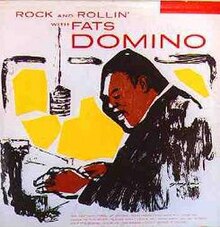
We've heard Bill Haley. Elvis. Fats. We've listened to Little Richard and Jerry Lee. But one key part of the foundation of rock and roll is missing, until now.
It's impossible to overestimate Chuck Berry's impact on rock and roll. When you hear a guitar solo by one of today's rockers, you're hearing Chuck Berry. When a lyricist tells a story and plays with the meter of his lines, you're hearing Chuck Berry.
On the excellent rockumentary about Berry, "Hail Hail Rock And Roll," Chuck talks about the blues music he heard in his neighborhood. But then then he'd go with his father to work in the white neighborhoods, and he'd hear country songs. So he figured out that he could make more more money from his music if he combined the two. He wasn't the first musician to mix blues and country, but he was perhaps the first to mix them so seamlessly. Then he played the horn solos from the swing combos on his guitar, and created a sound unlike anything that came before and that has not left us since.
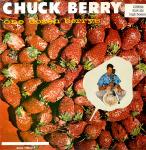
"One Dozen Berrys" is Chuck Berry's second album. Significantly, it was the first to be released in England, where it had a tremendous impact on the up-and-coming British rock and roll scene.
This album contains several hits: "Sweet Little Sixteen," "Oh, Baby Doll," "Reeling & Rocking," and "Rock & Roll Music." But it also shows Berry has a serious musician with blues tunes like the instrumental "Blue Feeling" (and "Low Feeling," the same recording slowed down), the bilingual love song, "La Juanda," and the R&B love song, "How You've Changed." Chuck Berry had ambitions beyond teen dance music, but he also knew what he needed to do to make his money. The result is an album that wears its influences on its sleeves, but also shows how those influences were combined into that unique Chuck Berry sound. "Oh, Baby Doll" is a great example. It has a traditional country rhythm, sped up a bit, with R&B instrumentation behind a story song.
Chuck Berry changed everything.
In addition to being the king of rock and roll guitar, Chuck Berry is one of the great lyricists of all time, moving beyond the usual popular love songs with a kind of folk poetry that is on par with Cole Porter and the Gershwins, but with a straight-from-the-streets twist that makes it so amazingly easy to relate to. It's not just the words that he chose, but also the way he plays with the meter of his lines. I miss that on the many instrumentals on this record (maybe a couple too many), but those instrumentals also show the great musicianship from Chuck Berry and his band, especially his other musical half, pianist Johnnie Johnson, who deserves a bigger share of the credit for Chuck Berry's sound than he is usually given.
One thing that amazes me about Chuck Berry is that, unlike many of the rock and roll pioneers, his best music does not sound dated. A good Chuck Berry song from 1958 is still a good song today. Chuck Berry's music often lacks the trendy, novelty-song feel of so much of early rock and roll.
Brad's Take:
The first time I remember really listening to Chuck Berry was in 7th grade. We had to do a small report on a famous person, and my dad suggested I do it on Chuck Berry so I did. I played a clip of Chuck Berry performing and then read my report to the class. I didn't really listen to Chuck Berry much after that, at least not on my own.
This guy was an amazing performer, which helped him become a classic artist. Like Elvis, Chuck Berry had his own stage moves that people loved to see. On top of just being a great performer in general, he was an amazing guitarist. His guitar playing style stepped up the rock 'n roll game.
One Dozen Berrys has a couple of Chuck's well known songs, including "Sweet Sixteen" and "Rock & Roll Music," as well as some other awesome jams that I have never heard before, like "La Juanda." The lyrics to that song cracked me up for some reason:
I speak only the language of English
I don't understand Espanol
This album is a great record for people wanting to get into Chuck Berry. It's got some hits, some slower songs, and not much filler. If only "My Ding A Ling" was on this one...