Showing posts with label blues. Show all posts

Monday, October 14, 2013

"Led Zeppelin" by Led Zeppelin (January, 1969)


Brad's Take:

Led Zeppelin is a band I've become very familiar with in the last few years. So when I saw that this album was next on our list, I was really excited to dive into it. Led Zeppelin (or as some refer to it: I) contains some of my favorite tracks by the band.

This album was recorded in only about 36 hours, over the course of a few weeks.

The album kicks off with guitarist Jimmy Page and drummer John Bonham having a conversation with each other on their respective instruments on the classic tune "Good Times Bad Times." The song's intro must be one of the most instantly familiar rock intros of all time.

Next up is another great song, and my personal favorite Led Zeppelin jam, "Babe I'm Gonna Leave You." To me, this song encompasses everything that Led Zeppelin is. It starts with beautiful classic-styled acoustic guitar playing by Page with vocalist Robert Plant crooning about (you guessed it) leaving his babe. Then, the song busts into a hard hitting rockin' riff that you can't help but headbang to. The song is almost 7 minutes long, but it could play all day, and I wouldn't even mind.

The fact that this album was Led Zeppelin's debut is very impressive. Right from the beginning of their professional career, these guys were already destined to become a classic household name. It was recorded and mixed in only 36 hours over the span of just a few weeks. A very impressive feat. It contains a whole slew of recognizable hits. The ones I mentioned above as well as "Dazed and Confused" and "Communication Breakdown." Listening to this record feels like a vacation for me. It's pretty much all gold.

Part of what makes this album so great is Jimmy Page's production. There are no points on here that feel sloppy at all. Everything was very well organized and pre-calculated before they even hit the record button. Page knew exactly what he wanted this album to sound like, and he nailed it.

I really only have good things to say about Led Zeppelin's debut. There are songs I like better than others, but there isn't a single note on here that is bad. This is a perfect album to start with if you're wanting to get into the band.

Dad's Take:

It's hard now to think of a time when Led Zeppelin was new, when their first album came out and nobody knew who they were. The members of the band were not complete unknowns. Jimmy Page had kicked around British recording studios for quite some time appearing on several well-known records as a session guitarist, and had joined the Yardbirds not long before Zeppelin's debut. The other members were also busy studio musicians or had been in other local bands of decent reputation.

But there had been no Led Zeppelin.

Then, in April, 1969, that iconic intro to "Good Times, Bad Times," introduced the new band to the world, and the music changed.

On their debut record, Zeppelin moved into the heavy blues rock world of Hendrix, Mayall, Butterfield, the Yardbirds, Cream, and others who had come before, but it's sometimes hard to recognize today that they came in with a fresh, new take on what was by then a common genre. It wasn't a new style of music, but the interpretation and presentation and reimagining of what had come before them resulted in something that was, and remains, absolutely unique.

Songs like "Babe, I'm Gonna Leave You" fit perfectly with the psychedelic-infused blues of those other bands. If you were a fan of other heavy blues rock bands of the day, much of this album would have felt comfortable and familiar. But then songs like "Communication Breakdown" would have made you sit up and realize that this was something fresh, and these guys were something special. Critics weren't crazy about the album, but rock fans ate it up, and it became even bigger as people discovered their subsequent albums and looked back to the band's beginnings.

This is a difficult album to write about, because so much has been said about it. But an album with the songs I've mentioned already, plus "Dazed and Confused" and "Communication Breakdown" couldn't become anything but an instant classic.

Every song, thanks to Page, Plant, Bonham, and Jones' impeccable playing and singing (and, no doubt, thanks to almost 45 years of frequent play) is now familiar and classic. You might not be as familiar with"You Shook Me" or "Your Time Is Gonna Come,"  but you'll immediately recognize them.

What I like best about this album is how firmly blues-based it is. Everything that Led Zeppelin added to the blues to create their unique sound is here, but it's wrapped tightly around the blues. For example, the album's closer, "How Many More Times," is at its root a basic blues tune, but by the time Led Zeppelin is done with it, it's something much more, something unusual that transcends the blues and psychedelia and anything that had been heard before. Sure, you could hear the influence of bands like Cream and The Jimi Hendrix Experience, but this was no copy-cat band.

I don't want to write any more. I just want to listen. Many records are called great, but this one truly deserves that over-used adjective. It builds on what had come before, but there had never been anything like it, and all imitators since then have fallen short. This is an iconic, classic album.

Saturday, March 31, 2012

"Surrealistic Pillow" by Jefferson Airplane (March, 1967)

Dad's Take:

This is Jefferson Airplane's second album, but it's the first after the band was joined by drummer Spencer Dryden and vocalist Grace Slick, one of the sixties' most recognizable voices. It is also the first major success to come out of the San Francisco counter-culture scene.

The album's first track, "She Has Funny Cars," makes a good opener, but the record doesn't get going until the second song, "Somebody To Love," which gets my vote for one of the greatest rock and roll singles ever. I love that song. Paired with side two's "White Rabbit," "Somebody To Love" cements Grace Slick's reputation as an icon.

Almost everything about this song is first rate. A driving rhythm section, amazing vocals, great guitar work, hippy lyrics, and an overall upbeat counter cultural feel opened the floodgates for other bands from San Francisco. Together with LA bands like The Byrds and The Mamas and Papas, this music invited the peace and love crowd to come to San Francisco for a summer of love, with the intersection of Haight and Ashbury streets and ground zero. That area eventually became a sad disaster zone, but for one short period, it was something beautiful.

"Somebody To Love" and "White Rabbit" aren't all this album has to offer, although they'd be enough. I've always had a tender spot for "Today," with it's great lead vocal by Marty Balin. Jorma Kaukonen's guitar work on "Embryonic Journey" is a classic of acoustic psychedelia. And I also really enjoy Balin's "Plastic Fantastic Lover." "Comin' Back To Me" also has a marijuana-fueled beauty that shows off the band's softer side. Grace Slick gets most of the attention--and deserves it--but Marty Balin's vocals are also a major part of the band's sound, a psychedelic instrument in their own right. "3/5 of a Mile in 10 Seconds" is a another great example of the Airplane's sound, every bit as good as the record's pair of massive hits.

The version I have of this album includes several bonus tracks. Although we've tried to stick pretty much to reviewing the albums in their original form, I can't help commenting on the great blues track, Kaukonen's "In The Morning." (Brad will love the re-emergence of his favorite instrument.) The song just plain rocks. Sure, it doesn't exactly fit the sound of the album, which is probably why it was left off, but MAN! what a great tune. Same with the Paul Kantner rocker "Go To Her." There are two more bonus songs (and an instrumental hidden track), plus mono single versions of "Somebody To Love" and "White Rabbit." In this case, the bonus tracks really do enhance the original record. It doesn't always work that way.

I don't listen to this album enough. Whenever I do, I'm reminded just how great it is. There's really nothing here I don't like. It takes the LA folk rock and adds a generous twist of San Francisco's counter-culture (ahem) "fog," and the result is one of the best albums of the sixties.

Brad's Take:


Going into this album, I felt a bit pessimistic. 60s hippy rock music isn't typically my favorite, but by the third track, I was feeling pretty good about it! There's something about Surrealistic Pillow that is different than other albums of the same era/genre. It's got nice equal doses of just about everything from the era, and I like that. It's not overwhelmingly hippie-ish, but it's also not just a 60's rock record.

There were only a couple songs that I didn't really like as much as others, but to me, that's really surprising. Even the slow folky songs like "Comin' Back to Me" were interesting to me. Maybe it was because of "spiritual leader's" Jerry Garcia's fancy guitar playing. If it's even him. There's controversy about if Jerry Garcia contributed to this album at all. Garcia apparently even suggested the album title, but who knows. I'll need to research that stuff a little more.

But all in all, I was pleasantly surprised by my enjoyment of this album. It's got everything from folky acoustic tracks to fast rockin' songs to blues jams. I'd say this album encompasses the 60's perfectly. It makes me dislike the 60's a little bit less.

Thursday, March 22, 2012

"The Doors" by The Doors (January, 1967)

Dad's Take:

1967 opened with The Doors breaking through to the other side, the first classic album in a year full of experimentation, rule-breaking, psychedelia, and the summer of love. This would be a year dominated by Los Angeles and San Francisco, although the UK and other places would make their presence known.

Say what you will about Jim Morrison not having much of a voice, he had a power and a way of presenting a song. Over confident, swaggering, bigger than life. Whether stoned, angry (and probably still stoned), or whatever, his was the right voice for the drugged-out world of '67, especially when mixed with enough electric organ.

The Doors is one of those records that demands your attention. It's hard to do something other than listen. This is commanding music. There are the singles ("Break On Through (To the Other Side)" and the number one smash, "Light My Fire"), of course, but many of the other songs on the album have become bonafide classics. This is the era, remember, when albums had become more important than singles, at least for those artists who wanted to transcend pop. Songs became too long for the radio. The 7:06 "Light My Fire" was shortened considerably for AM radio play, with the long instrumental break and organ solo becoming the main casualty of the need to play more commercials. The Doors is truly a classic album, not just a collection of great songs but a coherent (well, mostly, I guess depending on your definition of "coherent") whole with a sound of its own.

If you know The Doors from their songs but not their albums, you'll be surprised how much of this record you know, even if you don't recognize the song titles. The album has become a cultural artifact, an icon of its time, the model of the heavier side of the year that gave us the Summer of Love with its sparkly psychedelic pop and folk rock. Unlike some of the music of that "heady" time, The Doors still holds up as something more than nostalgic. It really is a great album, the kind that you can even recognize as great if you don't really care for it personally. I happen to like it, even if The Doors don't rank as one of my favorite bands. This is just great music, with undeniable power.

Brad's Take:

The Doors are the epitome of a drugged out 60s rock band. This band was made for Woodstock, fuzzy posters, and black lights. This kind of music is totally outside of my comfort zone, but I liked it for what it is.

This album has a bit of everything from the era. Including, but not limited to: blues influenced rockin' singles, slow songs to sway to in a weird drug-induced manner, long guitar solo/jammy parts, experimental moments, lots of organ, and a shirtless front man for the sober people to drool over.

Jim Morrison had a great voice, and the instrumentation on this album is great. I really only liked a small handful of songs from this album though. "Break On Through (To The Other Side)," "Soul Kitchen," and "Back Door Man" were the only songs that really kept my attention and had me excited. The others just didn't grab me as much.

Friday, March 2, 2012

"John Mayall Blues Breakers with Eric Clapton" by John Mayall and the Blues Breakers, July 1966

Dad's Take:

Classic blues, mid-sixties style. As the sixties moved into its second half, blues music began to mix with psychedelia, permeating the airwaves with a sound both familiar and new. To help usher in this new sound, John Mayall's Bluesbreakers would, in its early years, include not only Eric Clapton and Jack Bruce, who are featured on this record, but future Fleetwood Mac members Peter Green and John McVie, future Rolling Stone Mick Taylor, three members of Canned Heat, Aynsley Dunbar, and several other well-known names.

The lineup for this record, nicknamed "The Beano Album," featured Mayall, Clapton, and McVie, plus Hughie Flint on drums. The result is one of the legendary blues records of the sixties, a groundbreaking effort that also started the trend of playing a Gibson Les Paul guitar through an overdriven Marshall Bluesbreaker amp, helping to define the heavy rock sound of the late sixties and seventies.

Clapton's guitar work is all over this album, which is as much a showcase for his playing as anything else. But it also features his first recorded solo vocal, on Robert Johnson's classic "Ramblin on My Mind."

If you enjoy sixties style blues rockers, you need to have this album. The playing is solid, crunch without sounding overly shiny or corporate. This is the sound that paved the way for Hendrix, MC5, Led Zeppelin, and other blues-based rock with a hard edge. Made up mostly of blues standards with a few originals mixed in, this is a fine example of the trend to create album-oriented music that was not about collecting hit singles. There are not really any songs that stand out on their own, but the sound of the entire album is what makes it so great. It hit number six on the UK album charts but was not immediately well-known in the U.S. It is most important now for the influence it had on people like Hendrix, Jimmy Page, and Brian May, and on the future sound of rock.

Brad's Take:


I enjoy when we get to listen to these records that I've never heard of before. I, of course, knew of Eric Clapton, but everything about this particular album was new to me.

First off, Clapton's guitar playing is awesome. But can you really expect anything less than that from him? The dude rules at guitar. There's no doubt about that. Song after song, the guitar solos are fantastic.

The album isn't much different than previous blues records from the 60s, but, like my dad mentioned, it was a little bit heavier in the rock genre than just straight up bluesy. I can really hear where Jimmy Page got some of his influence from. The song "What'd I Say" has a really long (but totally awesome) drum solo by Hughie Flint that John Bonham probably approved of, too.

Overall, this is just a great blues rock record. The opening track, "All Your Love," was probably my favorite song from the album. It's a lot heavier than most blues songs you hear, and I thought it was really good. It's definitely one I will go back to and put on my next mix CD for my car.

Sunday, January 22, 2012

"The Paul Butterfield Blues Band" by The Paul Butterfield Blues Band (October 1965)


Dad's Take:

The mid-sixties is when the white boys learned to play the blues, and this band was among the best. In fact, when Dylan shocked the crowd by going electric at Newport, he was backed by members of The Paul Butterfield Blues Band, only without Butterfield himself.

It was bands like this who set the stage for much of the blues-based music of the late sixties and seventies, influencing CCR, Led Zeppelin, the Yardbirds, the Doors, and the rest. It's hard to believe this album was made in 1965. I would guess '68 or '69 by the style and the sound.

The Paul Butterfield Band's highly electrified version of Chicago blues led this album to place (although barely) on Rolling Stone's list of the 500 greatest albums. It's also #11 on Down Beat Magazine's list of the fifty best blues albums.

It's an excellent album, full of rocking tunes from beginning to end. Standout tracks, for me, include "I Got My Mojo Working," the ironically titled "Mellow Down Easy," "Our Love Is Drifting," and "Mystery Train," but the other tracks are just as good.

With this album, The Paul Butterfield Blues Band takes rock and roll back to its roots but with a very modern feel, at a time when the studio was taking over popular music. The Beatles and Brian Wilson and Phil Spector were creating shiny, ever-more-elaborate productions with a somewhat corporate feel. This album returns to the crunchy jams of an earlier age, with the electrified sound of the sixties.

It works for me.

Brad's Take:


I think Paul Butterfield forgot his birth year during the recording of this album. In the opening song "Born In Chicago," he sing "I was born in Chicago in 1941," but apparently he was actually born in 1942, when I was reading about the man and his blues band. Maybe he just wished he was older for some reason. Aside from that small technicality, I enjoyed the album.

It has fast paced energy that James Brown could have danced to, and it has cool guitar solos that would have gotten a thumbs up from Jimi Hendrix. Apparently this album was recorded 3 different times before their record label, Elektra Records, was finally happy with it. I'm glad this version of the album was approved because it's a good, solid blues rock record.

Like my dad stated, it sounds like this album should have been released a couple years later., but maybe they decided to change the release date to make it seem older too, wink wink!

Thursday, January 19, 2012

"Highway 61 Revisited" by Bob Dylan (August, 1965)

Dad's Take:

Poor widdo Bwadley has to listen to another Dylan album already. Poor guy. This one is listed at number 4 on Rolling Stone's 500 Greatest Albums list, and its big single, "Like A Rolling Stone," is number one on their list of greatest songs. In other words, This will be pure torture for Brad. He's really going to be thrilled that the songs are so long on this record. But this album is a classic with a capital C. Even outtakes from this record like "Can You Please Crawl Out Your Window?" are great.

OK, so for Rolling Stone to pick a song called "Like A Rolling Stone" seems like it could have more behind it than simply liking the song, but seriously, it's hard to argue that choice. This song is a tour de force, unlike anything by anyone else (except maybe a few other Dylan tunes). It's spectacular. If it were the only decent song on this album, the album would be a classic.

But it's not.

Song after song is a gem. After "Like A Rolling Stone," we're treated to "Tombstone Blues," with its brilliant fast blues groove and its tribute to Woody Guthrie in the chorus. The lyrics are playful and poetic. This is a song that takes multiple listens before it all sinks in, but it's better with ever listen, and not so bad on the first one. Six minutes of near perfection, from the lyrics to the crunchy guitar. Next comes the piano-based blues of "It Takes A Lot To Laugh, It Takes A Train To Cry," with its train-whistle harmonica (oh, Brad's gonna love that!) and easy, shuffling blues rhythm.

This album is song after song of highlights. More favorites for me include "From a Buick 6," and "Ballad of a Thin Man" and and "Queen Jane Approximately," and the title track, and "Just Like Tom Thumb's Blues" (again, incredible lyrics, set to a cool song), and "Desolation Row," and --wait, I just mentioned every song on the album.

Perfection on vinyl. Or whatever CDs are made of. This is Dylan at his bluesy best, showing that there's more to Zimmy than a folk star. He's reinvented himself so many times, but this is the Dylan phase I like best. People Who Don't Know won't expect these words, but they're true: Dylan rawks! My favorite Dylan album is yet to come on our list, but this is awfully close.

Have fun, Braddio. Me, I'm spinning this one again, a little louder this time.

(Just a note about influence: watch what happened to rock and roll after these last couple Dylan albums. Dylan's direct influence is clear: the popular music of the day moved from typical songs about love to deeper songs with a more poetic and personal lyrical content. Thanks to Dylan, the Beatles (for one) moved from "I want to hold your hand yeah yeah" to "Doesn't have a point of view, knows not where he's going to, isn't he a bit like you and me?" And where Dylan took the Beatles, the rest of the serious music scene followed. Sure, there was still plenty of moon/June/hand/understand on the radio, but most of the more substantial artists moved beyond that, and the music world changed. Thank you, Mr. Dylan!)

Brad's Take:


Here we go...

On Bob Dylan's previous album, Bringing It All Back Home, he made Side A the electric/bluesy side, and Side B consisted of acoustic driven songs. Ol' Bobby decided to take it even a step further on Highway 61 Revisited though, and decided to make almost the entire album electric, much to the dismay of his long time fans; the ones who began to love him when he was just playing acoustically. I, personally, much prefer his electric stuff. It's easier for me to listen to because there's a lot more going on. (Dad, are you proud yet?)

The album opens with the lead single "Like A Rolling Stone." I, of course, have heard this song a few times before, but I never actually listened to it until now. It's definitely a song I can listen to many more times. I was surprised with how much I actually liked it. (How 'bout now, Dad?)

A few songs later, and I found myself really digging this album. It's upbeat and bluesy, and Bob's voice isn't as irritating on this album. (Or maybe I'm just used to it now.) But then about halfway into "Ballad Of A Thin Man," I started to feel the urge to skip to the next track, in hopes that the album wasn't actually starting to go downhill, like it felt like it was. I got through the whole song though, and then regained some faith as "Queen Jane Approximately" played, although not completely. (Sorry, Dad.)

It's safe to say that I really enjoyed the first half of Highway 61 Revisited the most, while the second half felt like just another Bob Dylan album to me, for whatever reason. "Just Like Tom Thumb's Blues" was enjoyable though. It should have been in the first half, as Side B feels to be the mellower side.

In the end, I did not dislike this album. In fact, I enjoyed the majority of it. "Like A Rolling Stone" was definitely my favorite song off of it. I got a bit bored with the second half of the album, but that might be mainly because the entire 9 song album is 51 minutes long. It was a struggle to get through it, but I did it without really suffering. It was a good album. (Now are you proud, Dad??)

Tuesday, January 3, 2012

"Folk Singer" by Muddy Waters (April, 1964)


Brad's Take:


Now this is folk music I can get behind! Although I'd give it the "blues" title before I called it folk, it was deemed as "folk" because of it being stripped down and acoustic.

This is the first time I've ever really given Muddy Waters a real solid listen, and I have to say, I am loving it! His soulful, powerful, low voice is so awesome. His voice just rumbles from your speakers while he and the great Buddy Guy jam delicate but intricate acoustic guitar phrases back and forth to a snails drum beat.

I only got halfway through the second song before I told myself that I loved this album. Every song is soooo good! I feel like I'm watching Muddy and Buddy play together in a tiny little coffee shop where all they have enough room for is their acoustic guitars.

I don't think I can say enough good things about this album. It's totally hitting the spot for me right now. If you want mellow, acoustic, powerful blues music, pick this up right now. But be warned: You won't be able to put it down.

Dad's Take:

This is to folk music what the Ray Charles album we reviewed earlier is to country, only unlike Ray, who gave his soulful sound to country classics, Waters is playing straight-up blues, the way it had been played in the old days. All I can think is that a record company exec thought they needed a title that would cash in on the folk craze, maybe because of the crossover succes Ray Charles had enjoyed with his record. No matter what the title claims, this is a blues classic. It's a beautiful thing.

One thing about these old-school blues guys: they could deliver powerful songs without the pyrotechnics of electronic instruments, effects, and amps that go up to 11. Muddy and Buddy and the rest of their supergroup (Muddy Waters, Buddy Guy, Willie Dixon, and Clifton James on one record? Really?) performing under Muddy's name deliver powerful blues moments in every song.

As the boy said in his take, this is a great album that can't be put down. When it's over, you'll want to go back and start it again.

Sunday, December 4, 2011

"The Sound Of Fury" by Billy Fury (May, 1960)


Brad's Take:


I'd never heard of Billy Fury before this so I was curious to hear his debut album, "The Sound Of Fury." As soon as I hit play, I immediately thought, "I didn't know Elvis impersonators actually got record deals..."

After doing a little bit of research, I discovered that he kind of was Elvis, but the UK's version of Elvis. His vocal styling and energy is almost identical, and he even dressed and moved like The King.

On "Turn My Back On You," Billy Fury does his best Buddy Holly impression by doing the stuttering vocal style that Buddy was well known for.

Since our book is from the UK, it makes sense for Billy Fury to be in it. The UK needed an Elvis and a Buddy Holly so this kid probably made lots of people (especially girls) happy until the real came over from the states.

Putting the similarities to other artists aside, Buddy, I mean Billy Fury nailed it on this album. He stuck to the same blues/rock/country formula that was popular in the US and brought it to the UK, and he succeeded. His voice and energy were great, and he was a good looking guy. I'm sure the English girls swooned over him all day and night. It's not a surprise that a life size bronze statue of him (doing an Elvis impression) was eventually built in Liverpool in his honor in 2003.

Dad's Take:

This is one of a few British-only releases on our list. It's a British book, so that's to be expected. It's also interesting, because it ensures that we'll hear some albums that we've never heard, but that influenced the great British bands. Billy Fury, as an early leader in the Liverpool rock and roll scene, undoubtedly played a more important role than we Yanks are likely to recognize. Interestingly, according to one source, one group that auditioned to be Fury's band was a little band called the Silver Beetles. They were turned down when they refused to fire their bass player, Stuart Sutcliffe, thus missing out on a £20 per week job.

If you listen to very much 1950's rockabilly, you'll hear a number of Elvis imitators of varying quality. Billy Fury is actually pretty good. The songs are good, and the performances are strong. As Brad mentioned, you hear the obvious influence of people like Elvis and Buddy Holly, as well as Carl Perkins and other rockabilly greats, especially Eddie Cochran.

Fury had the chops to pull off some really good rockabilly, as well as the voice for ballads. He didn't have quite the same energy level as Elvis or Buddy. His music isn't especially original, but he was one of the early architects of British rock and roll, and as such deserves a spot on our list.

Bottom line, though, is that it's just a fun record. Songs like "Don't Say It's Over," "That's Love," and several others on this record deserve to be better known stateside. I found "Since You've Been Gone" with its bizarre tempo changes and stuttering "baby baby baby" delivery to be especially interesting. It's not the best song on the record, but it's unusual and fun in its weirdness. If you like good old rock and roll, and especially rockabilly, look for this record. It's good stuff if you like this kind of thing. And I do.

Sunday, November 20, 2011

"It's Everly Time," by The Everly Brothers (April, 1960)

Dad's Take:

The Everlys' country-flavored harmony pop is one of the signature sounds of the period. By the time this album came out, many of their biggest hits were behind them, but they put together a solid record. The Everlys helped to fill the void in rock and roll music in the time after Buddy Holly died and Elvis went into the Army, and the onslaught of the Brits. They were a huge influence on later harmony groups like Simon and Garfunkel, the Beach Boys, the Beatles, the Bee Gees, and the Hollies.

The best-known song in this set is the opener, "So Sad (To Watch Good Love Go Bad)." Other songs sound familiar, though, because the Everlys never stray far from what you expect of them. I would have liked to see them welcome the sixties by trying something new on a song or two, but I can't complain about an album that is everything I expect from Phil and Don: some light rock and roll, country, easy ballads, and even a touch of country blues.

Not every song is a hit, but every song is a quality recording. It's a good, strong album.

Brad's Take:


I've listened to The Everly Brothers many times growing up, but never have listened to a full Everly Brothers album. At least not knowingly. But after listening to this one, I want to get all of their stuff and check them out.

I love the super catchy country pop sound they have on "So Sad (To Watch Good Love Go Bad)," I love the slow songs like "Sleepless Nights" and I love the blues influenced style they had on "What Kind Of Girl Are You?" Each song sounds like The Everly Brothers, but the album has a nice variety of styles so it isn't monotonous at all.

It's just a great and solid fun record. 

Saturday, November 12, 2011

Sam Cooke, by Sam Cooke (March, 1958)


Brad's Take:

Sam Cooke's self titled solo debut was originally released in the US in 1957, but our book lists the UK release date of 1958.

Sam Cooke started out singing lead vocals in the gospel group The Soul Stirrers. It wasn't until 1956 that he wanted to try crossing over to pop music. In those days, it was frowned upon for nice gospel boys to sing pop music. In order to not be chastised, he released his first pop single "Lovable" under the alias Dale Cook, but his voice was too recognizable and it didn't actually trick anyone.

This album is definitely worthy of the "classic" title. His voice really makes these songs amazing. I love his voice's tone and powerful it sounds at times. He sounds young and excited to be doing something different than gospel music.

The orchestration from Bumps Blackwell is near perfect as well. It doesn't sound much different than the other blues influenced pop albums at the time, but Bumps pulled it off very well. I'm sure that working with Little Richard a lot in his early days helped perfect his skills too.

Most of the songs on this album are slow to mid-tempo, but it's a really nice laid back record. I'll definitely give this more than one spins.

Dad's Take:

This album sends me. OK, cheap joke, but I couldn't resist. Plus it's true.

There's a lot here I've never heard, or at least that I haven't heard from Sam Cooke. Most of the songs are pop standards, but the Sam Cooke treatment works well. The R&B fusion with jazz and gospel works for me, and Cooke's voice is always flawless, even when matched with the wrong song. Cooke himself was reportedly unhappy with the song selection, which he deemed inappropriate, but he recorded them well anyway. He makes it sound so easy. There are a couple songs I could live without ever hearing again, but overall, it's a solid record.

Several of these fifties records make me look forward to music becoming more album-oriented a few years down our list. Sometimes the filler is a little too obvious. This album feels more complete than, say, the Jerry Lee Lewis record we reviewed recently, but it's definitely a collection of songs rather than a unified album.

But you can't really knock an album for being put together the way it was done back in those days. The important thing here is that Sam Cooke could sing, and the instrumental arrangements are good, even if nothing breaks new ground here. The song selection is satisfying, for the most part. The oddest choices are probably "Danny Boy" (Sam Cooke just doesn't sound all that Irish, and the R&B treatment is unintentionally funny) and "Tammy," which is just kind of a dorky song, written for a teen girl singer.

This is one of those records a kid could listen to when his parents were home, without freaking them out. But then, it has a number of songs that the parents would have known. Fortunately, they are done well.

Good record. Mostly.

Tuesday, November 1, 2011

Elvis, by Elvis Presley (October, 1956)


Dad's Take:

By the time Elvis Presley released his second RCA album in October 1956, he was able to release it under his first name only. He had had the smash hit of the summer with both sides of the "Don't Be Cruel"/"Hound Dog" single. Riding on the success of that single, went back into the studio for three days in September, and the result topped the charts for four weeks, despite containing only one hit, "Love Me," which hit #2 on the Billboard Pop Singles chart (as well as #7 on the Black Singles chart and #10 on the Country Singles chart). The other two singles, "Old Shep" and "Paralyzed" failed to reach the top 40.

Elvis was now a bona fide star, and this album shows him performing with much more confidence and energy than he had on Elvis Presley earlier in the year. "Rip It Up" is an energetic opener, one of three Little Richard covers on the record. Elvis's "Ready Teddy," on the other hand, is just plain kick-but rock and roll, thanks in no small part to a killer instrumental break. Add the three Little Richard covers to the one on his first album and you add significant fuel to Little Richard's claim to be the "architect of rock and roll." "Rip It Up" falls a little short of Little Richard's maniacal energy and you can understand the words (which takes some of the fun out of it), but it's a strong opener and sets the mood that permeates this album.

I've heard a lot of Elvis over the years, but most of these songs are new to me, because they weren't hits. That they weren't is a surprise. For the first time, we get an album full of songs with the signature Elvis sound. By 1957 almost every song on this album would probably have made an assault on the top of the charts, but now they can almost be considered obscure to anybody but big Elvis Fans.

A favorite that I don't remember hearing before, but that I'll be listening to again (and again, and again) is "So Glad You're Mine." This song is as Elvisy as "Heartbreak Hotel," but not nearly as well known, with a rocking bar room beat and some heavy guitar and piano, and fun lyrics that stick in my head, like:

My baby's long and tall
Shaped like a cannon ball

Say every time she loves me

Lord you can hear me squall

She cried "ooo weee"

I believe I changed my mind

She said, "I'm so glad I'm livin'
"
I cried, "I'm so glad you're mine"

I had to listen three times before I could move on, something that hasn't happened yet while listening to the records for this review. Even unadulterated cheese like "Old Shep," an old-style country weeper that won Elvis 2nd place at a fair in Tupelo when he was ten, can't spoil the fun of this record. If Elvis Presley is Elvis before he was The King, Elvis is his coronation party.

Brad's Take:


This album kicks off with quite the punch. "Rip It Up" truly rips it up right from the start. I wish the whole album was like that song. It's just a tease though because the second song is as slow as Elvis gets. I wish they had moved "Love Me" down in the tracklist, but oh well.

This album is a lot like Elvis' debut. It's a roller coaster. Fast paced classics with ballads randomly thrown in here and there. He, of course, has the voice to pull off everything he did, but I prefer fast rockin Elvis to slow-dancing Elvis. I was loving the fast paced songs and getting impatient with the slow ones, in hopes that the next song was another rockin' jam. "Rip It Up", "Long Tall Sally" were early favorites, but that guitar work in "So Glad You're Mine" is a lot of fun.

Another thing that I loved right from the moment it happened was the way that "When My Blue Moon Turns To Gold Again" flowed into "Long Tall Sally." It's almost seamless. I love when tracks flow so smoothly with each other.

Whether it was a fast song or a slow song, The King nailed it. They got some golden takes in just the 3 days that it took to record this record. Without all the fancy technology we have these days, it's clear that Elvis, his band, and the producer had great talent.

I think it's time for me to make an Elvis mix CD with all of the up-tempo songs from his first two albums...

Friday, October 21, 2011

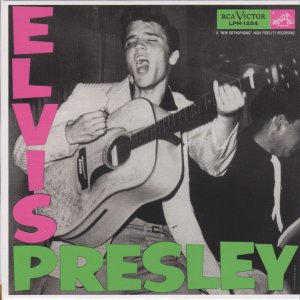
Elvis Presley, by Elvis Presley (March, 1956)

Brad's Take:
This album was an important one for its generation and generations to come. It was the first rock and roll album to ever reach #1 on the Billboard Top Pop Albums charts and it was the first album to ever make one million dollars and sell one million copies. That's definitely impressive, especially for the time it was released.

It's hard to review the debut album by an artist like this because he became such an important musical icon after this was released. He became the king of rock and roll, for crying out loud! Whether you like him or not, everyone has done an Elvis impression at one point in their lives, and everyone knows at least one Elvis song. But all those facts aside, I'll review this for what it is more than what it became...

Elvis Presley's self titled debut album sounds a lot like what was already popular in the 50's. It's not much different than Bill Haley's album that we reviewed before this one. These recordings sound cleaner though and the mixes sound a bit better. This album sounds a little different to me though. I think this is a good representation of what was to come from pop acts following Elvis' success. Before, it didn't really matter what you sounded or looked like as long as the music was fast and something the kids could dance to, but it feels like this album was more focused on the King's vocals rather than the overall general feel of the music.

Sometimes in the older rock and roll records, the vocals were pushed to the back or middle of the mixes so the piano or guitar would shine more, or equally. Elvis' vocals on this album are pushed a lot more to the front though. They're louder and cleaner sounding than the music is, like they really wanted his voice to shine and be the selling point. Elvis' voice sounds great on this album, but sometimes the instrumentation seems a little too bare and empty, but I think they meant for it to be that way. His vocals were more important than the music was, and they wanted them to really stand out and almost be on their own.

As an album though, I'd say that these are its ingredients:

1/4 cup of solid radio hits
1/4 cup of great non-hit songs
1/4 cup of semi-boring ballads
1/4 cup of filler songs

Dad's Take:

I think to fully appreciate this album, you have step back in time. You have to remember, Elvis was not yet The King. He was a little-known 21-year-old kid from Tupelo, with good looks, a good voice, and a style that was just a little bit different than similar artists. Few people knew him, and the RCA record company went on a hunch, based on the very modest performance of his Sun releases.

At RCA, Elvis moved firmly into the new rock 'n' roll, without leaving behind his country and southern blues roots. Rockabilly was hot, and it was genre that fit Elvis very well. This first RCA album isn't all that different than a lot of old rockabilly records, but Elvis obviously had something special that drew the kids to him, and his album became a much bigger hit than RCA had probably anticipated.

It's not really a great album, although it has a few great songs. Much of the album consists of covers of recent hits by others, recordings that Sun didn't think were good enough to release. Some of those, like Elvis's versions of "Tutti Frutti" and "Blue Moon," pale in comparison to the popular versions. In fact, "Blue Moon" teeters on the edge of unintentional comedy. But this album deserves the "classic" label because this is the greatest force in rock and roll history on the verge of greatness. He's often a little restrained, and the quality of many of the recordings show that nobody was ready to throw more money in his direction than was safe. The $40,000 to transfer Elvis and his recordings to RCA was a big enough risk. So they did enough to give them hope of recovering their investment, but they didn't do what they'd do for him when he became a sure thing.

Looking back on it as we are, all the elements that made Elvis The King are there. The energy (although he holds back a little more than he would very soon), the style, the passion. It's easy to see through the flaws and find The King.

My favorite thing about this album is that it's Elvis without the gloss and pressure of superstardom. This is raw Elvis, pure Elvis, without baggage. It's easy to have as much fun as he was.


Monday, October 17, 2011

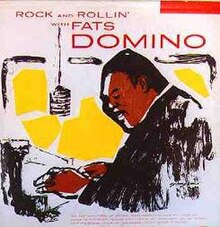
Rock And Rollin' With Fats Domino, by Fats Domino (November, 1955)


Dad's Take

You said your arms are empty
And your eyes, full of tears
Haven't had no lovin'
For so many years
Don't blame it on me
I'm not guilty, can't you see?
Don't blame it on me
I'm the same cat I used to be


Fats Domino's classic New Orleans sounds predates rock 'n' roll. He had been playing the same style of music since 1949. In fact, some of the tracks on this album date back to that year, including the first song, "The Fat Man." That was the sound that became rock 'n' roll, and Domino was one of the pioneers.

Like much "race" music of the day, Domino's songs are crudely recorded, with a single microphone in the studio and the music played live through primitive equipment. But the result is a cool old-school blues sound, with Domino's smooth singing and bangin' piano triplets playing over a heavy backbeat, inviting young fans of the emerging rock 'n' roll to do dances like the stroll.

Most of the songs have classic blues themes, like heartache and broken relationships, played by a simple combo of piano, drums and guitar. Add a stand-up bass and a tenor sax and you have the recipe that changed popular music. Fats had a definite sound and he stuck to it, and he was copied by most other early rock 'n' rollers over the next few years.

The big hit here is "Ain't That A Shame," which became an even bigger hit for Pat Boone, who had an easier time getting airplay on white radio. It's hard to believe now that the three pioneers of rock, Fats Domino, Little Richard, and Chuck Berry had a total of zero number one hits, until Berry hit the top of the chart with his 1973 novelty song, "My Ding-A-Ling."

"Rock and Rollin' with Fats Domino" was his first album, and was one of the first of rock 'n' roll. In the 56 years since it was initally released as "Carry On Rockin'" very few people have done it better. This is an album full of Fats Domino rockers that you won't hear on the 1950's compilations. You should seek this one out and put it in regular rotation. It's an amazing record, not just for its day but for the entire rock and roll era.

Brad's Take:

This is my first time listening to a full Fats Domino album. I know that I've definitely heard "Ain't That A Shame" played in our house many times before though, but I didn't know that was actually a Fats Domino song until now.

I love the fact that it was all recorded live with just a single microphone in the studio. This is the kind of music that I have always felt would be the best experienced in a live setting so this helps show me what it would have sounded like if I was a 50s era Brad.

The instrumentation at times is pretty sloppy, but it almost had to be. Bands back then probably couldn't afford much when it came to recording in a professional studio, so they probably had only a few hours to record the album. I've recorded hundreds of songs on my own, and I know that it's almost impossible to get a perfect recording on just a one-take recording, especially with an entire band playing on the same track. Also, with this style of recording, they would have had to mix all of their instruments through their actual amplifiers and by standing in different areas of the room, rather than just moving the slider on the soundboard up and down. The quality of this album isn't good by today's standards, but it's as good as they could get at the time, and that is really interesting and cool to me.

This is an album I can see myself putting on again when I'm feeling like listening to something classy and fun. When I'm in these kinds of moods though, they typically don't last for very long so the fact that there aren't any songs over 3 minutes long makes this an album that is very easy and enjoyable to listen to.