Showing posts with label psychedelic. Show all posts

Wednesday, November 13, 2013

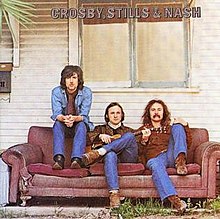
"Crosby, Stills, and Nash" by Crosby, Stills, and Nash (May, 1969)


Brad's Take:

The debut album from the power trio Crosby, Still, and Nash deserves the "Classic" title. It's a great blend of everything that was popular in the late 60s; folk, pop, and bluesy jam rock. The album's Wikipedia page puts it best: "Not only blending voices, the three meshed their differing strengths, Crosby for social commentary and atmospheric mood pieces, Stills for his diverse musical skills and for folding folk and country elements subtly into complex rock structures, and Nash for his radio-friendly pop melodies, to create an amalgam of broad appeal."

In the first track, "Suite: Judy Blue Eyes," it sets up the listener perfectly for what to expect from the album as a whole. Great finger-picking guitar work, beautiful three-part harmonies, and catchy melodies. The "doo doo doo" part at the end of this song will be stuck in my head the rest of the day, at least. Some of the songs on here even remind me of the style the Kingston Trio was doing back in their heyday.

There are a few snoozers on here, but the album has some really great songs on it. "Judy Blue Eyes" and  "Pre-Road Downs", which is a song that I will definitely go back to down the road. (No pun intended.) That song is a lot of fun.

For a debut, it's no wonder that it did so immediately well. They hit the nail on the head with what they were trying to accomplish. And really, they were pretty genius by combining all of the popular styles at the time, getting the attention of a much larger spectrum of listeners. There was something for everyone. I think the album still holds up even today.

Dad's Take

Crosby Stills & Nash might not have been the first supergroup, but they were one of the first that blended so well that you almost forget they were with great bands before they got together. David Crosby of the Byrds, Stephen Stills of Buffalo Springfield, and Graham Nash of the Hollies blended their strengths perfectly to create arguably the greatest debut album ever.

This album is classic in every sense. Hugely popular, it was also a major influence. It’s not stretching the truth to say it changed the popular music scene by ushering in the change from heavy blues-based rock (although they certainly don’t leave that behind) to a softer hippy sound that helped open the door for the singer-songwriters of the first half of the seventies. But it’s also just a pure joy to listen to, and the more you listen, the deeper it gets vocally and musically.

This record is so familiar that it’s almost like reviewing a greatest hits package.It’s been a while since I’ve really gushed over one of the albums on our list, but this one deserves a song-by-song treatment.

The album’s opener, “Suite: Judy Blue Eyes,” the group’s second single, may be the best opening track on a debut album ever. It says, “Hey, we’re a supergroup and a super group and we’re awesome, so deal with us.” Great harmonies, a brilliant song structure and, as Brad mentioned, some of the catchiest bits of vocal magic you’re likely to find anywhere. This song is hard to beat.

Next up is their first single, “Marrakesh Express,” which brilliantly shows off Graham Nash’s pop capabilities.The highlight of this irresistible song is the train-whistle-like “All on board the train” vocal line.

“Guinnevere” is pure heaven on record. A spectacular piece of gorgeous atmospheric beauty, this song has become a classic.

“You Don’t Have To Cry” is a very good song that suffers a little from having to follow the previous three songs. It showcases Stephen Stills’ songwriting skills and how well his voice blends with Graham Nash’s singing.

“Pre-Road Downs” is one of the least-known songs on this record, but this doesn’t mean this Graham Nash song is weak by any means. This is psychedelic music all grown up and mellowed. Instead of banging the listener over the head, the guitar and other psychedelic touches create a thing of beauty and blend well in the overall feel of the song. And, this song has the best surprise final line since the Beach Boys’ “I’d Love Just Once to See You.”

“Wooden Ships” is a poignant piece of anti-war psychedelia noir. It’s an atmosphere-drenched story about two soldiers from opposite sides meeting, realizing they are both human, and helping each other to survive. Now, I love a good, obvious anti-war song as much as the next guy, but by switching the tone from “war is bad so don’t do it” to “the people on both sides are human and worthy of respect,” the message becomes much stronger.

“Lady of the Island” is kind of a companion piece to “Guinnevere,” returning us to that beautiful fairy tale world. Beautifully poetic lyrics combine with a simple production to transplant the listener into another place and time, either Arthur’s Camelot with its lords and ladies or a wildflower-filled meadow in 1969 Topanga Canyon with its cannabis.

The next classic song on the album is “Helplessly Hoping,” a song whose alliterative verses are almost impossible to resist singing along to. This tune showcases the classic CSN vocal blend.

“Long Time Gone” is another example of psychedelic folk rock all grown up. Slightly subdued psychedelia and hippy “escape from the Man” sensibilities combine in a mellowed Southern California package. Again, we’re not beat over the head with the hippy messages, but they still come across clearly and are more enjoyable for being a little less obvious. This song brings to mind the David Crosby tune, “Almost Cut My Hair,” that appears on their next album.

The album closes with the suitably titled “49 Bye Byes,” another of the less-well-known songs on the album. It may not be a standout track, but that’s only because there are so many strong songs on this record. I love the extended note that ends the song and the record, leaving me wanting more.

This is a truly great record, and I hate to see it end.

Sunday, August 4, 2013

"S.F. Sorrow" by The Pretty Things (December, 1968)

Dad's Take:

1968, like many other years in that musical decade, was a year of firsts. "S.F. Sorrow" by The Pretty Things is best known as the first rock opera, beating The Who's "Tommy" by a full six months. Would it make everybody's great albums lists if it wasn't? Is it actually any good? Let's see, shall we?

It's tempting to write about this album in the context of "Tommy." Both albums came out of the same general area and the same generational attitudes of breaking away from conventions in a somewhat oppressive culture shaped by post-war attitudes. It's an inevitable comparison, but not really fair, since "Tommy" did not yet exist on record when this one came out. I'll try to review it in its own terms, rather than how it compares to The Who's better-known classic. It won't always be easy though.

I like the orchestral psychedelia of the first song. It's musically interesting, and portends a tragic life when Sebastian F. Sorrow is born. Next is a song about love, that seems to lack love, then moves into another psychedelic gem. I can imagine my little Bradley cringing at brilliant lyrics like "Fly to the Moon on the curve of a spoon I turn upside-down," but I'm digging it. There's a bleak overtone to this album, but the music and lyrics are playful, even if far from cheerful.

Three songs in, the characters are not nearly as strongly portrayed as in "Tommy" (Doh! I compared them). The end of "She Says Good Morning" could have come from "Sgt. Pepper's," though. The influence there is obvious, as it is at other times on this record.Then It moves into "Private Sorrow," one of my favorites on the album. But with 13 cuts on the album (20 on our reissued version), I can't do a track-by-track without going really long. So let's stop that right now. There are many highlights on this album for me, including the huge percussion break of "Baron Saturday," the spaced-out use of the studio on "I See You," the swirling Beatlesque feel of "Trust," the almost modern alternative rock feel (especially on the verses) of "Old Man Going," And the mellow--even pretty--"Loneliest Person" that ends the album. I'll refrain from detailing the five bonus tracks for this review, because I want to stick to the original album, but I think they add to the album nicely. I especially like the sudden unexpected explosions of guitar and bass on the wonderfully schizophrenic bonus track "Defecting Grey." 

Here's the thing. This album doesn't really work as an opera. It tells an interesting and dark story about S.F. trying to break out from a world that tries to keep him down and eventually descending into madness. It takes multiple close listens (and maybe some internet help) to really figure out the story. It is not a happy album. You don't get the feeling of freedom and success at the end like you do on "Tommy" (I did it again, didn't I?), but I think it's a very good album, much better than its US sales would indicate. Then again, it didn't see store shelves in the US until after Tommy came out, by which time it would seem like a pale imitation. (Ack! It's so hard not to review this in the context of "Tommy.") Its relative failure led to the demise of the band. Like so many classics, it is recognized now, but at the time, nobody knew quite what to do with it. That's what happens when you break down barriers.

It's not quite like anything that had ever been done before, and is full of great playing and unusual touches. It works for me. The songs are often melodic, inventive, and trippy (in a good way). It holds together well musically and lyrically as a good concept album should. I like it.

And, yes, it belongs on all of those classic album lists, in its own right.

Brad's Take:

This album really didn't do much for me. The psychedelic genre as a whole all blends together and sounds the same to me. It seems like the bands that went this route are all just imitating each other with their organs and sitars, but they just try to out-weird each other. But even the weird experimental stuff sounds familiar.

I wouldn't say that there were any songs on this album that I liked, but there also were none that I hated. To me, the music just went in and out of my head. I couldn't connect with it at all. I wouldn't say that I wasted 41 minutes of my life by listening to it because I honestly don't remember the time going by. Maybe the music hypnotized me and made me feel tripped out, or it's because it's 7:30am right now, but either way, I couldn't care less about what I just listened to, unfortunately. Sorry, Dad!

Thursday, June 7, 2012

"The Who Sell Out," by The Who (Jan. 1968)

Dad's Take:

It's hard to say for sure, but if I were forced to choose only one Who album for my collection, I think I would pick this one. I love the combination of The Who's loud rock with the sometimes delicate production. The result is a psychedelic concept album more subtle than most, creating the sounds of the time without the over-indulgence of many of the psychedelic bands. Whatever the Stones failed to do with their psychedelic experiment, The Who succeeded at. In spades.

Part of the reason for the success was the concept. Blending songs that are mostly about commercialism with both real and fake radio ads creates a cohesive feel that makes the album a delight. Best of all, though, are the songs. There's the hit, the great "I Can See For Miles," the only single from the album and a genuine classic. But there's so much more. And, of course, a concept helps you get away with silliness like "Heinz Baked Beans" and "Medac."

There's not a bad song on this record. The Who's Pythonesque humor comes through in many of the tunes, and the band really tries to stretch their limits and grow beyond those often bombastic garage proto-punk of much of their early material. Story songs like the sad/comical "Tattoo" and "Odorono," their song about using the wrong deodorant, show The Who moving toward the rock opera they'd record soon. And let's not forget great characters like Silas Stingy.

It's hard to single out favorite songs here, but some of the tunes that stay with me include the aforementioned "Tattoo" and, of course, "I Can See For Miles." But there's so much more. "Mary Anne with the Shaky Hand" has become a classic, with arguably the best melody the group ever produced, all over amazing Latin rumba rock. Perhaps less generally well known, but every bit as good are songs like "I Can't Reach You" and the incredible "Our Love Was" (maybe my favorite on the record), with its deep personal lyrics and great melody, set to the expected heavy bass and guitar, but played much more subtly. Mostly. You can't listen to this song without hearing the obvious inspiration for Queen's operatic rock. Some of the songs also foreshadow the great "Tommy" rock opera. Especially "Rael 1&2," which is built around one of the main riffs from Tommy. You also get lyrics in "I Can't Reach You" about not being able to see, hear, or feel.

Producer Kit Lambert deserves as much credit as the band. Every time I listen to this record, I hear little touches I didn't notice. A clever bit of percussion. Some little horn thing. A soft guitar lick in the background of a heavy rock song. The album is perfectly produced, and impeccably mixed.

Great songs. Great production. Fun concept. Brilliant performances. There's nothing this record doesn't have. It's one of the reasons I often claim that 1968 is my favorite year for rock and roll. The experimentation of 1967 solidifies into great records like this, less avant garde, but full of all those brilliant studio touches that had been developed over the previous two years.

So get this record. It's both exactly what you'd expect from The Who, and not at all what you think you'll hear. Great stuff.

Brad's Take:


The Who is a band I've been pretty familiar with my whole life, thanks to my old man. Songs like "My Generation," "Baba O'Reilly," and "Pinball Wizard" are a small handful of classic songs that I can name off of the top of my head. None of which are on  this album, unfortunately.

Although I can and have always said "I like The Who," I feel like I am missing something here. Maybe this is an album you have to listen to a few times before you can truly understand the beauty and greatness of it. Only listening to it once though, nothing really clicked with me until the sixth track began, "Our Love Was." The next few tracks that followed were pretty great too, but to me, nothing really special. None of these songs are even on their Greatest Hits albums, besides "I Can See For Miles." Which, again, makes me feel like it's more of an album that you need to listen to more than once to fully appreciate it.

I think the biggest reason I feel kind of let down by this album is because I assumed every Who song sounded like "My Generation" and "Baba O'Reilly." I don't get that feeling from any of the songs on this Who record though, unfortunately. Sorry dad!

Thursday, May 31, 2012

"Their Satanic Majesties Request" by The Rolling Stones (December, 1967)


Dad's Take:

In the wake of Sgt. Pepper's, everybody had to do a psychedelic album, including the Stones. Problem is, their album sounds like they were jumping on a bandwagon. It sounds insincere, more than a little off, and just not especially good.

The Stones are best when they play blues-based garage rock. They are clearly out of their element here. A few songs are interesting, like "She's A Rainbow" (reviled by John Lennon), and my favorite from the album, "2000 Light Years From Home," but most of the album comes off as nothing more than a pretention, over-produced (and badly produced) attempt to follow a trend. Trend following is the opposite of what people love about the Stones. Throughout their 50 years, they've been themselves, managing to stay current without huge shifts in style--except here.

The album charted very well, #3 in the UK and #2 in the US, but didn't maintain its popularity very long. Many listeners agreed with Keith Richards, who famously called the album "a piece of crap." Unfortunately, when it comes to many of the songs, he may be right. Like in the way overlong "Sing This All Together (See What Happens)," with all of its sound effects that just never quite work. Or "Gomper," which sounds like an attempt at Indian music by somebody who doesn't understand it.

I'm all for bands stretching their wings and trying new sounds, even if it doesn't quite work, so I'll give them credit for trying. Every band needs to grow and occasionally take a new path to keep it fresh. I'll give them even more credit for returning to their own sound after this anomaly.

Brad's Take:


A lot of these songs just sound like... well... not songs. They sound like they improvised parts on each instrument individually, recorded themselves saying weird stuff into the microphone (snoring? really?), and then played them all at the same time, and then declared it as art and put it out into the world. Like my dad said, it's obvious (but very poorly executed) that the Stones were trying to ride the coattails of The Beatles here. It almost sounds like they're trying to make fun of The Beatles.

I didn't know "Yellow Submarine" was on this album. Oh wait, it's actually the song "On With The Show."

"Sing This All Together" would be a lot better if it was half as long and didn't have the random middle section. That song is probably the only one that I kind of liked. "2000 Light Years From Home" is okay, but it still doesn't feel original at all, no matter how hard they tried for it to be. I'm not sure why this album is considered a classic, other than maybe a classic parody album.

The album's production has a flaw that I've noticed in a lot of albums from this era. It's the panning of the tracks that really bothers me. Why is it that they sometimes insisted on putting the drums in just one speaker, or like in the case of "Citadel," the lead vocals are only in the left speaker. It drives me crazy. Drums and lead vocal tracks should always be in both ears. It feels so lopsided when they're not. It really bothers me.

"Forever Changes" by Love (November, 1967)

Dad's Take:

Our excursion into psychedelic rock now turns stateside, where Love takes a lighter approach, full of strange turns that nearly always lead someplace special. Rolling Stone lists this album at number 40 in its list of the 500 greatest albums of all time, and it's not hard to understand why.

This ambitious album, full of unusual twists and turns that never bend beyond taste and always work, was not a big seller, but it's one that holds up better than many of the better-known records of the period. A brilliant fusion of folk rock, acid rock, and pop, often with a classical feel, is nothing short of incredible. Like many people, I don't know it nearly as well as I should, but I suspect that will change soon.

At times, like on the opening track, "Alone Again, Or" it reminds me of the sound that the Moody Blues had not yet created. Then there's one of my favorites on the record, "Andmoreagain," similar to the best of the pre-disco Bee Gees songs, which they also had not yet created.

Throughout the album, the playing is excellent. The lyrics are poetic and sometimes psychedelic without dipping to often into the silliness that was so common during that time. Unlike much of the classic output of 1967, this album stills feels vibrant and relevant. There are still echoes of this record in many of today's subgenres.

I feel like I should be mentioning more songs but, although individual songs are great, this record is best appreciate as a whole. There's a cohesive sound here that can accommodate disparate songs like "The Red Telephone" (another of my favorites), "Old Man," and the jazzy horn-drenched "Maybe the People Would Be the Times or Between Clark and Hilldale," or the Hendrix like "Bummer in the Summer." Can't wait to read Brad's reaction to "Live and Let Live," probably the catchiest song ever to feature snot. I also really like "The Good Humor Man He Sees Everything Like This." Then the closer, "You Set The Scene" is one of the best-realized rock mini-suites I've heard, leaving me wanting so much more. But, as I said, this record is much more than a collection of interesting songs. Everything combines perfectly into a great piece of work.

This is one of my favorites on our list so far, and I can't believe I haven't given it more attention before. I've always kind of written it off as just another psychedelic critical favorite that doesn't fit as well outside its time, but I've been very wrong. This is great stuff. It takes all of the self-indulgent weirdness of 1967's rock and combines it into an almost timeless, highly accessible record that should be listened to as often as it is talked about. 

Brad's Take:


The opening track "Alone Again Or" starts off with an almost silent acoustic guitar, but the track explodes quickly. "And I will be alone again tonight my dear." That line is probably going to be stuck in my head the rest of the night. Big guitars and an even bigger horn section makes this song really stand out to me.


This band doesn't just utilize horns to stand out with their competition. They also use a string section sometimes,  like in the songs "Andmoreagain" and "Old Man." The horns and orchestral arrangements on this album are awesome. They really make the songs they're featured in sound even bigger and fuller. But the band doesn't need that stuff all the time. 


On songs like "The Daily Planet," it's just the band doing what they do. Go glitz and glamour, just guitars, bass, drums, and vocals rockin' out together. This would have been a really fun song to see performed live by Love, I think. Plus, it's called "The Daily Planet." I hope that's a Superman reference because that would make me like the song even more. 


The album gets the weirdest with the songs "The Red Telephone" and "Live and Let Live." The lyrics to these songs are just ridiculous, especially the former. But I think I know why my dad was excited to read what I have to say about "Live and Let Live." The songs opens with the line: "Oh, the snot has caked against my pants, it has turned into crystal." Probably the best line in any song of the 60s.

Overall, I really enjoyed this album. It's really accessible, for the kids who aren't into most psychedelic rock, like myself. It's got really weird stuff, really rockin' stuff, and really mellow stuff. It's just a lovely, well-rounded, little child made out of Love. 

Friday, May 4, 2012

"The Piper At The Gates Of Dawn" by Pink Floyd (August, 1967)

Dad's Take:

In the months following the release of "Sgt. Pepper's Lonely Hearts Club Band," psychedelic rock exploded on the scene. The Beatles weren't the first to venture into that territory, but they helped bring an underground musical form to the masses, opening the door for bands like Pink Floyd, who took psychedelic rock and eventually led the way into a new genre, progressive rock.

The Piper at the Gates of Dawn was Pink Floyd's first album, and the only one created under the direction of their legendary leader, Syd Barrett, probably the prototype of the rock genius driven to madness. Barrett's decent into insanity makes others like Brian Wilson and Sly Stone look almost normal.

For better or worse, madmen seem to make interesting music, and Barrett is proof of that. Piper is a crazy record, at times whimsical and at times just mad, but seldom dull. Recorded at Abbey Road Studios, the album is like a heavier Sgt. Pepper's without borders. Moving from fairy tales to space to bicycles and just everything in between, the album is unlike anything before it, defining Pink Floyd's unique musical vision and helping to usher in a period of baroque 'n' roll, where the studio is the most important instrument in the music.

For better or worse, Pink Floyd helped shatter the three-chord, three-minute idiom of popular music, pushing the way into art rock, and burying it all in the deep tones of madness.

Possibly my favorite song in the collection is the heavily whimsical "Flaming," with its fairy tale images, insane sound effects, and insane chord patterns. "Pow R. Toc H." takes the sounds and rhythms we heard on the exotica albums of the late fifties and makes them psychedelic--a pretty cool effect, actually. "The Scarecrow" and "The Gnome" are also interesting tunes. Throughout the album, every song seems to build on the last, creating a cohesive record that demands a close listen to get it all.

OK, and a weird album. There's no denying that this is a strange record, even in retrospect. Even without the help of chemicals, the listener's mood is altered, and we are pulled into the mind of a madman. It's not a comfortable place to spend time, but that only makes the record all the more interesting.

These album makes me wonder what Barrett could have given us if he'd been able to. On the other hand, if he hadn't been losing his mind, this would be a completely different experience, and not necessarily for the better. Art and madness often go hand in hand, and this is a classic example. I like it, in the right mood.

I can't wait to read Brad's take. I know how much he loves psychedelic rock.

Brad's Take: 


I've tried listening to a couple Pink Floyd albums before (The Wall and Dark Side of the Moon) to see what the big hype was all about. That was a couple years ago, and I still haven't figured it out. They're weird as hell, but that's pretty much the only thing I have been able to take from Pink Floyd's music. I don't really find "weird" to be that cool. Just weird. So I have been kind of dreading listening to this album, but my old man's been patiently waiting for me to do it so we can move on to more reviews. So here goes...

The first third of the album wasn't all that bad. It was more rock-oriented and pretty structured. As structured as Pink Floyd allows themselves to get, anyway. "Matilda Mother" was probably the song I liked the most on the whole album.

When the record moves into its belly section, you start to hear how crazy and weird this band can get.

Doi, doi, doi... "Pow R. Toc H." almost made my brain go inside out. I just imagine a whacked out Syd Barrett jumping around like Dr. Frankenstein screaming, "We need more of this!!! Play that instrument over there!! What is it?! Who cares!!!! Just go nuts!!! This is AMAZING!!!! Don't STOPPPPP!!!!!!!!! HAHHAHAHAHAAAAAAA!!!!!!!!!!" He must have been on the verge of an aneurysm his whole musical career.

The last third of the album is more poppy. Still just as weird as everything else on the album, but there was more of a bouncy Beatles-ish kind of vibe to these last few songs. I want to hear my dad sing the song "The Gnome." He can't roll his R's so it would be pretty funny.

All in all, Syd Barrett was nuts. Or maybe the whole band was nuts. Even the producer was probably nuts. Either way, not just any band or producer could make (or even want to make) this record. It could only be done by a band of equally crazy people so they could all get inside of each other's heads to make the songs work. Everyone must have been on the exact same page, and that kind of scares me.

After listening to this album though, I am starting to understand the appeal of Pink Floyd a little bit. They had no rules. The only rule they had was "make it weirder." They were geniuses when it came to experimenting with different sounds, structures, chords, and all sorts of other stuff (including, but not limited to: drugs).

Although I am not exactly looking forward to listening to the inevitable other Pink Floyd albums on our list, I'm not dreading them as much anymore.

Thursday, April 12, 2012

"The Velvet Underground & Nico" by The Velvet Underground (March, 1967)

Dad's Take:

I find the Velvet Underground very hard to relate to personally, with its urban junkie themes, but it's impossible not to hear how this band that barely scratched the awareness of the general public during most of their career influenced much of what came later, especially in the punk and post-punk alternative scenes.

The opening track, "Sunday Morning," is like late-sixties sparkly pop on heroin. Maybe because of Lou Reed's pop sensibility and his substance issues. It belies the darkness of most of the rest of the album.

This is one of those records that's hard not to judge in retrospect. Even in the anything-goes musical world of 1967, this album is odd. For one thing, nobody can actually sing, although they almost sound like people who can. It's not just that their voices are unusual, but that they really sound like they are in the wrong business. It's like they're saying, "If Dylan can do it, we can too," only they can't. And yet, the thing works extremely well. Like so many successful artists who make it in spite of their voices, VU took their sub-par voices and made them right for their music. If they had better voices, their schtick would break. And when you look back at it from those punk and alternative days, you see how much influence they had.

The catchy pop songs like "Femme Fatale" with their sixties feel have a dark edge that is almost a parody of the pop forms they imitate. And that's the whole point. VU is like the underside of pop, and its way is more honest than the music it undercuts. Whether they are attacking the exotic sound of the Beatles Indian-influenced songs on cuts like "Venus In Furs" or flat-out junkie songs like "Heroin," there's a truth in the music that is often missing from the shiny corporate pop. Maybe this is Any Warhol's influence on the album. His art often looks like simple commercial pop art, but with a sharp underbelly. That same thing is all over this record.

I admit that I often find VU difficult to listen to, and at times feel like it's one of those "art" things that I'm not hip enough to get. Only, I do get it, I think. That it's hard to listen to doesn't mean I don't see why it is so highly rated. It's not hard to believe that Lou Reed started out by playing cover versions of popular songs for budget labels like Pickwick. You hear the pop sensibilities and the jadedness of mail-order budget commercial cynicism. This attitude became the predominant one in popular music two and three decades later. That those bands that popped up in the late eighties and nineties looked back at the VU is obvious and maybe inevitable.

And, here's the thing. There's a lot of interesting stuff happening in these songs, especially in the cynical dissonance. The almost-too-relaxed underground style of the arrangements and the garage band production values hide some smart instrumentation and an artistic sensibility. Like much worthwhile art, it's not always pretty, but it tells a truth we don't like to see.

Do I like it? What is "like"? Does the band even want me to like it? I don't know. But it's better than I sometimes like to admit, fits in with both 1967 and 1997, and rewards repeated listenings more than you might expect the first time you hear it. Yeah, that junkie New York club scene is probably as much a myth as the Beach Boys' version of California (which it also lampoons in places), and it's a mythical world that makes me uncomfortable, but that doesn't make the art any less valid.

So this is one I can pull out once in a while and get into, although I'm exhausted by the end. For its influence alone it belongs on our list, and maybe mainly for that influence. But it also takes rock and roll to artistic places where it hadn't gone before. And, even if it's hard to listen to, it is good, much better than it seems like it should be, given the elements of the band.

Brad's Take:

This is yet another good example of a band that I have heard of for many years, but never got around to listening to on my own. Because of that, I was pretty excited to bust this out and give it a whirl.

The album's first 3 songs are great. They've got that 60's folk rock kind of thing going on, mixed with some of the psychedelic sounds. It reminds me a little bit of the last Bob Dylan album we reviewed. Lou Reed and Dylan even have a similar vocal style in some songs, like "Venus In Furs."

"Femme Fatale" was a song that I was already very familiar. Not their version though. The solo project of Mike Kinsella, called Owen, recorded an almost unrecognizable version of the song for his amazing album At Home With Owen a few years ago. Until just a few months ago though, I thought he wrote it. It was cool hearing the original version of the song, but I do enjoy Owen's rendition of it most.

In the song "Run Run Run," you realize that these guys weren't the most skilled musicians... The "guitar solo" in that song is just terrible. I can't figure out what Sterling Morrison was thinking when he recorded that thing, but it's no bueno.

Overall, this album reminds me of a sloppy band of teenagers trying to write in the style of Bob Dylan and The Beatles, but doing it very sloppily and not very well. For what it is though, it's pretty good. There's definitely potential. It's like watching a local band of junior high kids that are trying hard to be awesome, but they're coming up short, but you still give them a few bucks for a CD and say, "Good job, but keep trying. You'll be great in a couple years." I could listen to this again, I think.