Wednesday, March 5, 2014

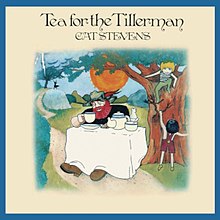
"Tea for the Tillerman" by Cat Stevens (November, 1970)


Brad's Take:

Cat Stevens is a name I've heard since I can remember, but I never actually sat down and listened to his music. I've heard a slew of cover versions of his hit "Wild World" (which is featured on this album) so I was interested in checking this out.

Tea for the Tillerman comes loaded with mid-tempo, acoustic-based, singer-songwriter, and other hyphenated adjective tunes all written by Mr. Stevens. Even though these songs are late 60s acoustic jams, they don't sound like the overdone acoustic folk music that was coming out in an over-abundance around then. Cat brings a refreshing twist into his songwriting. He sounds like he's having fun and not taking himself too seriously, which I find appealing. It doesn't sound like there's an ego behind his music like a lot of his peers.

There isn't really much else I can say about this album. I can see why it made an impact on people's ears back in 1970, and why it still resonates today. You can tell there's a special fun little spark in Cat Stevens' songs that wasn't really in very many others around that era, when everyone was trying to out-cool each other.

Dad's Take:

If you were to hop in the Wayback Machine and set the dials for my early teens, you might see me with a pre-Walkman portable cassette player from Radio Shack, listening to a copy of Tea for the Tillerman copied from an LP I borrowed from my local library. This album got fairly heavy rotation from me in those days, one of the albums most likely to be played between Beach Boys binges.

With the popular "Hard-Headed Woman" and the mega-hit "Wild World," how could this album miss? Add to that everybody's favorite teen-angst tune, the moving-from-both-sides-of-the-conversation (as I know now) "Father and Son," and you have a sure classic.

The non-hits are no slouch either. Cat Stevens was a fine songwriter, and a welcome relief to the acid rock and crazy experimentation of the time. "Sad Lisa," "Where Do the Children Play," and several other songs are ambitious, smart, and loaded with meaning without sounding pretentious or trite. "Into White" is one of my favorite Cat Stevens album tracks. 

If the album has a fault, it's that there's a sameness to many of the songs. While the songs go well together, they go maybe a little too well together. Most of the songs are a similar tempo and cover similar lyrical territory. Cohesiveness is a good thing in an album, but it's nice sometimes to have some bigger differences across the record.

That's pretty minor, though, in the case of Tea for the Tillerman. The album is full of what Stevens does best, mid-tempo tunes full of more-or-less subtle spiritual themes. If there's a sameness, at least it's a pleasant formula.

I have no real excuse for not having listened to this for many years. It was nice to return to, and has aged well. Probably better than this listener has.

Friday, February 28, 2014

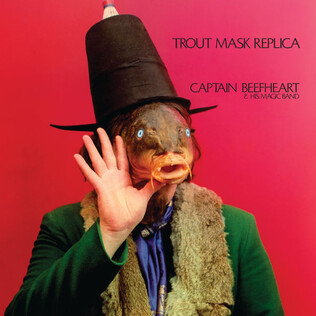
"Trout Mask Replica" by Captain Beefheart (June, 1969)


Brad's Take: 

Another excruciatingly epic, experimental, cacophony of an album to add to our list...

Last time, it was Frank Zappa's "classic" Uncle Meat. I hated 99% of that album. But now we get to forcefully sit through a double-LP of Don Van Vliet's madness, otherwise known as Captain Beefheart. And wouldn't 'cha know it? Don's pal Frank Zappa produced this album. It only makes sense that Zappa would want to get behind this project.

I actually find this album to be a lot easier to get through than Uncle Meat. It's hard to pinpoint why or what makes it "better" (i'm using that term very loosely) but it's a little bit less obnoxious, I feel like. His lyrics are more like him just reading his looney poetry, but I kinda like it, I think .

Just like Frank Zappa's album we reviewed before, Trout Mask Replica contains a whole mess of different genres and sounds. "China Pig", for example, is a guitar-only blues track that I actually found very enjoyable. It's got Captain Beefheart's quirks, for sure, but looking deeper, it's a great track that takes me back to when we were reviewing Muddy Waters and similar blues/jazz stuff.

This album also has stuff that sounds like post-punk/hardcore stuff that I've actually enjoyed for quite a while ."My Human Gets Me Blues" has these interesting guitar riffs in some weird time signature, which doesn't sound too far from more modern bands, like Blood Brothers or At The Drive-In, if they had been around in the late 60s. I can dig it.

The good songs are very few and far between. Very. But when little gems popped up, it made me forgive the bad ones. I wouldn't call this a good album, but it's surely not absolutely terrible, like his friend Frank Zappa's was to me.

Phew, I survived!

Dad's Take:

In every art form, there are artists who the experts claim to understand although they are difficult for the uneducated to make sense of. In my field, literature, people like James Joyce and William Faulkner come to mind. In rock and roll, Captain Beefheart has to be near the top of the list of those kinds of artists, and Trout Mask Replica is his best known work. 

Over the past several months, I've sampled this album in bits and pieces, to prepare myself for listening to the whole thing. I don't know if I'm quite prepared for this review yet, but we need to move on.

Much of this album is cacophonic. It sounds wild and unstructured, like people who can't play broke into a studio and had at it. And there's the genius of this album, I supposed. Every weird sound, every note, was meticulously planned. The album took eight months to rehearse. It's hard to make sense of, especially on the first listen, but it's not as free-form as it sounds. Or so we're supposed to believe. Mix the rough music with beat-style poetry and you get an album that is sometimes entertaining, sometimes perplexing, and sometimes annoying.

Once you get over the shock, it's mostly listenable, although I still prefer it in smaller bites than trying to get through the whole thing in one sitting like I am for this review. Songs like "Ella Guru" or "Moonlight In Vermont" present a jazzy, bluesy sound full of musical and vocal play. Play is fun, right? The more you listen, the more it starts to almost make aural sense, until they throw something in to break the reason you thought you were finding.

Some bits, like "China Pig" and "Well," sound like old low-fi blues recordings. Those tend to be the most listenable for me. In fact, "Well" is kind of cool. Or maybe I just feel some relief because it's a vocals-only song, giving me some relief from the music.Same with "Orange Claw Hammer," a fun and odd little pirate chanty. Maybe I shouldn't mention that it's odd. That's kind of understood on this record.

Much of the wordplay on many of the tracks is fun, even when it's ridiculous. "Old Fart At Play" is a prime example. The last song, "Veteran's Day Poppy" is also kind of not as annoying as much of the rest, and for sequential moments at a time quite enjoyable.

This is like some of those modern paintings that look like meaningless splashes of color on a canvas, but when you take the time to really examine them, you can find beauty. These are sound poems, and the Captain knew exactly what he wanted on his canvas. If I don't get it or if I find much of it unenjoyable, so what? Who says art always has to be enjoyable? But why does it have to be so long? And why does it have to hurt my head and make me feel stressed?

So maybe I'll never really understand why this album is so close to the top of so many Greatest Albums lists. I'll leave "getting it" to the experts and the cognescenti. But, hey, I enjoy a William Faulkner novel here and there, and can appreciate James Joyce. Maybe if I listen enough, I'll get it. It's just that, well, I don't know if I care that much about understanding it, when there are so many albums to discover out there, so much that I'll really like.

Saturday, December 28, 2013

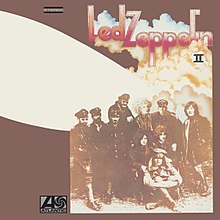
"Led Zeppelin II" by Led Zeppelin (October, 1969)


Brad's Take:

Odds are that if you're reading this blog then Led Zeppelin is already a borderline household name for you. When you listen to a Led Zeppelin record, you know exactly what you're getting. This album is not an exception. It isn't much different than their debut at all, but that's totally alright with me. These guys knew how to make 5+ minute long rock songs interesting and original yet familiar and catchy, all without sounding overly repetitive, at least for the most part. I really can't say anything negative about any of the songs, the members, or the album as a whole. It's just a great classic rock record, and a perfect sequel to their debut, that leaves me wanting more. Normally, I'd probably complain a little bit about the drawn out slower songs on this, but right now they're hitting me in just the right way.

My favorite songs on this album are:
Whole Lotta Love
The Lemon Song
Heartbreaker

Moby Dick


Led Zeppelin was such a great band, and compared to the similar rock records that we've already reviewed from this era, Zeppelin just had a different spark to them. They stand out. Maybe it's got a lot to do with each individual member of the band being incredibly talented and perfect in their role, or maybe it's because of guitarist Jimmy Page's production skills in the studio. I don't know what it is exactly, but whatever they had, it was a perfect formula. If you're going to listen to this record, listen to their debut as well.

Dad's Take:

Led Zeppelin's second effort is one of those albums that every fan of classic rock has to have.

The album opens with what may be the classic Led Zeppelin rocker,  "Whole Lotta Love." It's pretty much a straight blues-based rock and roll song, except for the prog rock middle section. And if you've never heard it, you've probably been living under a rock. Other classics on the album include "Heartbreaker" with its instantly recognizable riff and incredible solo, "Living, Loving Maid (She's Just A Woman)," and "Ramble On."

The album ranges from the straight-up blues of "The Lemon Song" to the psychedelic "What Is and What Should Never Be." It has touches of prog and pop, with legendary guitar work and big drum solos.

The album is also somewhat controversial, with three songs that resulted in lawsuits for failure to give credit to sometimes obvious sources, something the band doesn't deny.

What more can you say about this one? If you like Zeppelin, you already love this album. If you don't know them, check this one out for a good sense of what they were all about.

It's a classic rock album with a bit of everything you expect from a great 1969 band.

Sunday, November 17, 2013

"King Crimson in the Court of the Crimson King" by King Crimson (October, 1969)

Dad's Take:

This is one of those albums I've somehow missed over the years. I've heard parts, but I think I've only sat and listened to the whole thing once before. Not sure why, because I like it.

I'm wondering how Brad will respond to this one. I don't really see him getting into this kind of heavy prog rock, but I don't think he'll hate it either. But here's my own response.

The album begins with the crazy rock music of "XXI Century Schizoid Man." It almost sounds like a spacy precursor to grunge or alternative rock. I like songs about the insane, for some reason, and this doesn't disappoint.

Next up is the very pretty, Pink Floyd-ish "I Talk To The Wind." I got so wrapped up in the song that I forgot to take notes. Beautiful song with classical touches.

The third track, "Epitaph," has a Renaissance feel to it. It's a pretty song that reminds me in places of the Moody Blues, which shouldn't be too surprising because they had moved into the brand new progressive rock territory with their two albums that came out before this one.

The next track is the one that hit me the hardest. "Moon Child" completed altered how I feel, which I guess meant it was a successful tune. Like the other songs on this album, it's a mini-suite, this time comprised of three sections, "Moon Child," "The Dream," and "The Illusion." The first section is spacy and psychedelic, with a softer, classical-leaning sound. It creates a moody musical fantasy about a moon child waiting to be kissed by a sun child. "The Dream" is unlike anything I've heard before. It begins with a chimey, pretty, sleepy section that feels like you're being carried away on a cloud, then moves into a hypnotic succession of little tinkling bits of sound. like a dream, you wonder where it will take you, but then you end up somewhere different. The track ends with an attempted return to reality, only reality has been altered and is not real anymore. If there were such a thing as a lullabye of awakening, it would sound like this.

Finally, the last track, "Court of the Crimson King," is a return to a more rock-like environment. Think of it as medieval fantasy prog-rock. It moves all over the place, from rock to a circus and back to some Moodies-influenced rock. At one point, the song becomes almost silent, then it explodes into waves of rock music before suddenly coming to an end.

There are only five tracks on this album, but their suite like quality includes enough variation to keep the tracks from becoming dull or from feeling overly long. Like most prog-rock, there's a bit of pretension and self-indulgence, but it's not as annoying here as on some other albums.

This album met with very mixed reviews upon release, but has since become a classic. There was nothing quite like it when it was released, so it's not surprising that it seems to have been a love-it-or-hate-it record. I'm looking forward to see where it takes Bradley.

Brad's Take: 

When I saw the album title and cover art, I knew this wasn't going to be a straightforward pop album or anything like that. I could just tell that it was going to be interesting and weird, so I went into it with that mentality. I judged a book by its cover, and my assumptions were spot on.

The first song "21st Century Schizoid Man" is a heavily distorted rock song with strange lyrics and distorted vocals. It reminded me a little bit of Black Sabbath, although it had a middle section that was basically a metal band playing jazz music, with everyone taking solos. The song is definitely titled correctly, in that it's completely schizophrenic. Also, an interesting side note: This song was sampled in Kanye West's song "Power."

The next song ("I Talk To The Wind") is a lot less schizo. It's basically drums, bass, and flute dancing around with some mellow vocals laced in. This song is very "1969-ish."

"Epitaph" has a special significance to me. While doing a little bit of research while listening to this album, I learned that one of my favorite punk rock record labels in high school (Epitaph Records) was named after this song. Without that record label (started by Bad Religion's guitarist, Brett Gurewitz), I probably wouldn't have gotten into a lot of the music that I fell in love with in high school. So for that, it gets my respect. As for the song itself though, I struggled to get through the entire thing. Unlike the previous 2 tracks, I could feel the song's length taking a toll on my patience. It sounds like a typical Woodstock-era prog-rock song.

"Moonchild" is more mellow jazz stuff. Some parts of the song actually get to the point of being almost completely quiet. You can barely hear the drums and guitars being touched. It's an interesting little jam, but I can only handle so much free-form playing before it sounds like it's just a band dinking around on their own while another member is tuning their guitar or something. I've experienced moments like that many times at band practice and it gets kind of irritating. Especially 12 minutes of it, like in this song.

The final track, "The Court of the Crimson King", had a cool chorus of "Ahhhh's" which sound very epic. I feel like this song (and the entire album) would probably be a lot more enjoyable if the listener was on some kind of drugs, which I assume the band was at the time. It's a late 60's prog-rock song, that's all there really is to it.

Especially for being the band's debut album, I think they did it exactly what they set out to do. And the fact that they produced it themselves makes it even more impressive. This type of album would typically be a band's third or fourth, where they decide to take their poppy music to a "more artistic level" with no boundaries. They just went straight for it though on their debut which is admirable.

For what it is, it's pretty great. It was an enjoyable listen, for the most part. Sometimes the songs dragged on in the middle sections, but I got through it just fine. The first track was definitely my favorite though. I wish more of the songs had been heavier like that one.

Thursday, November 14, 2013

"Cloud Nine" by The Temptations (February, 1969)


Brad's Take:

Seeing a Temptations album come up on our list, I got really excited. I was surprised when this one started up though. From the get go, this is not your typical Temptations record. This is a borderline-psychedelic, upbeat, almost-funky version of the group that previously performed ballads such "My Girl" and other classics. Needless to say, it took a few minutes for me to warm up to this new direction they were going in.

Apparently, a couple of the members became very inspired by Sly & The Family Stone. Not all of the songs are upbeat soul jams with groovin' bass lines. In fact, it's mostly just the first half of the the album that ventures into that style. Cloud Nine has some classic Temptations styled songs as well, such as "Love Is A Hurtin' Thing" and "Why Did She Have To Leave." Mid-tempo songs about bummed out hearts.

After the first couple of songs, the change in sound clicked with me, and I was fully on board. I even went back and started the album over so I could give those first couple songs a more open-minded listen. Cloud Nine feels extremely dated, sure, but for what it is, I thought it was a lot of fun. The second half is a lot more comfortable and laid back, which is how I prefer my Temptations to sound. The groovin' upbeat jams are definitely welcome though.

Dad's Take

It seems like, so far, Motown has been under-represented on our list. Cloud Nine is a good way to bring it back to our attention. The Temptations wanted to emulate the new funky psychedelia of Sly & the Family Stone (and where are their excellent late sixties albums on our list, huh?), so this album is the beginning of their psychedelic period.

The title song is the one indisputable classic track on this album, and it's a great one, a funky, psychedelic, socially aware about using chemicals to escape from the kinds of problems that were all too common among the primary audience of Motown's soul groups. The other great song here, is the often-forgotten "Runaway Child, Running Wild."

Other than those songs, the album is enjoyable but doesn't blow me away. There's a lackluster vocal performance of "I Heard It Through The Grapevine," over a pretty cool track, punctuated with some Sly-like "boom boom" scatting. It seems like for a while, everybody on Motown tried their hand at that song. I really enjoyed "Love Is A Hurting Thing," "Hey Girl," and "Why Did She Have To Leave Me (Why Did She Have To Go)."

Other than that, the album is enjoyable but not particularly memorable. Still, the title song was highly influential and still sounds good today, even if it is, as the youngster pointed out, a little dated. On the strength of that one song, it's easy to argue in favor of this album's inclusion on our classic albums list, and the rest of the record supports it nicely.

"Tommy" by The Who (May, 1969)


Brad's Take:

This double album was the first album to be deemed as a "rock opera." Tommy tells the story of a young boy named Tommy, who witnesses a murder between his father and his mother's new lover. After his parents tell him that he "didn't see or hear anything", Tommy continues his life as being "blind, deaf, and dumb." He goes through a lot of terrible things in his life (and plays a lot of pinball), until he becomes "magically cured." The story is a lot more in-depth than that so you'll just have to listen to it to get the full story. It's really sad and intriguing.

It's obvious why this album is considered such a classic. It's a compelling  rock opera that must have been an incredibly large undertaking for the band, and on top of that, it must have been such a risky move for them to take. Fortunately though, it definitely paid off. It's sold over 20 million copies and was even inducted into the Grammy Hall of Fame in 1998 for "historical, artistic and significant value."

Although I can absolutely see why Tommy was and still is such a classic album, the music itself is very hit or miss to me. I got through the first 10 songs and didn't even realize I'd listened to that many already. Most of the songs blended together. In a way, I can see that as being a compliment, in that the songs blend together because it's all just one big story. I understand if that was the intention, and I can see the appeal there, but I personally am not really turned on by that kind of thing. To me, it's just a long album that all blends together, but with an occasional awesome song or moment.

I love all kinds of music, but I think it's become apparent that I'm not much of a reader. I like a good song, but a good story within a song doesn't necessarily make it a "good song" to me. For me, I get the most pleasure from a song by the way it actually makes me feel; the way the guitars punch, the melodies of the vocals, a catchy beat, etc. Technicality and lyrics have always been lower on my list of "what makes a good song good." That may or may not be why Tommy doesn't connect with me on its first run through.

The amount of thought that had to have gone into the writing and making of this album is extremely commendable. That's about all I will take away from listening to this though. It's an album that every music fan or musician should listen to it at least once, I must say. It shows that music can be more creative and thoughtful than just a catchy chorus and a pretty face. Music should be original and viewed as a piece of artwork and not just a money-grabbing monster. Tommy proved that it can be both.

Dad's Take:

The boy's take on this one was about what I expected. And it was pretty spot on.

Although often referred to as the first rock opera, Tommy was actually preceded by almost a year in that category by S.F. Sorrow by The Pretty Things, which we reviewed a few months ago. Brad's right that the music can be hit and miss, but I give it credit for a lot more hitting than my offspring does.

It's a highly ambitious project, and is best listened to with full attention. The story is odd but interesting. The music is the highlight, though, as it should be. It is given a more dramatic treatment, maybe, in the movie soundtrack, but I very much prefer the Who's original version.

Pete Townshend was really stretching himself here, far beyond what would have been expected of this band when the first came up. They were always creative and a little weird, but were best known for being loud and for their destructive behavior, especially that of Keith Moon. They are not the band you'd expect to challenge the limits of their genre this much--not, at least, unless you'd really paid attention to what they had done previously.

The music here is mostly excellent. It's the Who, after all. Because of the nature of the rock opera, it often feels a bit fragmentary, but the fragments hold together very well, for the most part.

What sets this apart from S.F. Sorrow and the few other attempts at rock operas is the characters. Uncle Ernie and Cousin Kevin are two of the weirdest characters you're likely to find in any kind of storytelling. They are creepy and cruel and sick and disgusting and tremendously fun. The Acid Queen is memorable, and Tommy's mother is pretty messed up, although she's nowhere near as prominent in the original as she is in the movie. But, hey, if you have Ann-Margret hanging around, you give her screen time. And beans and chocolate to roll around in. I mean, duh. But no wonder Tommy is so screwed up. Unlike Bradley, I'm a big fan of stories and story songs, so the strength of these memorable characters is a big part of why I love this album. I mean, just the guts it takes to try to tell a story from the point of view of somebody who can't tell it. Brilliant.

And then there are the songs. Although several of the pieces are obviously there to link the plot elements, there's some great music. "It's A Boy," "Eyesight to the Blind (The Hawker)," "Christmas," "Cousin Kevin," "The Acid Queen," the brilliant "Underture" with Moon's excellent drumming, "Do You Think It's Alright," "Fiddle About" with its dark chords and even darker subject matter, "Pinball Wizard," "Go To The Mirror," "Tommy Can You Hear Me?," "Smash The Mirror," "Sally Simpson," and the anthemic songs from the climax, "I'm Free" and "We're Not Gonna Take It"--those are all obvious highlights, but there are other great songs between these.

This album is easily one of the high points of sixties rock, the culmination of the concept album trend. The story is strangely satisfying, even if summarizing it makes it sound like a hopeless mess. And the music stands up well, even now. That said, it is definitely a product of its era, a time when limits were being pushed everywhere. Being as separated from that time as Brad's generation is, the fruits of that experimental iconoclasm are going to be appreciated differently. I don't know how well Tommy stands up as nothing but a rock album, because I can't separate it from its context, but that's how these young whippersnappers are going to hear it. And that's to be expected. I can understand it being kind of a generation-gap album, like Straight Outta Compton is on the other side of the gap. My generation is right, though, of course.

So, I'm going to go back to listening now, basking in the brilliance that is Tommy.


Wednesday, November 13, 2013

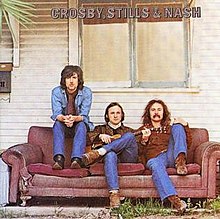
"Crosby, Stills, and Nash" by Crosby, Stills, and Nash (May, 1969)


Brad's Take:

The debut album from the power trio Crosby, Still, and Nash deserves the "Classic" title. It's a great blend of everything that was popular in the late 60s; folk, pop, and bluesy jam rock. The album's Wikipedia page puts it best: "Not only blending voices, the three meshed their differing strengths, Crosby for social commentary and atmospheric mood pieces, Stills for his diverse musical skills and for folding folk and country elements subtly into complex rock structures, and Nash for his radio-friendly pop melodies, to create an amalgam of broad appeal."

In the first track, "Suite: Judy Blue Eyes," it sets up the listener perfectly for what to expect from the album as a whole. Great finger-picking guitar work, beautiful three-part harmonies, and catchy melodies. The "doo doo doo" part at the end of this song will be stuck in my head the rest of the day, at least. Some of the songs on here even remind me of the style the Kingston Trio was doing back in their heyday.

There are a few snoozers on here, but the album has some really great songs on it. "Judy Blue Eyes" and  "Pre-Road Downs", which is a song that I will definitely go back to down the road. (No pun intended.) That song is a lot of fun.

For a debut, it's no wonder that it did so immediately well. They hit the nail on the head with what they were trying to accomplish. And really, they were pretty genius by combining all of the popular styles at the time, getting the attention of a much larger spectrum of listeners. There was something for everyone. I think the album still holds up even today.

Dad's Take

Crosby Stills & Nash might not have been the first supergroup, but they were one of the first that blended so well that you almost forget they were with great bands before they got together. David Crosby of the Byrds, Stephen Stills of Buffalo Springfield, and Graham Nash of the Hollies blended their strengths perfectly to create arguably the greatest debut album ever.

This album is classic in every sense. Hugely popular, it was also a major influence. It’s not stretching the truth to say it changed the popular music scene by ushering in the change from heavy blues-based rock (although they certainly don’t leave that behind) to a softer hippy sound that helped open the door for the singer-songwriters of the first half of the seventies. But it’s also just a pure joy to listen to, and the more you listen, the deeper it gets vocally and musically.

This record is so familiar that it’s almost like reviewing a greatest hits package.It’s been a while since I’ve really gushed over one of the albums on our list, but this one deserves a song-by-song treatment.

The album’s opener, “Suite: Judy Blue Eyes,” the group’s second single, may be the best opening track on a debut album ever. It says, “Hey, we’re a supergroup and a super group and we’re awesome, so deal with us.” Great harmonies, a brilliant song structure and, as Brad mentioned, some of the catchiest bits of vocal magic you’re likely to find anywhere. This song is hard to beat.

Next up is their first single, “Marrakesh Express,” which brilliantly shows off Graham Nash’s pop capabilities.The highlight of this irresistible song is the train-whistle-like “All on board the train” vocal line.

“Guinnevere” is pure heaven on record. A spectacular piece of gorgeous atmospheric beauty, this song has become a classic.

“You Don’t Have To Cry” is a very good song that suffers a little from having to follow the previous three songs. It showcases Stephen Stills’ songwriting skills and how well his voice blends with Graham Nash’s singing.

“Pre-Road Downs” is one of the least-known songs on this record, but this doesn’t mean this Graham Nash song is weak by any means. This is psychedelic music all grown up and mellowed. Instead of banging the listener over the head, the guitar and other psychedelic touches create a thing of beauty and blend well in the overall feel of the song. And, this song has the best surprise final line since the Beach Boys’ “I’d Love Just Once to See You.”

“Wooden Ships” is a poignant piece of anti-war psychedelia noir. It’s an atmosphere-drenched story about two soldiers from opposite sides meeting, realizing they are both human, and helping each other to survive. Now, I love a good, obvious anti-war song as much as the next guy, but by switching the tone from “war is bad so don’t do it” to “the people on both sides are human and worthy of respect,” the message becomes much stronger.

“Lady of the Island” is kind of a companion piece to “Guinnevere,” returning us to that beautiful fairy tale world. Beautifully poetic lyrics combine with a simple production to transplant the listener into another place and time, either Arthur’s Camelot with its lords and ladies or a wildflower-filled meadow in 1969 Topanga Canyon with its cannabis.

The next classic song on the album is “Helplessly Hoping,” a song whose alliterative verses are almost impossible to resist singing along to. This tune showcases the classic CSN vocal blend.

“Long Time Gone” is another example of psychedelic folk rock all grown up. Slightly subdued psychedelia and hippy “escape from the Man” sensibilities combine in a mellowed Southern California package. Again, we’re not beat over the head with the hippy messages, but they still come across clearly and are more enjoyable for being a little less obvious. This song brings to mind the David Crosby tune, “Almost Cut My Hair,” that appears on their next album.

The album closes with the suitably titled “49 Bye Byes,” another of the less-well-known songs on the album. It may not be a standout track, but that’s only because there are so many strong songs on this record. I love the extended note that ends the song and the record, leaving me wanting more.

This is a truly great record, and I hate to see it end.