Thursday, October 27, 2011

Memorial Album by Hank Williams (September 1956 UK)


Dad's Take:

I don't care who thinks we're silly
You be daffy and I'll be dilly
We'll order two bowls of chili
Settin' the woods on fire

This album was assembled and released a couple years after Williams died too young in the back seat of a Cadillac. I couldn't find a US release date, other than "1955" (with two more songs), but our book lists a September, 1956 UK release date, so we're going with that release.

I'm not a country music fan, but I like Hank Williams and some of the other old-school country artists. Williams might not have invented western music, but he brought a new emotion and heart to the genre. This is back when there wasn't a lot of difference between country & western and folk. It's American roots music, and it lies at the bottom of nearly everything that came after in rock 'n' roll, whether it's Buddy Holly (and by extension, The Beatles), Bob Dylan, CCR, or the Eagles. Without Hank Williams, today's popular music, whether country, rock, or whatever else, would be a very different place.

This is a fine collection of eight Hank Williams classics. It might have been a mistake to follow "Your Cheatin' Heart" with the nearly identical "You Win Again," to open the album, but other than that, I have no complaints.

Every drawn-out word is a hillbilly cry, every bit as sad as Sinatra was in the wee small hours. Sinatra cried in a city bar, where Williams sat alone by the fire out on the ranch, but both lamented their plight. When Williams is cheerful, as in "Settin' The Woods On Fire," "Hey, Good Lookin'," or "Jambalaya" (which was apparently on the 1955 release but not on the only one we could find, and which is very much missed on this record), the joy fills his voice just like the cries of the sad stuff.

Bottom line for me is, whether you like country music or not, no American popular music education is complete without a good strong dose of Hank Williams. This album is as good a place as any to start.

Brad's Take:


This isn't a style that I usually listen to on my own, but I enjoyed this memorial album. The tempo and guitar style to some of the songs aren't much different than the Chet Atkins album we reviewed before this, but with vocals and a band, it makes it different enough.

If you have this on as background music, you'll think it's all upbeat and cheesy fun country songs, but when you pay attention to the lyrics, you hear that Hank had his ups and downs in relationships:

If you missed me half as much as I miss you
You wouldn't stay away half as much as you do
I know that I would never be this blue
If you only loved me half as much as I love you


Like my dad said, whether you're a fan of country music or not, Hank Williams would definitely have to fit into the curriculum of The History Of American Music. Artists like Bob Dylan and Johnny Cash might have never gotten as popular as they did without Hank Williams' success.

Finger-Style Guitar, by Chet Atkins (September 1956)


Dad's Take:

Chet Atkins was an innovator of country-style guitar playing, they tell me. And it may have been true. I don't know enough about that genre prior to this album to be able to comment on that.

All I know is, innovator or not, every song on this album makes me think of roller rink music or the samples for guitar lessons. There is some good picking here, but every song is played at the same roller skating tempo. Whether it's an upbeat number like "Gavotte in D" or a gentle ballad like "Unchained Melody," nearly every song is played at pretty much the same tempo, a tempo that reminds me of what you might hear when you walk into a chapel.. It doesn't help that there are no gaps between tracks. (You wouldn't, after all, want gaps of silence in your skating rink.) When songs are played pretty much the same and run together, there's no avoiding monotony. Occasionally, there's a song that promises a little more excitement, like "Malaguena," but by the end, even those songs drop back into the all-too-familiar tempo.

I'm going to have to leave it to my guitarist son to comment on the technical virtuosity of Atkins's playing. Truth is, whether this album is really innovative, and whether it is an influential disc, it's not something I find particularly entertaining. I'm afraid this is a one-time listen for me.

Brad's Take:

When I first started guitar lessons way back in the day, my teacher mostly taught me acoustic finger picking techniques. At the time, I hated it. I just wanted to play rock music. In the last few years though, I've opened my mind a bit more and I wish I had paid more attention and practiced more often during that first year of guitar lessons. I would love to be able to finger pick like Chet Atkins.

Fun fact: This album was recorded in only one day, which is pretty impressive. Then again, it's only a guy and his guitar, for the most part. If you're good enough (which he obviously is) then it shouldn't take very long to record a whole album in one day. I wonder how many takes each song took though.

There's no doubt that this guy is incredibly talented. The album went by really fast for me. I enjoyed it a lot. As my old man said, the tempo to each song is pretty much the same, at least in the first half of the album. The songs remind my dad of roller skating, but they remind me of the ending credits to Spongebob Squarepants. We definitely grew up in different eras.


Saturday, October 22, 2011

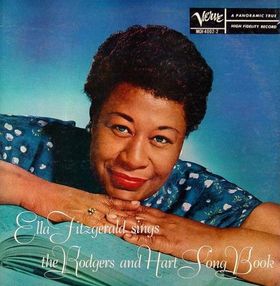
Sings The Rodgers and Hart Songbook Vol. 1, by Ella Fitzgerald (August, 1956)


Brad's Take:
This is a collection of songs written by the duo Richard Rodgers and Lorenzo Hart as performed by the incredible Ella Fitzgerald. In the 24 years that they wrote music together, Rodgers and Hart wrote over 500 songs and 28 stage musicals, including A Connecticut Yankee.

I personally haven't listened to any of the original Rodgers and Hart versions of these songs, at least that I am aware of, so I can't really compare Ella's recordings to the originals. From what I can tell though, I'm sure Ella's beautiful voice does them justice, if they aren't even better.

Ella Fitzgerald reminds me of a female Frank Sinatra. She has that same kind of unmistakable classic voice that Frank had. Another thing that reminds me of Frank Sinatra is that they both had slow melancholy ballads as well as up-tempo swing songs, and they both did each style perfectly. I'm glad neither of them just stuck with one style.

Ella also reminds me of a classy neighbor who'd sing around the house, but was too shy and modest to ever make a recording or perform in public, and would give you cookies if you came over to visit. I just imagine her singing over some of her favorite records while she was cleaning the house or something, and the only way you could really ever watch her sing was peering through the window or putting your ear against the front door, like a creep.

Although all of the songs on this compilation are written by someone else, she makes them her own in these recordings. She sings with just as much passion as she would have if she had written them herself. But you can't forget to mention the beautiful compositions by Buddy Bregman. Ella and Buddy really complimented each other extremely well on this album.

There's no reason why anyone who likes classic jazz and swing music shouldn't have this album in their collection.

Dad's Take:
I've been looking forward to listening to this one. I've never heard it, but I believe that Ella Fitzgerald had one of the greatest voices in the history of recorded music. Unfortunately, I read Brad's review before I started listening. Now I feel like I have to wear my creepy peeping Tom outfit. And here all this time I thought I was done with that part of my life. So I'll grab my trench coat and other gear from the back of the closet and put this album on.

I worried going in that I would know all of the songs, so it would feel like a tribute album. Fortunately, I only recognize a few of the titles. I like that, because part of the fun of this little exercise Brad and I are going through is hearing new music I might not otherwise have picked up. Turns out it wouldn't have mattered. Thanks to Ella's incredible performances and the brilliant arrangements by Buddy Bregman, this record could contain her versions of all the songs I know best, or total gibberish for that matter, and I'd still be enthralled. And, of course, the songs themselves are wonderful.

I find myself not even caring about the songs and just concentrating on Lady Ella's voice. And when she's not singing, the musical arrangements are almost as good. A few times I' even wished she wouldn't sing again for just a little longer during instrumental breaks so I could listen to the music. Of course, those thoughts vanish as soon as her voice kicks in again. I really like that Bergman's work is not mixed as far back as Nelson Riddle's are in In The Wee Small Hours.

It's interesting to compare Ella and Sinatra's versions of "Dancing On The Ceiling." We heard Frank's version on In The Wee Small Hours. Hearing two masters interpret the same song in such different ways is a musical education all by itself. Where Frank imbued the song with an ironic melancholy, Ella makes it a pure romantic dream. If this were a competition, I couldn't pick a winner. Because I prefer Ella's voice, I thought I'd give her the edge, but her version makes me appreciate Sinatra's ability to put an unexpected twist of emotion into a song. We get to compare the two albums again with "It Never Entered My Mind."

I've tried to find both the merits and flaws of each album so far, and I have to admit, I'm having trouble finding any flaws, unless it's that, even with 17 songs, this record is too short. This is about as perfect as it gets and is--unexpectedly--my favorite on our list so far. Lucky for us, Ella Fitzgerald released a volume 2.

Friday, October 21, 2011

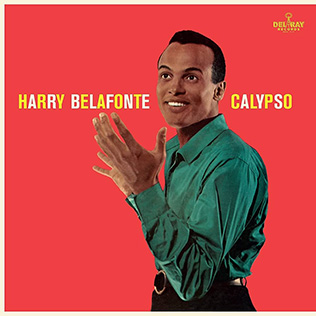
Calypso, by Harry Belafonte (June, 1956)


Dad's Take:

It can be argued that Belafonte's classic album really belongs to Exotica genre. In the mid-fifties, people apparently developed a taste for travel via hi-fi, maybe due to the new pictures that came to them over their new television sets.

Belafonte's classic, "The Banana Boat Song,"aka "Day O," has been forever changed for me by Stan Freberg's equally classic send-up of the song. It really is a great song, but I can't listen to it without inserting Freberg and Peter Leeds as the calypso singer and the bongo player. Or the Muppets.

My mom used to listen to Harry Belafonte when I was small, so it has sentimental meaning to me. "Jamaica Farewell" was one of my early favorite songs, and it still sounds great. I also like "The Jack-Ass Song," if only because it gives me a reason to say, "Don't tie me donkey down dere." And then there's one about Santa building a houseboat. What? It's Hosanna who build de houseboat? OK. If you say so. I could have sworn it was "Oh Santa."And I can't forget the beautifully sentimental "Come Back Liza." The album ends with a couple of social statements. "Brown-Skinned Girl" is a poignant look at the babies left behind by American sailors. Finally we get one of popular music's earliest feminist songs, the very funny (and true) "Man Smart (Woman Smarter)."

Harry Belafonte was a great performer, with a voice as smooth as the white sands of Jamaica. But the album suffers from the same problem a lot of reggae and other records have to deal with: there's a sameness that sometimes overwhelms the quality of the songs. It doesn't help that the same song is on here twice, with very slight changes to the lyrics ("The Banana Boat Song" and "Star-O"). It's a fun record. It might never be one of my favorites, but it deserves its place in our list like it deserved its then-record 31 weeks at the top of the American charts.

Brad's Take:
Welp, now I know who originally sung the song from the dinner scene in Beetlejuice that always cracks me up.

Side A of "Calypso" starts with "Day-O" and then side B starts with "Star-O." I was listening to the album straight through so I didn't realize that it was split into two parts. I forget that that's how it was back then... So I wondered why he'd put those two songs on the same album because they are basically the same exact song, but it made a lot more sense when I realized that the album was divided into two parts like that. My poor young naive self.

"Calypso" is not an album I thought I'd ever listen to. Harry Belafonte's name hardly even sounded familiar to me. This isn't something I'd listen to on an average day, but for what it is, I enjoyed it. It's actually pretty fun to listen to. I even caught myself singing along with the final chorus on "Dolly Dawn."

All of the songs have the same Jamaican folk beat and sound so it's a little hard to tell one song from another, but sometimes the same of one thing is good if it's a good thing to begin with (which it is, in this case.)

The Platters, by The Platters (May, 1956)


Dad's Take:
The Platters are one of those mellow vocal groups that bring romance to their era and, undoubtedly, to their share of back seats. Everybody knows their smooth ballads. This group could sing. They are a great example of the fun, sometimes overwrought vocal stylings of their day. Straight singing wasn't always enough. They had to sing with style. And that makes this record drip with cool.

It's hard to find many better vocal groups. Those soaring ballads are well written and have interesting musical arrangements that combine doowop and jazz. When the Platters sing a song, you believe them. If they say they're sorry, or they ask for mercy, or they try to seduce you with a song, it's hard to say no.

What surprised me on this record, though, is that they were much more versatile than you might think based on the handful of hits that make the oldies compilations. They can even rock, like they do on "I Wanna." I don't think I've ever heard that side of them before. You don't hear a lot of it here, either. As you'd expect from the Platters, ballads rule this scene, Gene.

Regardless of who is singing lead on each song (and the whole group gets their chances to shine), you get a quality performance, whether on new rock 'n' roll ballads or explorations of the Gerschwins and other classics.

This is just a quality record from start to finish, the prototype for R&B mellowness for decades to come. There aren't many hits. "My Prayer" might be the only one. But, unlike most records of the day, it also doesn't feel like there's a lot of filler here. Every song is good. Ever performance is golden. And this is about as good as make-out music can get.

Brad's Take:
The Platters are a group I've been listening to for a few years. Whenever I'm in the mood for some doo-wop music, The Platters song "Only You" is always one that I make sure to listen to. I was kind of disappointed that that song wasn't on this because I really wanted to listen to it when I saw that The Platters were next on the list. I've never listened to this album before though so I was especially excited to check out some Platters songs I'm not really familiar with.

This album is pretty much just what I expected. There's only a couple songs that I've heard before, but it's 12 tracks of perfectly solid vocal performances. These guys could really sing! Something that I admire so much in older music is the fact that studio magic was pretty much non-existent at the time. This is 100% talent. There is no auto-tune or compression on the vocals to make them sound perfect and on key. The Platters and all of the other vocal groups from back in the day were just insanely good at singing. Singers these days couldn't pull this kind of stuff off now without over-production done on their voices. I have great respect for the singers from these classic doo-wop groups.

There really isn't much else to say about this album. It's The Platters doing what they do! Incredible vocal harmonies over music that you can snap your fingers to... or make out to. That is in no particular order, by the way.

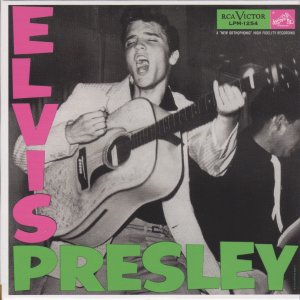
Elvis Presley, by Elvis Presley (March, 1956)

Brad's Take:
This album was an important one for its generation and generations to come. It was the first rock and roll album to ever reach #1 on the Billboard Top Pop Albums charts and it was the first album to ever make one million dollars and sell one million copies. That's definitely impressive, especially for the time it was released.

It's hard to review the debut album by an artist like this because he became such an important musical icon after this was released. He became the king of rock and roll, for crying out loud! Whether you like him or not, everyone has done an Elvis impression at one point in their lives, and everyone knows at least one Elvis song. But all those facts aside, I'll review this for what it is more than what it became...

Elvis Presley's self titled debut album sounds a lot like what was already popular in the 50's. It's not much different than Bill Haley's album that we reviewed before this one. These recordings sound cleaner though and the mixes sound a bit better. This album sounds a little different to me though. I think this is a good representation of what was to come from pop acts following Elvis' success. Before, it didn't really matter what you sounded or looked like as long as the music was fast and something the kids could dance to, but it feels like this album was more focused on the King's vocals rather than the overall general feel of the music.

Sometimes in the older rock and roll records, the vocals were pushed to the back or middle of the mixes so the piano or guitar would shine more, or equally. Elvis' vocals on this album are pushed a lot more to the front though. They're louder and cleaner sounding than the music is, like they really wanted his voice to shine and be the selling point. Elvis' voice sounds great on this album, but sometimes the instrumentation seems a little too bare and empty, but I think they meant for it to be that way. His vocals were more important than the music was, and they wanted them to really stand out and almost be on their own.

As an album though, I'd say that these are its ingredients:

1/4 cup of solid radio hits
1/4 cup of great non-hit songs
1/4 cup of semi-boring ballads
1/4 cup of filler songs

Dad's Take:

I think to fully appreciate this album, you have step back in time. You have to remember, Elvis was not yet The King. He was a little-known 21-year-old kid from Tupelo, with good looks, a good voice, and a style that was just a little bit different than similar artists. Few people knew him, and the RCA record company went on a hunch, based on the very modest performance of his Sun releases.

At RCA, Elvis moved firmly into the new rock 'n' roll, without leaving behind his country and southern blues roots. Rockabilly was hot, and it was genre that fit Elvis very well. This first RCA album isn't all that different than a lot of old rockabilly records, but Elvis obviously had something special that drew the kids to him, and his album became a much bigger hit than RCA had probably anticipated.

It's not really a great album, although it has a few great songs. Much of the album consists of covers of recent hits by others, recordings that Sun didn't think were good enough to release. Some of those, like Elvis's versions of "Tutti Frutti" and "Blue Moon," pale in comparison to the popular versions. In fact, "Blue Moon" teeters on the edge of unintentional comedy. But this album deserves the "classic" label because this is the greatest force in rock and roll history on the verge of greatness. He's often a little restrained, and the quality of many of the recordings show that nobody was ready to throw more money in his direction than was safe. The $40,000 to transfer Elvis and his recordings to RCA was a big enough risk. So they did enough to give them hope of recovering their investment, but they didn't do what they'd do for him when he became a sure thing.

Looking back on it as we are, all the elements that made Elvis The King are there. The energy (although he holds back a little more than he would very soon), the style, the passion. It's easy to see through the flaws and find The King.

My favorite thing about this album is that it's Elvis without the gloss and pressure of superstardom. This is raw Elvis, pure Elvis, without baggage. It's easy to have as much fun as he was.


Monday, October 17, 2011

Rock Around The Clock, by Bill Haley and His Comets (December, 1955)


Brad's Take:

The first time I remember hearing Bill Haley's song "Rock Around The Clock" was while listening to my parents copy of the American Graffiti movie soundtrack. It's a 2-disc compilation of songs from the 50's and 60's. I remember it being one of the first times I realized that I loved "oldies music." I think the only songs from this album that I had heard before though are the first tracks ("Rock Around The Clock" and "Shake, Rattle, and Roll.")

The overall recording of this album is a lot different than the Fats Domino album we reviewed before this one. It's mixed a lot better and the band plays tighter than Domino's. It still has a very live feel to it, however. It's not overly polished by any means.

This is a fun mid-50's collection of songs that I'm sure made the kids want to get up and "shake, rattle, and roll" (pun intended!) I even found myself tapping my foot and bobbing my head side to side. Each song has an upbeat tempo. There's no slow songs on this album. High schoolers were probably either bummed out by the fact that there were no songs to slow dance to with their dates, or they were stoked that they could put this album on and just have fun all night with their friends. I like to think that it was probably the latter.

A lot of the songs sound similar on this album, but I think back then, it wasn't about bands trying to write a collection of different sounding songs. They stuck to the formula that worked for them, and they perfected it. They didn't change their style or experiment much until later in their careers, if at all. It's kind of hard for me to imagine, but I assume rock and roll was still so fresh and new at this time that kids and teenagers weren't bored of the blues/rock sound yet. But really, how could anyone be bored while listening to this?

Dad's Take

Where Fats Domino showed the influence New Orleans blues had on the fledgling rock'n'roll, Bill Haley and his Comets showed the swinging side of the new fad in popular music.

To earn a few more bucks off the fad while it lasted, DJ Alan Freed and the movie company rushed out a string of low budget movies featuring the awful music those wacky kids were listening to, with its devil beat and "colored" influence. These movies had a thin plot, usually about Alan Freed putting on a show for the kids, but the story didn't matter. This was a way for Freed to show off his stable of artists and to get the kids to let loose of their quarters for a movie seat.

I think Rock Around The Clock was the first of this string of films. No soundtrack was ever released, but Bill Haley and his Comets, the headline act in the film, put out their album to capitalize on the album. Strangely, the title song, although heard three times in the movie, was never actually performed on stage during the rock 'n' roll show. The song the kids went to hear was never performed. It's too bad no soundtrack was ever released because it featured some great performances by Haley's combo and other great and not-so-great bands, most notably the Platters.

As Brad said, this album is nothing but fun. It was meant to be dropped onto a hi-fi at a platter party and danced to. Fats Domino's music was great for the stroll, but this is pure jitterbug music from the moment the needle hits the wax.

Now you can listen to it as a cultural artifact, and boogie with your baby while you do it. There's the classic title song, followed by Haley's sanitized, radio-friendly version of Big Joe Turner's "Shake, Rattle, and Roll." Also included is a Cold War artifact, where Haley dreams that his town was destroyed by an H-bomb, leaving only him and thirteen women alive. The women are, of course, there for his pleasure.

What strikes me about many of the songs--mostly performed in classic swing style with a big band replaced by a tight combo of guitar, bass, piano, and sax--is how much filler was added to the two hits, and how as long as the song says "rock," "roll," and "boogie" enough times, it's rock 'n' roll and not swing.

Check out this song, the album's closer:

Rock, rock, rock, everybody,
Roll, roll, roll, everybody,
Rock a beating boogie beat.

You take a rock, you take a beat,
You take a boogie, you make it sweet,
You take a rock a beating boogie,
Rock a beating boogie beat,
Well, rock a beating boogie,
B-O-O-G-I-E.

Well, we’re rocking to the rhythm,
Of the rock a beating boogie,
Dancing to the rhythm,
Of the rock a beating boogie,
Shaking to the rhythm,
Of the rock a beating boogie,
Jumping to the rhythm,
Of the rock a beating boogie,
Romping to the rhythm,
Of the rock a beating boogie,
B-O-O-G-I-E.

You gotta jump, you gotta jive,
You gotta dance to be alive,
You take a rock a beating boogie,
Rock a beating boogie beat,
Well, rock a beating boogie,
B-O-O-G-I-E.

But the dorky-but-cool jive lyrics didn't matter. What mattered was the beat. And the beat never lets up throughout this whole record, providing the perfect platter for your platter party. It's pure fun, and it changed the world.

You really can't beat that boogie beat. Put it on and try to remember that there was a time when this sound was brand new and exciting, and created a musical generation gap that has never been bridged. Most of all, though, just have fun. It's really hard not to with music this infectious.