Showing posts with label little richard. Show all posts

Saturday, November 12, 2011

Sam Cooke, by Sam Cooke (March, 1958)


Brad's Take:

Sam Cooke's self titled solo debut was originally released in the US in 1957, but our book lists the UK release date of 1958.

Sam Cooke started out singing lead vocals in the gospel group The Soul Stirrers. It wasn't until 1956 that he wanted to try crossing over to pop music. In those days, it was frowned upon for nice gospel boys to sing pop music. In order to not be chastised, he released his first pop single "Lovable" under the alias Dale Cook, but his voice was too recognizable and it didn't actually trick anyone.

This album is definitely worthy of the "classic" title. His voice really makes these songs amazing. I love his voice's tone and powerful it sounds at times. He sounds young and excited to be doing something different than gospel music.

The orchestration from Bumps Blackwell is near perfect as well. It doesn't sound much different than the other blues influenced pop albums at the time, but Bumps pulled it off very well. I'm sure that working with Little Richard a lot in his early days helped perfect his skills too.

Most of the songs on this album are slow to mid-tempo, but it's a really nice laid back record. I'll definitely give this more than one spins.

Dad's Take:

This album sends me. OK, cheap joke, but I couldn't resist. Plus it's true.

There's a lot here I've never heard, or at least that I haven't heard from Sam Cooke. Most of the songs are pop standards, but the Sam Cooke treatment works well. The R&B fusion with jazz and gospel works for me, and Cooke's voice is always flawless, even when matched with the wrong song. Cooke himself was reportedly unhappy with the song selection, which he deemed inappropriate, but he recorded them well anyway. He makes it sound so easy. There are a couple songs I could live without ever hearing again, but overall, it's a solid record.

Several of these fifties records make me look forward to music becoming more album-oriented a few years down our list. Sometimes the filler is a little too obvious. This album feels more complete than, say, the Jerry Lee Lewis record we reviewed recently, but it's definitely a collection of songs rather than a unified album.

But you can't really knock an album for being put together the way it was done back in those days. The important thing here is that Sam Cooke could sing, and the instrumental arrangements are good, even if nothing breaks new ground here. The song selection is satisfying, for the most part. The oddest choices are probably "Danny Boy" (Sam Cooke just doesn't sound all that Irish, and the R&B treatment is unintentionally funny) and "Tammy," which is just kind of a dorky song, written for a teen girl singer.

This is one of those records a kid could listen to when his parents were home, without freaking them out. But then, it has a number of songs that the parents would have known. Fortunately, they are done well.

Good record. Mostly.

Tuesday, November 8, 2011

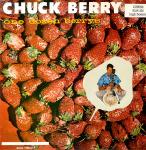
One Dozen Berrys, by Chuck Berry (March, 1958)

Dad's Take:

We've heard Bill Haley. Elvis. Fats. We've listened to Little Richard and Jerry Lee. But one key part of the foundation of rock and roll is missing, until now.

It's impossible to overestimate Chuck Berry's impact on rock and roll. When you hear a guitar solo by one of today's rockers, you're hearing Chuck Berry. When a lyricist tells a story and plays with the meter of his lines, you're hearing Chuck Berry.

On the excellent rockumentary about Berry, "Hail Hail Rock And Roll," Chuck talks about the blues music he heard in his neighborhood. But then then he'd go with his father to work in the white neighborhoods, and he'd hear country songs. So he figured out that he could make more more money from his music if he combined the two. He wasn't the first musician to mix blues and country, but he was perhaps the first to mix them so seamlessly. Then he played the horn solos from the swing combos on his guitar, and created a sound unlike anything that came before and that has not left us since.

"One Dozen Berrys" is Chuck Berry's second album. Significantly, it was the first to be released in England, where it had a tremendous impact on the up-and-coming British rock and roll scene.

This album contains several hits: "Sweet Little Sixteen," "Oh, Baby Doll," "Reeling & Rocking," and "Rock & Roll Music." But it also shows Berry has a serious musician with blues tunes like the instrumental "Blue Feeling" (and "Low Feeling," the same recording slowed down), the bilingual love song, "La Juanda," and the R&B love song, "How You've Changed." Chuck Berry had ambitions beyond teen dance music, but he also knew what he needed to do to make his money. The result is an album that wears its influences on its sleeves, but also shows how those influences were combined into that unique Chuck Berry sound. "Oh, Baby Doll" is a great example. It has a traditional country rhythm, sped up a bit, with R&B instrumentation behind a story song.

Chuck Berry changed everything.

In addition to being the king of rock and roll guitar, Chuck Berry is one of the great lyricists of all time, moving beyond the usual popular love songs with a kind of folk poetry that is on par with Cole Porter and the Gershwins, but with a straight-from-the-streets twist that makes it so amazingly easy to relate to. It's not just the words that he chose, but also the way he plays with the meter of his lines. I miss that on the many instrumentals on this record (maybe a couple too many), but those instrumentals also show the great musicianship from Chuck Berry and his band, especially his other musical half, pianist Johnnie Johnson, who deserves a bigger share of the credit for Chuck Berry's sound than he is usually given.

One thing that amazes me about Chuck Berry is that, unlike many of the rock and roll pioneers, his best music does not sound dated. A good Chuck Berry song from 1958 is still a good song today. Chuck Berry's music often lacks the trendy, novelty-song feel of so much of early rock and roll.

Brad's Take:


The first time I remember really listening to Chuck Berry was in 7th grade. We had to do a small report on a famous person, and my dad suggested I do it on Chuck Berry so I did. I played a clip of Chuck Berry performing and then read my report to the class. I didn't really listen to Chuck Berry much after that, at least not on my own.

This guy was an amazing performer, which helped him become a classic artist. Like Elvis, Chuck Berry had his own stage moves that people loved to see. On top of just being a great performer in general, he was an amazing guitarist. His guitar playing style stepped up the rock 'n roll game.

One Dozen Berrys has a couple of Chuck's well known songs, including "Sweet Sixteen" and "Rock & Roll Music," as well as some other awesome jams that I have never heard before, like "La Juanda." The lyrics to that song cracked me up for some reason:


I speak only the language of English
I don't understand Espanol

This album is a great record for people wanting to get into Chuck Berry. It's got some hits, some slower songs, and not much filler. If only "My Ding A Ling" was on this one...

Monday, November 7, 2011

Here's Little Richard, by Little Richard (July, 1957)


Dad's Take:

It's hard to imagine a greater contrast between two records than between the last one we reviewed, the soundtrack from "Around The World In 80 Days," and this one by the "architect of rock and roll," but the juxtaposition of these two records shows how schizophrenic the popular music charts were in 1957, as rock and roll started to dominate but still shared chart space with more traditional musical forms.

Victor Young's classical film score, heavy on the strings as it is, just can't match the excitement Little Richard's manic piano-driven rock and roll. It's clear which one is better music by traditional definitions, but the kids who were buying the records didn't care about traditional definitions. They wanted fun and excitement and enjoyed shocking their parents. Reviewing these two records back to back is about as detailed a definition of the 1950s generation gap as you're likely to find anywhere.

Few of the fifties icons shocked like Little Richard, this noticeably effeminate screaming black man. My mom tells stories of how her parents reacted to her Little Richard records, stories that include a certain very impolite N word that's hard to imagine coming from my grandparents, but apparently did.

This record starts with the iconic "womp bomp aloombomp a womp bam boom" and never lets go. There's screaming, sex, "jungle beats," and everything the aging white post-war culture feared, but that the kids absorbed and emulated in a way that never happened again until the hip-hop revolution 30 years later. Here's Little Richard is almost a greatest hits record, with great songs like "Tutti Frutti," "Ready Teddy," "Slippin' and Slidin'," "Rip It Up," "Jenny Jenny," and "Long Tall Sally." Those well-known songs are padded with R&B ballads and other fun stuff.

The mixed quality of the recordings makes it clear that this is a collection of music that was recorded over time in different studios. It also makes it obvious that the copy of this album we found online was actually cobbled together from different sources, rather than from the original record. A couple songs were the wrong versions. As a result, there's no uniform production value, and sometimes that can be a little distracting. But it doesn't change the fact that this is a kick-ass record (or a re-creation of a kick-ass record). I'm going to have to find the real thing.

It's easy to find what attracted the kids to this music. "Ready Teddy, for example," starts with a traditional swing sound and kicks out the jams. It's fast, fun, dirty, rebellious dance music that pissed off the parents. What's not to like?

Very few people influenced the future of popular music like Little Richard did, but nobody knew that when this record came out. Listen to it in the context of its time and it's exciting, scary, and more than a little naughty and dangerous. In 1957, this was about as edgy as anything could be. When Aunt Mary almost catches Uncle John with bald-headed Sally and they duck back in the alley, everything decent is turned on its head. That's the stuff of greatness. That's the stuff that changes the world.

Brad's Take:


After listening to the The Girl Can't Help It soundtrack, it made me excited that we'd eventually get to Little Richard's debut album Here's Little Richard. This is the first time I recall listening to a full official Little Richard album, and I am far than disappointed.

The energy this man has is just out of control. You can hear how much fun he must have been having in the studio recording his first album's set of songs. Whether it's a fast song like "Tutti Frutti" or a slower song like "Can't Believe You Wanna Leave", he puts 120% of himself into the songs and gives them maximum energy. The energy is totally contagious too. I found myself air-drumming to a lot of the songs.

This might as well be a greatest hits record because it includes so many Little Richard favorites, such as "Tutti Frutti", "Ready Teddy", "Long Tall Sally", and many others.

Besides the Frank Sinatra album that we reviewed, Here's Little Richard is my favorite album that we've reviewed so far. It's just straight up fun and energetic. It's an amazing debut album from an artist that is a couple years shy of 80 years old and still rocking these songs like it was 1957 again.

The Girl Can't Help It, by Various Artists (December 1956)

Dad's Take:

This is a strange album to include in the book about classic albums that we're using as our list, because it wasn't an album at all. The Girl Can't Help It was the first major rock'n'roll movie. All previous movies had been black and white cheapies. For the first time, audiences could see rock'n'roll stars, as well as unknowns who were never heard from again, on the screen in color, in a funny, innuendo-charged movie starring Jayne Mansfield. Other than a four-song EP by big band star Ray Anthony, no soundtrack was released until recently. It's that recent release that we're reviewing here.

I have this movie, and enjoy it immensely. The movie is good and the performances are excellent. Little Richard is featured in the title song and two others. Other big names include Fats Domino, Julie London, Gene Vincent, the Platters, and Eddie Cochrane. (The great Eddie Cochrane is amazingly presented in the movie as an Elvis imitator and as "proof" that you don't need talent to be a rock'n'roll star. This film has the only known color footage of Gene Vincent performing "Be-Bop-A-Lula." Ray Anthony is also featured as both a musician and an actor.

The influence of this movie cannot be over-estimated. Besides introducing millions to rock'n'roll stars in full living color, it had a major impact on the history of rock and roll. For example, John Lennon claimed that, when the movie was shown in Liverpool in 1957, showing him his musical idols for the first time, it helped inspire him to follow his rock'n'roll dreams.

The soundtrack is excellent, containing several songs in versions only available in the movie (and mastered from the film for CD), as well as the original Ray Anthony EP and several other songs not available elsewhere (and some that were probably never available anywhere else).

The best way to experience this soundtrack is by watching the film, but the music is also very much worth having by itself.

Brad's Take:


It's kind of weird reviewing single artist albums and then reviewing one with a bunch of artists compiled into one album. Instead of judging the album's vocals, lyrics, overall recording quality, etc., we're having to review each song one-by-one and then the entire thing as a whole.

Needless to say, there are some amazing artists on the soundtrack for The Girl Can't Help It. You've got Little Richard, Gene Vincent, Fats Domino, The Platters, and a handful of others that are a little less known (at least to me.)

Little Richard starts the soundtrack off with a two and a half minute bang with the title track "The Girl Can't Help It." It starts off at full speed and never slows down. It sets the mood up perfectly for the rest of the soundtrack. It rarely ever slows down. This soundtrack is full of up-beat finger-snapping classic rock 'n roll jams. With 24 tracks, the album clocks in at just under an hour. No song is over three minutes long. Each song gets straight to the point within the first couple seconds.

I haven't seen the movie, but I can only imagine how great it actually is. Seeing the actual musicians in the movie "performing" these songs would be awesome to see. I'll have to steal my dad's copy next time I'm over there.

I understand why this soundtrack is in the book. It's a perfect mix of the great 50's rock 'n roll vibes. If you want to listen to up-beat fun 50's music, but you don't know where to start, I'd definitely recommend this.

Tuesday, November 1, 2011

Elvis, by Elvis Presley (October, 1956)


Dad's Take:

By the time Elvis Presley released his second RCA album in October 1956, he was able to release it under his first name only. He had had the smash hit of the summer with both sides of the "Don't Be Cruel"/"Hound Dog" single. Riding on the success of that single, went back into the studio for three days in September, and the result topped the charts for four weeks, despite containing only one hit, "Love Me," which hit #2 on the Billboard Pop Singles chart (as well as #7 on the Black Singles chart and #10 on the Country Singles chart). The other two singles, "Old Shep" and "Paralyzed" failed to reach the top 40.

Elvis was now a bona fide star, and this album shows him performing with much more confidence and energy than he had on Elvis Presley earlier in the year. "Rip It Up" is an energetic opener, one of three Little Richard covers on the record. Elvis's "Ready Teddy," on the other hand, is just plain kick-but rock and roll, thanks in no small part to a killer instrumental break. Add the three Little Richard covers to the one on his first album and you add significant fuel to Little Richard's claim to be the "architect of rock and roll." "Rip It Up" falls a little short of Little Richard's maniacal energy and you can understand the words (which takes some of the fun out of it), but it's a strong opener and sets the mood that permeates this album.

I've heard a lot of Elvis over the years, but most of these songs are new to me, because they weren't hits. That they weren't is a surprise. For the first time, we get an album full of songs with the signature Elvis sound. By 1957 almost every song on this album would probably have made an assault on the top of the charts, but now they can almost be considered obscure to anybody but big Elvis Fans.

A favorite that I don't remember hearing before, but that I'll be listening to again (and again, and again) is "So Glad You're Mine." This song is as Elvisy as "Heartbreak Hotel," but not nearly as well known, with a rocking bar room beat and some heavy guitar and piano, and fun lyrics that stick in my head, like:

My baby's long and tall
Shaped like a cannon ball

Say every time she loves me

Lord you can hear me squall

She cried "ooo weee"

I believe I changed my mind

She said, "I'm so glad I'm livin'
"
I cried, "I'm so glad you're mine"

I had to listen three times before I could move on, something that hasn't happened yet while listening to the records for this review. Even unadulterated cheese like "Old Shep," an old-style country weeper that won Elvis 2nd place at a fair in Tupelo when he was ten, can't spoil the fun of this record. If Elvis Presley is Elvis before he was The King, Elvis is his coronation party.

Brad's Take:


This album kicks off with quite the punch. "Rip It Up" truly rips it up right from the start. I wish the whole album was like that song. It's just a tease though because the second song is as slow as Elvis gets. I wish they had moved "Love Me" down in the tracklist, but oh well.

This album is a lot like Elvis' debut. It's a roller coaster. Fast paced classics with ballads randomly thrown in here and there. He, of course, has the voice to pull off everything he did, but I prefer fast rockin Elvis to slow-dancing Elvis. I was loving the fast paced songs and getting impatient with the slow ones, in hopes that the next song was another rockin' jam. "Rip It Up", "Long Tall Sally" were early favorites, but that guitar work in "So Glad You're Mine" is a lot of fun.

Another thing that I loved right from the moment it happened was the way that "When My Blue Moon Turns To Gold Again" flowed into "Long Tall Sally." It's almost seamless. I love when tracks flow so smoothly with each other.

Whether it was a fast song or a slow song, The King nailed it. They got some golden takes in just the 3 days that it took to record this record. Without all the fancy technology we have these days, it's clear that Elvis, his band, and the producer had great talent.

I think it's time for me to make an Elvis mix CD with all of the up-tempo songs from his first two albums...

Monday, October 17, 2011

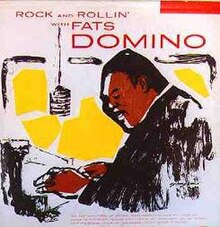
Rock And Rollin' With Fats Domino, by Fats Domino (November, 1955)


Dad's Take

You said your arms are empty
And your eyes, full of tears
Haven't had no lovin'
For so many years
Don't blame it on me
I'm not guilty, can't you see?
Don't blame it on me
I'm the same cat I used to be


Fats Domino's classic New Orleans sounds predates rock 'n' roll. He had been playing the same style of music since 1949. In fact, some of the tracks on this album date back to that year, including the first song, "The Fat Man." That was the sound that became rock 'n' roll, and Domino was one of the pioneers.

Like much "race" music of the day, Domino's songs are crudely recorded, with a single microphone in the studio and the music played live through primitive equipment. But the result is a cool old-school blues sound, with Domino's smooth singing and bangin' piano triplets playing over a heavy backbeat, inviting young fans of the emerging rock 'n' roll to do dances like the stroll.

Most of the songs have classic blues themes, like heartache and broken relationships, played by a simple combo of piano, drums and guitar. Add a stand-up bass and a tenor sax and you have the recipe that changed popular music. Fats had a definite sound and he stuck to it, and he was copied by most other early rock 'n' rollers over the next few years.

The big hit here is "Ain't That A Shame," which became an even bigger hit for Pat Boone, who had an easier time getting airplay on white radio. It's hard to believe now that the three pioneers of rock, Fats Domino, Little Richard, and Chuck Berry had a total of zero number one hits, until Berry hit the top of the chart with his 1973 novelty song, "My Ding-A-Ling."

"Rock and Rollin' with Fats Domino" was his first album, and was one of the first of rock 'n' roll. In the 56 years since it was initally released as "Carry On Rockin'" very few people have done it better. This is an album full of Fats Domino rockers that you won't hear on the 1950's compilations. You should seek this one out and put it in regular rotation. It's an amazing record, not just for its day but for the entire rock and roll era.

Brad's Take:

This is my first time listening to a full Fats Domino album. I know that I've definitely heard "Ain't That A Shame" played in our house many times before though, but I didn't know that was actually a Fats Domino song until now.

I love the fact that it was all recorded live with just a single microphone in the studio. This is the kind of music that I have always felt would be the best experienced in a live setting so this helps show me what it would have sounded like if I was a 50s era Brad.

The instrumentation at times is pretty sloppy, but it almost had to be. Bands back then probably couldn't afford much when it came to recording in a professional studio, so they probably had only a few hours to record the album. I've recorded hundreds of songs on my own, and I know that it's almost impossible to get a perfect recording on just a one-take recording, especially with an entire band playing on the same track. Also, with this style of recording, they would have had to mix all of their instruments through their actual amplifiers and by standing in different areas of the room, rather than just moving the slider on the soundboard up and down. The quality of this album isn't good by today's standards, but it's as good as they could get at the time, and that is really interesting and cool to me.

This is an album I can see myself putting on again when I'm feeling like listening to something classy and fun. When I'm in these kinds of moods though, they typically don't last for very long so the fact that there aren't any songs over 3 minutes long makes this an album that is very easy and enjoyable to listen to.