Showing posts with label Bill Haley. Show all posts

Tuesday, November 8, 2011

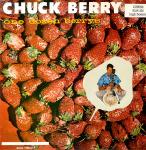
One Dozen Berrys, by Chuck Berry (March, 1958)

Dad's Take:

We've heard Bill Haley. Elvis. Fats. We've listened to Little Richard and Jerry Lee. But one key part of the foundation of rock and roll is missing, until now.

It's impossible to overestimate Chuck Berry's impact on rock and roll. When you hear a guitar solo by one of today's rockers, you're hearing Chuck Berry. When a lyricist tells a story and plays with the meter of his lines, you're hearing Chuck Berry.

On the excellent rockumentary about Berry, "Hail Hail Rock And Roll," Chuck talks about the blues music he heard in his neighborhood. But then then he'd go with his father to work in the white neighborhoods, and he'd hear country songs. So he figured out that he could make more more money from his music if he combined the two. He wasn't the first musician to mix blues and country, but he was perhaps the first to mix them so seamlessly. Then he played the horn solos from the swing combos on his guitar, and created a sound unlike anything that came before and that has not left us since.

"One Dozen Berrys" is Chuck Berry's second album. Significantly, it was the first to be released in England, where it had a tremendous impact on the up-and-coming British rock and roll scene.

This album contains several hits: "Sweet Little Sixteen," "Oh, Baby Doll," "Reeling & Rocking," and "Rock & Roll Music." But it also shows Berry has a serious musician with blues tunes like the instrumental "Blue Feeling" (and "Low Feeling," the same recording slowed down), the bilingual love song, "La Juanda," and the R&B love song, "How You've Changed." Chuck Berry had ambitions beyond teen dance music, but he also knew what he needed to do to make his money. The result is an album that wears its influences on its sleeves, but also shows how those influences were combined into that unique Chuck Berry sound. "Oh, Baby Doll" is a great example. It has a traditional country rhythm, sped up a bit, with R&B instrumentation behind a story song.

Chuck Berry changed everything.

In addition to being the king of rock and roll guitar, Chuck Berry is one of the great lyricists of all time, moving beyond the usual popular love songs with a kind of folk poetry that is on par with Cole Porter and the Gershwins, but with a straight-from-the-streets twist that makes it so amazingly easy to relate to. It's not just the words that he chose, but also the way he plays with the meter of his lines. I miss that on the many instrumentals on this record (maybe a couple too many), but those instrumentals also show the great musicianship from Chuck Berry and his band, especially his other musical half, pianist Johnnie Johnson, who deserves a bigger share of the credit for Chuck Berry's sound than he is usually given.

One thing that amazes me about Chuck Berry is that, unlike many of the rock and roll pioneers, his best music does not sound dated. A good Chuck Berry song from 1958 is still a good song today. Chuck Berry's music often lacks the trendy, novelty-song feel of so much of early rock and roll.

Brad's Take:


The first time I remember really listening to Chuck Berry was in 7th grade. We had to do a small report on a famous person, and my dad suggested I do it on Chuck Berry so I did. I played a clip of Chuck Berry performing and then read my report to the class. I didn't really listen to Chuck Berry much after that, at least not on my own.

This guy was an amazing performer, which helped him become a classic artist. Like Elvis, Chuck Berry had his own stage moves that people loved to see. On top of just being a great performer in general, he was an amazing guitarist. His guitar playing style stepped up the rock 'n roll game.

One Dozen Berrys has a couple of Chuck's well known songs, including "Sweet Sixteen" and "Rock & Roll Music," as well as some other awesome jams that I have never heard before, like "La Juanda." The lyrics to that song cracked me up for some reason:


I speak only the language of English
I don't understand Espanol

This album is a great record for people wanting to get into Chuck Berry. It's got some hits, some slower songs, and not much filler. If only "My Ding A Ling" was on this one...

Friday, October 21, 2011

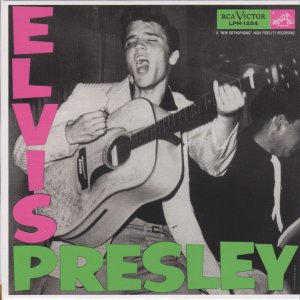
Elvis Presley, by Elvis Presley (March, 1956)

Brad's Take:
This album was an important one for its generation and generations to come. It was the first rock and roll album to ever reach #1 on the Billboard Top Pop Albums charts and it was the first album to ever make one million dollars and sell one million copies. That's definitely impressive, especially for the time it was released.

It's hard to review the debut album by an artist like this because he became such an important musical icon after this was released. He became the king of rock and roll, for crying out loud! Whether you like him or not, everyone has done an Elvis impression at one point in their lives, and everyone knows at least one Elvis song. But all those facts aside, I'll review this for what it is more than what it became...

Elvis Presley's self titled debut album sounds a lot like what was already popular in the 50's. It's not much different than Bill Haley's album that we reviewed before this one. These recordings sound cleaner though and the mixes sound a bit better. This album sounds a little different to me though. I think this is a good representation of what was to come from pop acts following Elvis' success. Before, it didn't really matter what you sounded or looked like as long as the music was fast and something the kids could dance to, but it feels like this album was more focused on the King's vocals rather than the overall general feel of the music.

Sometimes in the older rock and roll records, the vocals were pushed to the back or middle of the mixes so the piano or guitar would shine more, or equally. Elvis' vocals on this album are pushed a lot more to the front though. They're louder and cleaner sounding than the music is, like they really wanted his voice to shine and be the selling point. Elvis' voice sounds great on this album, but sometimes the instrumentation seems a little too bare and empty, but I think they meant for it to be that way. His vocals were more important than the music was, and they wanted them to really stand out and almost be on their own.

As an album though, I'd say that these are its ingredients:

1/4 cup of solid radio hits
1/4 cup of great non-hit songs
1/4 cup of semi-boring ballads
1/4 cup of filler songs

Dad's Take:

I think to fully appreciate this album, you have step back in time. You have to remember, Elvis was not yet The King. He was a little-known 21-year-old kid from Tupelo, with good looks, a good voice, and a style that was just a little bit different than similar artists. Few people knew him, and the RCA record company went on a hunch, based on the very modest performance of his Sun releases.

At RCA, Elvis moved firmly into the new rock 'n' roll, without leaving behind his country and southern blues roots. Rockabilly was hot, and it was genre that fit Elvis very well. This first RCA album isn't all that different than a lot of old rockabilly records, but Elvis obviously had something special that drew the kids to him, and his album became a much bigger hit than RCA had probably anticipated.

It's not really a great album, although it has a few great songs. Much of the album consists of covers of recent hits by others, recordings that Sun didn't think were good enough to release. Some of those, like Elvis's versions of "Tutti Frutti" and "Blue Moon," pale in comparison to the popular versions. In fact, "Blue Moon" teeters on the edge of unintentional comedy. But this album deserves the "classic" label because this is the greatest force in rock and roll history on the verge of greatness. He's often a little restrained, and the quality of many of the recordings show that nobody was ready to throw more money in his direction than was safe. The $40,000 to transfer Elvis and his recordings to RCA was a big enough risk. So they did enough to give them hope of recovering their investment, but they didn't do what they'd do for him when he became a sure thing.

Looking back on it as we are, all the elements that made Elvis The King are there. The energy (although he holds back a little more than he would very soon), the style, the passion. It's easy to see through the flaws and find The King.

My favorite thing about this album is that it's Elvis without the gloss and pressure of superstardom. This is raw Elvis, pure Elvis, without baggage. It's easy to have as much fun as he was.


Monday, October 17, 2011

Rock Around The Clock, by Bill Haley and His Comets (December, 1955)


Brad's Take:

The first time I remember hearing Bill Haley's song "Rock Around The Clock" was while listening to my parents copy of the American Graffiti movie soundtrack. It's a 2-disc compilation of songs from the 50's and 60's. I remember it being one of the first times I realized that I loved "oldies music." I think the only songs from this album that I had heard before though are the first tracks ("Rock Around The Clock" and "Shake, Rattle, and Roll.")

The overall recording of this album is a lot different than the Fats Domino album we reviewed before this one. It's mixed a lot better and the band plays tighter than Domino's. It still has a very live feel to it, however. It's not overly polished by any means.

This is a fun mid-50's collection of songs that I'm sure made the kids want to get up and "shake, rattle, and roll" (pun intended!) I even found myself tapping my foot and bobbing my head side to side. Each song has an upbeat tempo. There's no slow songs on this album. High schoolers were probably either bummed out by the fact that there were no songs to slow dance to with their dates, or they were stoked that they could put this album on and just have fun all night with their friends. I like to think that it was probably the latter.

A lot of the songs sound similar on this album, but I think back then, it wasn't about bands trying to write a collection of different sounding songs. They stuck to the formula that worked for them, and they perfected it. They didn't change their style or experiment much until later in their careers, if at all. It's kind of hard for me to imagine, but I assume rock and roll was still so fresh and new at this time that kids and teenagers weren't bored of the blues/rock sound yet. But really, how could anyone be bored while listening to this?

Dad's Take

Where Fats Domino showed the influence New Orleans blues had on the fledgling rock'n'roll, Bill Haley and his Comets showed the swinging side of the new fad in popular music.

To earn a few more bucks off the fad while it lasted, DJ Alan Freed and the movie company rushed out a string of low budget movies featuring the awful music those wacky kids were listening to, with its devil beat and "colored" influence. These movies had a thin plot, usually about Alan Freed putting on a show for the kids, but the story didn't matter. This was a way for Freed to show off his stable of artists and to get the kids to let loose of their quarters for a movie seat.

I think Rock Around The Clock was the first of this string of films. No soundtrack was ever released, but Bill Haley and his Comets, the headline act in the film, put out their album to capitalize on the album. Strangely, the title song, although heard three times in the movie, was never actually performed on stage during the rock 'n' roll show. The song the kids went to hear was never performed. It's too bad no soundtrack was ever released because it featured some great performances by Haley's combo and other great and not-so-great bands, most notably the Platters.

As Brad said, this album is nothing but fun. It was meant to be dropped onto a hi-fi at a platter party and danced to. Fats Domino's music was great for the stroll, but this is pure jitterbug music from the moment the needle hits the wax.

Now you can listen to it as a cultural artifact, and boogie with your baby while you do it. There's the classic title song, followed by Haley's sanitized, radio-friendly version of Big Joe Turner's "Shake, Rattle, and Roll." Also included is a Cold War artifact, where Haley dreams that his town was destroyed by an H-bomb, leaving only him and thirteen women alive. The women are, of course, there for his pleasure.

What strikes me about many of the songs--mostly performed in classic swing style with a big band replaced by a tight combo of guitar, bass, piano, and sax--is how much filler was added to the two hits, and how as long as the song says "rock," "roll," and "boogie" enough times, it's rock 'n' roll and not swing.

Check out this song, the album's closer:

Rock, rock, rock, everybody,
Roll, roll, roll, everybody,
Rock a beating boogie beat.

You take a rock, you take a beat,
You take a boogie, you make it sweet,
You take a rock a beating boogie,
Rock a beating boogie beat,
Well, rock a beating boogie,
B-O-O-G-I-E.

Well, we’re rocking to the rhythm,
Of the rock a beating boogie,
Dancing to the rhythm,
Of the rock a beating boogie,
Shaking to the rhythm,
Of the rock a beating boogie,
Jumping to the rhythm,
Of the rock a beating boogie,
Romping to the rhythm,
Of the rock a beating boogie,
B-O-O-G-I-E.

You gotta jump, you gotta jive,
You gotta dance to be alive,
You take a rock a beating boogie,
Rock a beating boogie beat,
Well, rock a beating boogie,
B-O-O-G-I-E.

But the dorky-but-cool jive lyrics didn't matter. What mattered was the beat. And the beat never lets up throughout this whole record, providing the perfect platter for your platter party. It's pure fun, and it changed the world.

You really can't beat that boogie beat. Put it on and try to remember that there was a time when this sound was brand new and exciting, and created a musical generation gap that has never been bridged. Most of all, though, just have fun. It's really hard not to with music this infectious.