Showing posts with label Elvis Presley. Show all posts

Wednesday, December 7, 2011

"Eddie Cochran Memorial Album" by Eddie Cochran (September, 1960, UK only)

Dad's Take:

This album was released to memorialize (or capitalize on) Eddie Cochran's death in a car crash in April, 1960, at the age of 21. It's a solid reminder of how good Eddie Cochran was and how much he'd done at such a young age.

Although Elvis's influence is strong, Cochran was much more than an Elvis copycat. He was an amazing talent on his own, and influenced guitar players like George Harrison, who, like Cochran, played a semi-acoustic Gretsch with an unwound third string.

Cochran's songs have been copied by many artists over the years. "Summertime Blues" is his best-remembered and most copied record, but his influence goes beyond that one song. One of the rockabilly greats, Cochran was copied by almost everybody in the sixties--especially the great British rockers like the Beatles, The Who, the Stones, and Led Zeppelin--if not in direct covers, then in style.

This album makes it clear why Cochran is in the Rock & Roll Hall Of Fame. Whether the song is well known, like "Summertime Blues" or "C'mon Everybody," or less known like "Somethin' Else," his performances are strong, energetic, and more original than some might claim. His influence on the second generation rockers is indisputable.

Check him out yourself if you don't believe me.

Brad's Take:

On songs like "Jeanie, Jeanie," you can definitely hear the Elvis influence in Eddie Cochran's music. He even sings "blue suede shoes" in the lyrics to that song which instantly reminds one of Elvis' song. But even if Eddie borrows Elvis' musical style a little bit, he's no Billy Fury. Cochran makes his songs his own, maybe except for the song "Pretty Girl."

"Hallelujah, I Love Her So" is a song I liked instantly. It's upbeat and has a loud strings section accompanying the other typical instruments. The violins really made that song stand out to me.

"Summertime Blues" is a classic that everyone knows, even if they just know the hook. This song shows that Cochran was original and not an Elvis Presley copy cat. This song is a solid golden hit that I don't even think The King could have written.

For me, this collection of songs is hit and miss throughout. I liked just about half of it, and the other half, I could have done without. Even though there are some songs that I didn't love, this is a great collection that shows off all of the sides to Eddie Cochran.

It's hard to believe that he was 21 or younger when he wrote all of these songs. The kid had true talent, and it's a bummer that he died so young. It would have been really interesting to see where he would have gone next.

Sunday, December 4, 2011

"The Sound Of Fury" by Billy Fury (May, 1960)


Brad's Take:


I'd never heard of Billy Fury before this so I was curious to hear his debut album, "The Sound Of Fury." As soon as I hit play, I immediately thought, "I didn't know Elvis impersonators actually got record deals..."

After doing a little bit of research, I discovered that he kind of was Elvis, but the UK's version of Elvis. His vocal styling and energy is almost identical, and he even dressed and moved like The King.

On "Turn My Back On You," Billy Fury does his best Buddy Holly impression by doing the stuttering vocal style that Buddy was well known for.

Since our book is from the UK, it makes sense for Billy Fury to be in it. The UK needed an Elvis and a Buddy Holly so this kid probably made lots of people (especially girls) happy until the real came over from the states.

Putting the similarities to other artists aside, Buddy, I mean Billy Fury nailed it on this album. He stuck to the same blues/rock/country formula that was popular in the US and brought it to the UK, and he succeeded. His voice and energy were great, and he was a good looking guy. I'm sure the English girls swooned over him all day and night. It's not a surprise that a life size bronze statue of him (doing an Elvis impression) was eventually built in Liverpool in his honor in 2003.

Dad's Take:

This is one of a few British-only releases on our list. It's a British book, so that's to be expected. It's also interesting, because it ensures that we'll hear some albums that we've never heard, but that influenced the great British bands. Billy Fury, as an early leader in the Liverpool rock and roll scene, undoubtedly played a more important role than we Yanks are likely to recognize. Interestingly, according to one source, one group that auditioned to be Fury's band was a little band called the Silver Beetles. They were turned down when they refused to fire their bass player, Stuart Sutcliffe, thus missing out on a £20 per week job.

If you listen to very much 1950's rockabilly, you'll hear a number of Elvis imitators of varying quality. Billy Fury is actually pretty good. The songs are good, and the performances are strong. As Brad mentioned, you hear the obvious influence of people like Elvis and Buddy Holly, as well as Carl Perkins and other rockabilly greats, especially Eddie Cochran.

Fury had the chops to pull off some really good rockabilly, as well as the voice for ballads. He didn't have quite the same energy level as Elvis or Buddy. His music isn't especially original, but he was one of the early architects of British rock and roll, and as such deserves a spot on our list.

Bottom line, though, is that it's just a fun record. Songs like "Don't Say It's Over," "That's Love," and several others on this record deserve to be better known stateside. I found "Since You've Been Gone" with its bizarre tempo changes and stuttering "baby baby baby" delivery to be especially interesting. It's not the best song on the record, but it's unusual and fun in its weirdness. If you like good old rock and roll, and especially rockabilly, look for this record. It's good stuff if you like this kind of thing. And I do.

Friday, November 18, 2011

"50,000,000 Elvis Fans Can't Be Wrong - Golden Records Vol 2," by Elvis Presley (December, 1959)

Dad's Take:

You might think that only a year and a half after Elvis's first Golden Records collection, there wouldn't be enough hits for a second.

You'd be wrong.

Sure, this album with a long, funny title contains mostly second-tier hits, but this is Elvis Presley. His second-tier hits include great songs like "I Got Stung," "One Night," "Big Hunk O' Love," "Don't," and plenty more. Even though it doesn't have most of Elvis's biggest hits, this is in some ways more satisfying, because it contains great songs that you don't hear quite as often.

Elvis is at his peak here. He is confident and a little crazy. He doesn't hold back like he did on some of his earlier records. He's on top of the world, and he sounds like he's loving it. This album might not have "Hound Dog" or "Jailhouse Rock," but it has an energy that surpasses even that of those earlier hits.

Great stuff!

Brad's Take:


Since we listened to the first Elvis record, I get excited every time I see another Elvis album come up on our list. I'm really starting to become a fan.

This album has some awesome songs on it. "One Night" and "Big Hunk O' Love" were early favorites.

One thing that kind of bothers me a little bit on this album is that on some songs there's someone singing bass backup vocals... Normally, it would be cool. Like if it was a Frankie Valli song or something, but the mix of this guy's vocal track is just too loud, and sometimes even a bit delayed. Meaning, sometimes his vocals don't match up with Elvis' when they're singing the line. The bass guy's vocals start a little too early or a little too late. It's a little bit irritating to me, especially since it's so loud. It makes it even more noticeable. Oh well, just a small technical recording problem. Let's get back to what really matters...

Elvis sounds great on this album. You can tell he had a blast singing these songs. One thing that I especially love about this particular Elvis album is the fact that it's almost all fast-paced and energetic. That's the version of Elvis I like the most. But of course, like every Elvis album, there are some ballads, such as "My Wish Came True" and "Don't." They aren't bad, by any means, they're just not as fun as the fast songs. During his slow songs, I just wait for them to be over so I can enjoy the faster songs that will for sure follow. I bet if oldschool Elvis fans read this, they're thinking, "Oh great... Brad's one of these kids... Ugh!" But really, I can appreciate the slow songs, but if I had the choice, I'd tell Elvis to stick with the upbeat songs so I can dance with my girlfriend, rather than watch my girlfriend drool all over his shoes.

All in all, I really like this album. These are great songs that many casual listeners most likely don't know, but should know. 

Saturday, November 12, 2011

Elvis' Golden Records, by Elvis Presley (April, 1958)


Brad's Take:


This is thought to be the first rock 'n roll greatest hits album. It includes eight Elvis #1 hits and five B-sides from 1956 to 1957. It includes "Heartbreak Hotel," "Hound Dog," "All Shook Up," and many more recognizable Elvis jukebox tunes. As of 1999, the album has gone 6x Platinum, which means 6,000,000 units have been sold from its original release date.

One thing that bugged me about this release is something that also bothered me with Elvis' second album Elvis; they kick both of these albums off with an upbeat song and then follow it up with a super slow song. I wish they did these albums like this... A side: Upbeat songs. B side: Slow songs. That way, depending on the mood of the listener, they could choose which version they wanted at that time, rather than having to flip the record over and over and over to get to certain songs. But that's the sequencer's problem, not Elvis' necessarily. Aside from the roller coaster sequencing, this is a great compilation of Elvis songs. It's got everything that any fan of The King would want; the fast upbeat songs and the slow-dancing ballads.

This is just another reminder that I need to make my own Elvis mix CD to listen to in my car

Dad's Take:

Brad has discovered one of the problems vinyl had compared to CDs, if you want to see it that way. We were at the mercy of the people who sequenced the songs. There was no programming the songs in the order you like, and skipping songs was only worth the effort if you really disliked a song. That said, the order of the songs on this record isn't that unusual. A fast song, followed by a ballad, then two or three fast songs, another ballad, and a fast song to end the side. The fast-to-slow-song ratio on this record wouldn't support the breakdown Brad suggests. If he wants a fast side and a slow side, he should check out the excellent Beach Boys Today! album which, somehow, did not make our list.

While I still think it's a little unfair to include a greatest hits package in a list of classic albums, unless the record became a phenomenon on its own (like, say, The Eagles Greatest Hits album that stayed on the charts for, like, forever), there's no denying the greatness of this record. And 40 weeks on the charts in its initial run, plus another 23 weeks after Elvis died in 1977, would qualify it as phenomenal record, I suppose.

Golden Records has most of the songs most people know, and a surprise or two for the casual listener. It's hard to listen to this record without breaking out the old Elvis imitation Mrs. Barbara Williams used to have me do in her Music As Media class back in my old Newark High School days, especially when I hear "I Want You, I Need You, I Love You," which was one of my favorites to do. Only now I'd be the fat old Elvis and I'd have to rest my knees for a few days afterward.

That all of these songs were hits in a two-year period demonstrates Elvis's reign better than anything we can write about the songs. And he had enough hits in the next year and a half for another greatest hits album, which comes later on our list. But if you only wanted one Elvis record, this was the one to get before Elv1s 30 #1 Hits came out in 2002.

Tuesday, November 8, 2011

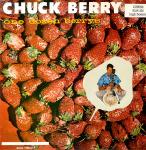
One Dozen Berrys, by Chuck Berry (March, 1958)

Dad's Take:

We've heard Bill Haley. Elvis. Fats. We've listened to Little Richard and Jerry Lee. But one key part of the foundation of rock and roll is missing, until now.

It's impossible to overestimate Chuck Berry's impact on rock and roll. When you hear a guitar solo by one of today's rockers, you're hearing Chuck Berry. When a lyricist tells a story and plays with the meter of his lines, you're hearing Chuck Berry.

On the excellent rockumentary about Berry, "Hail Hail Rock And Roll," Chuck talks about the blues music he heard in his neighborhood. But then then he'd go with his father to work in the white neighborhoods, and he'd hear country songs. So he figured out that he could make more more money from his music if he combined the two. He wasn't the first musician to mix blues and country, but he was perhaps the first to mix them so seamlessly. Then he played the horn solos from the swing combos on his guitar, and created a sound unlike anything that came before and that has not left us since.

"One Dozen Berrys" is Chuck Berry's second album. Significantly, it was the first to be released in England, where it had a tremendous impact on the up-and-coming British rock and roll scene.

This album contains several hits: "Sweet Little Sixteen," "Oh, Baby Doll," "Reeling & Rocking," and "Rock & Roll Music." But it also shows Berry has a serious musician with blues tunes like the instrumental "Blue Feeling" (and "Low Feeling," the same recording slowed down), the bilingual love song, "La Juanda," and the R&B love song, "How You've Changed." Chuck Berry had ambitions beyond teen dance music, but he also knew what he needed to do to make his money. The result is an album that wears its influences on its sleeves, but also shows how those influences were combined into that unique Chuck Berry sound. "Oh, Baby Doll" is a great example. It has a traditional country rhythm, sped up a bit, with R&B instrumentation behind a story song.

Chuck Berry changed everything.

In addition to being the king of rock and roll guitar, Chuck Berry is one of the great lyricists of all time, moving beyond the usual popular love songs with a kind of folk poetry that is on par with Cole Porter and the Gershwins, but with a straight-from-the-streets twist that makes it so amazingly easy to relate to. It's not just the words that he chose, but also the way he plays with the meter of his lines. I miss that on the many instrumentals on this record (maybe a couple too many), but those instrumentals also show the great musicianship from Chuck Berry and his band, especially his other musical half, pianist Johnnie Johnson, who deserves a bigger share of the credit for Chuck Berry's sound than he is usually given.

One thing that amazes me about Chuck Berry is that, unlike many of the rock and roll pioneers, his best music does not sound dated. A good Chuck Berry song from 1958 is still a good song today. Chuck Berry's music often lacks the trendy, novelty-song feel of so much of early rock and roll.

Brad's Take:


The first time I remember really listening to Chuck Berry was in 7th grade. We had to do a small report on a famous person, and my dad suggested I do it on Chuck Berry so I did. I played a clip of Chuck Berry performing and then read my report to the class. I didn't really listen to Chuck Berry much after that, at least not on my own.

This guy was an amazing performer, which helped him become a classic artist. Like Elvis, Chuck Berry had his own stage moves that people loved to see. On top of just being a great performer in general, he was an amazing guitarist. His guitar playing style stepped up the rock 'n roll game.

One Dozen Berrys has a couple of Chuck's well known songs, including "Sweet Sixteen" and "Rock & Roll Music," as well as some other awesome jams that I have never heard before, like "La Juanda." The lyrics to that song cracked me up for some reason:


I speak only the language of English
I don't understand Espanol

This album is a great record for people wanting to get into Chuck Berry. It's got some hits, some slower songs, and not much filler. If only "My Ding A Ling" was on this one...

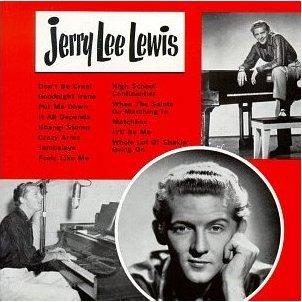
Jerry Lee Lewis, by Jerry Lee Lewis (December, 1957)

Dad's Take:

It's telling that this album by one of rock and roll's original bad boys begins with an Elvis cover, turning "Don't Be Cruel" into a honky-tonk rollicker. And that the next song is a cover of Leadbelly's "Irene Goodnight." Jerry Lee Lewis was an exciting rocker with deep country roots. A hyperactive hillbilly, Lewis was always looking for trouble and had no difficulty finding it.

This classic Jerry Lee Lewis album has one big hit, "High School Confidential," but other songs like "Put Me Down" have the sound most people associate with Jerry Lee Lewis. But this album also has a ton of filler. At his best, Jerry Lee is one of my favorites. Unfortunately his output is a little bit inconsistent. Or maybe you prefer "versatile." On any Jerry Lee Lewis record, other than some greatest hits collections, you're going to get rock and roll as manic as Little Richard, Hank Williams style country, Dixieland spirituals, and bar room honky tonk. That's not a bad thing, as long as you don't go in expecting every song to be "Great Balls Of Fire." The Killer was far too ADHD to be pinned down to one musical style.

Lewis rose quickly and burned out just as fast, thanks to all that trouble he was looking for. Marrying his 13-year-old cousin was, in retrospect, maybe not such a very good idea, and it brought his career to a crashing halt after only about a year and a half. He has stuck around since then, but his prime was cut short by his actions. 1950s rock and roll liked its bad boys, but not when they really went Bad.

With all the great music he gave us in that short period, Jerry Lee Lewis leaves us with a "what if" almost as big as the ones we were left with on February 3, 1959. Fortunately, not for the same reason, but it still left Jerry Lee Lewis as one of the first tragic figures of rock and roll, brought down by his own hubris and poor judgment. Jerry Lee stuck around to have a few more hits even as late as the 1970s (especially on the country charts), and to electrify live audience all the way to now. I don't think the music world ever really forgave him, but they didn't forget him either.

Brad's Take: 


When I think of Jerry Lee Lewis, I instantly think of "Great Balls Of Fire." That's the only song that I really associate with Jerry, despite how unfair that probably is. I'm just only really familiar with his fast blues rock music. It wasn't until track 9 ("High School Confidential") when I heard the Jerry Lee Lewis sound that I was already familiar with.

I was a bit bored with all of the mid-tempo filler songs in the first half of this album. Maybe it's just today, but it wasn't holding my attention until "High School Confidential." And when the next track started ("When The Saints Go Marching In") I chuckled to myself. What a random song to throw on a rock 'n roll album. But either way, it was a fun version of the tune.

Needless to say, this album was mostly underwhelming. Especially with the Little Richard album we reviewed before this still fresh in my head. This album's energy and excitement just doesn't compare to Lil Rich.

This album isn't necessarily bad or anything. I just know that Jerry Lee Lewis has better music than what was put on this album.

Tuesday, November 1, 2011

Elvis, by Elvis Presley (October, 1956)


Dad's Take:

By the time Elvis Presley released his second RCA album in October 1956, he was able to release it under his first name only. He had had the smash hit of the summer with both sides of the "Don't Be Cruel"/"Hound Dog" single. Riding on the success of that single, went back into the studio for three days in September, and the result topped the charts for four weeks, despite containing only one hit, "Love Me," which hit #2 on the Billboard Pop Singles chart (as well as #7 on the Black Singles chart and #10 on the Country Singles chart). The other two singles, "Old Shep" and "Paralyzed" failed to reach the top 40.

Elvis was now a bona fide star, and this album shows him performing with much more confidence and energy than he had on Elvis Presley earlier in the year. "Rip It Up" is an energetic opener, one of three Little Richard covers on the record. Elvis's "Ready Teddy," on the other hand, is just plain kick-but rock and roll, thanks in no small part to a killer instrumental break. Add the three Little Richard covers to the one on his first album and you add significant fuel to Little Richard's claim to be the "architect of rock and roll." "Rip It Up" falls a little short of Little Richard's maniacal energy and you can understand the words (which takes some of the fun out of it), but it's a strong opener and sets the mood that permeates this album.

I've heard a lot of Elvis over the years, but most of these songs are new to me, because they weren't hits. That they weren't is a surprise. For the first time, we get an album full of songs with the signature Elvis sound. By 1957 almost every song on this album would probably have made an assault on the top of the charts, but now they can almost be considered obscure to anybody but big Elvis Fans.

A favorite that I don't remember hearing before, but that I'll be listening to again (and again, and again) is "So Glad You're Mine." This song is as Elvisy as "Heartbreak Hotel," but not nearly as well known, with a rocking bar room beat and some heavy guitar and piano, and fun lyrics that stick in my head, like:

My baby's long and tall
Shaped like a cannon ball

Say every time she loves me

Lord you can hear me squall

She cried "ooo weee"

I believe I changed my mind

She said, "I'm so glad I'm livin'
"
I cried, "I'm so glad you're mine"

I had to listen three times before I could move on, something that hasn't happened yet while listening to the records for this review. Even unadulterated cheese like "Old Shep," an old-style country weeper that won Elvis 2nd place at a fair in Tupelo when he was ten, can't spoil the fun of this record. If Elvis Presley is Elvis before he was The King, Elvis is his coronation party.

Brad's Take:


This album kicks off with quite the punch. "Rip It Up" truly rips it up right from the start. I wish the whole album was like that song. It's just a tease though because the second song is as slow as Elvis gets. I wish they had moved "Love Me" down in the tracklist, but oh well.

This album is a lot like Elvis' debut. It's a roller coaster. Fast paced classics with ballads randomly thrown in here and there. He, of course, has the voice to pull off everything he did, but I prefer fast rockin Elvis to slow-dancing Elvis. I was loving the fast paced songs and getting impatient with the slow ones, in hopes that the next song was another rockin' jam. "Rip It Up", "Long Tall Sally" were early favorites, but that guitar work in "So Glad You're Mine" is a lot of fun.

Another thing that I loved right from the moment it happened was the way that "When My Blue Moon Turns To Gold Again" flowed into "Long Tall Sally." It's almost seamless. I love when tracks flow so smoothly with each other.

Whether it was a fast song or a slow song, The King nailed it. They got some golden takes in just the 3 days that it took to record this record. Without all the fancy technology we have these days, it's clear that Elvis, his band, and the producer had great talent.

I think it's time for me to make an Elvis mix CD with all of the up-tempo songs from his first two albums...

Friday, October 21, 2011

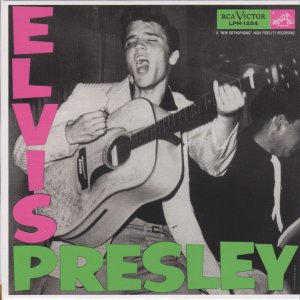
Elvis Presley, by Elvis Presley (March, 1956)

Brad's Take:
This album was an important one for its generation and generations to come. It was the first rock and roll album to ever reach #1 on the Billboard Top Pop Albums charts and it was the first album to ever make one million dollars and sell one million copies. That's definitely impressive, especially for the time it was released.

It's hard to review the debut album by an artist like this because he became such an important musical icon after this was released. He became the king of rock and roll, for crying out loud! Whether you like him or not, everyone has done an Elvis impression at one point in their lives, and everyone knows at least one Elvis song. But all those facts aside, I'll review this for what it is more than what it became...

Elvis Presley's self titled debut album sounds a lot like what was already popular in the 50's. It's not much different than Bill Haley's album that we reviewed before this one. These recordings sound cleaner though and the mixes sound a bit better. This album sounds a little different to me though. I think this is a good representation of what was to come from pop acts following Elvis' success. Before, it didn't really matter what you sounded or looked like as long as the music was fast and something the kids could dance to, but it feels like this album was more focused on the King's vocals rather than the overall general feel of the music.

Sometimes in the older rock and roll records, the vocals were pushed to the back or middle of the mixes so the piano or guitar would shine more, or equally. Elvis' vocals on this album are pushed a lot more to the front though. They're louder and cleaner sounding than the music is, like they really wanted his voice to shine and be the selling point. Elvis' voice sounds great on this album, but sometimes the instrumentation seems a little too bare and empty, but I think they meant for it to be that way. His vocals were more important than the music was, and they wanted them to really stand out and almost be on their own.

As an album though, I'd say that these are its ingredients:

1/4 cup of solid radio hits
1/4 cup of great non-hit songs
1/4 cup of semi-boring ballads
1/4 cup of filler songs

Dad's Take:

I think to fully appreciate this album, you have step back in time. You have to remember, Elvis was not yet The King. He was a little-known 21-year-old kid from Tupelo, with good looks, a good voice, and a style that was just a little bit different than similar artists. Few people knew him, and the RCA record company went on a hunch, based on the very modest performance of his Sun releases.

At RCA, Elvis moved firmly into the new rock 'n' roll, without leaving behind his country and southern blues roots. Rockabilly was hot, and it was genre that fit Elvis very well. This first RCA album isn't all that different than a lot of old rockabilly records, but Elvis obviously had something special that drew the kids to him, and his album became a much bigger hit than RCA had probably anticipated.

It's not really a great album, although it has a few great songs. Much of the album consists of covers of recent hits by others, recordings that Sun didn't think were good enough to release. Some of those, like Elvis's versions of "Tutti Frutti" and "Blue Moon," pale in comparison to the popular versions. In fact, "Blue Moon" teeters on the edge of unintentional comedy. But this album deserves the "classic" label because this is the greatest force in rock and roll history on the verge of greatness. He's often a little restrained, and the quality of many of the recordings show that nobody was ready to throw more money in his direction than was safe. The $40,000 to transfer Elvis and his recordings to RCA was a big enough risk. So they did enough to give them hope of recovering their investment, but they didn't do what they'd do for him when he became a sure thing.

Looking back on it as we are, all the elements that made Elvis The King are there. The energy (although he holds back a little more than he would very soon), the style, the passion. It's easy to see through the flaws and find The King.

My favorite thing about this album is that it's Elvis without the gloss and pressure of superstardom. This is raw Elvis, pure Elvis, without baggage. It's easy to have as much fun as he was.